Scissor Lift vs. Boom Lift: Which One Do You Need?
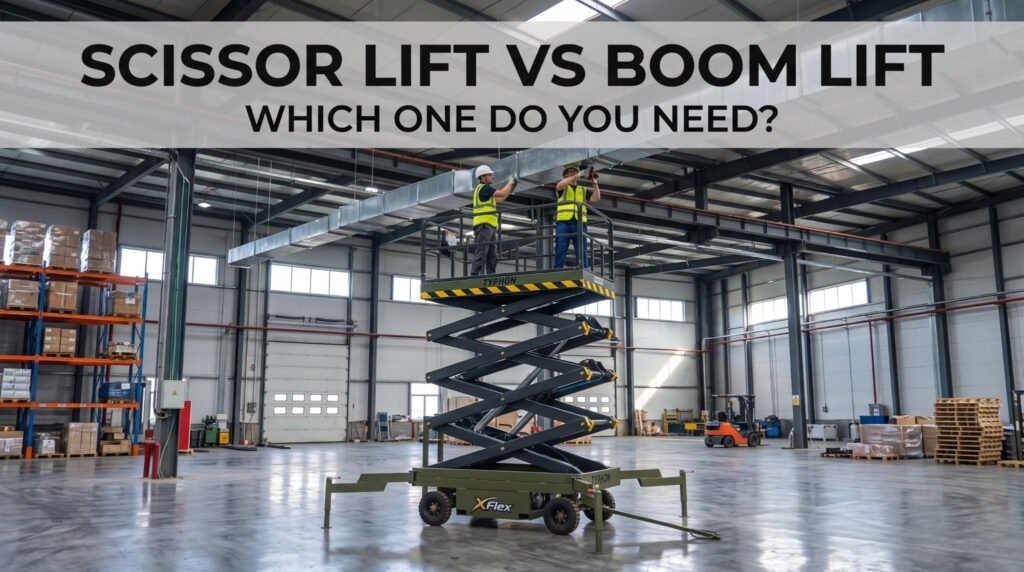
You’ve got crews scheduled to install ductwork thirty feet up in a warehouse, and a rental order due by end of day. The lift you pick has to reach the height, fit the space, and let your people work safely for the whole run. Choose a scissor lift and it rolls straight down the aisle, deck loaded with tools and two workers, rising dead-level to the ceiling. Choose a boom lift for the same job and you’ve paid for reach you don’t need while giving up floor space you do. Get it backwards on the next job, though, and the wrong machine leaves your crew stranded short of the work.
That’s the trap. A scissor lift and a boom lift both put people up in the air, so they look interchangeable on a spec sheet. They are not. One is built to go straight up on flat ground with a big platform; the other is built to reach up, out, and over obstacles across rough terrain. Pick the wrong one and you either waste money on capability you’ll never touch or, worse, send a crew to a job the machine physically can’t complete.
Getting the choice right comes down to four things: how high you need to go, whether you need to reach sideways or over something, the surface you’re working on, and how many people and how much material ride the platform. Nail those, and the right lift is obvious. Miss them, and you’re paying for a second rental. Here’s how the two machines actually differ, when each one wins, and how to match a lift to the job in front of you.
Where Scissor Lifts and Boom Lifts Truly Differ
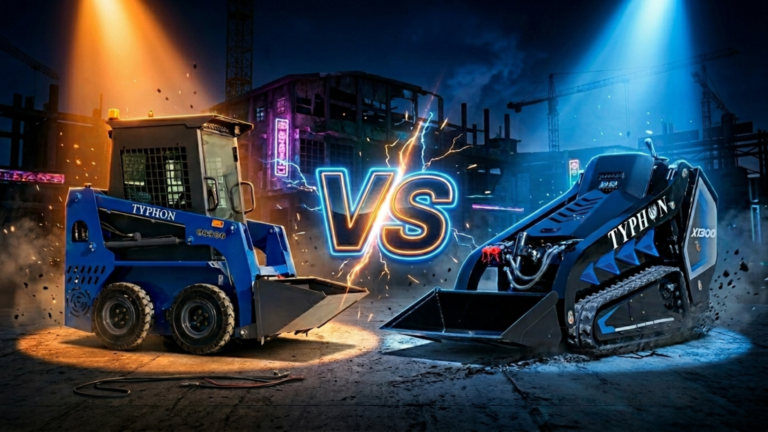
They share a purpose and almost nothing else. A scissor lift raises a wide platform vertically on crossed, folding supports, while a boom lift extends a work platform on the end of an articulating or telescoping arm. That single design difference drives every practical distinction that matters on a job site. Knowing which one fits starts with knowing what each was engineered to do.
Vertical Lift Versus Reach and Outreach
A scissor lift moves in one direction: straight up and straight back down. It can’t reach out past its own base, so the platform sits directly over the machine no matter how high it climbs. That makes it a pure vertical-access tool, ideal when the work is directly overhead and you can position the machine right beneath it.
A boom lift trades that simplicity for range. Its arm extends up and outward, and an articulating model can bend at a joint to reach over walls, equipment, or gaps in the floor. When you need to place a worker beside a beam that a machine can’t park under, horizontal outreach at height is exactly what a boom delivers and a scissor lift never can.
Platform Size and Working Capacity
Scissor lifts win on space. Their platforms are large, often extendable, and rated to carry multiple workers plus tools and materials at once. For a crew running a long ceiling job, that roomy deck keeps everyone and everything up top, cutting the trips up and down that eat a shift.
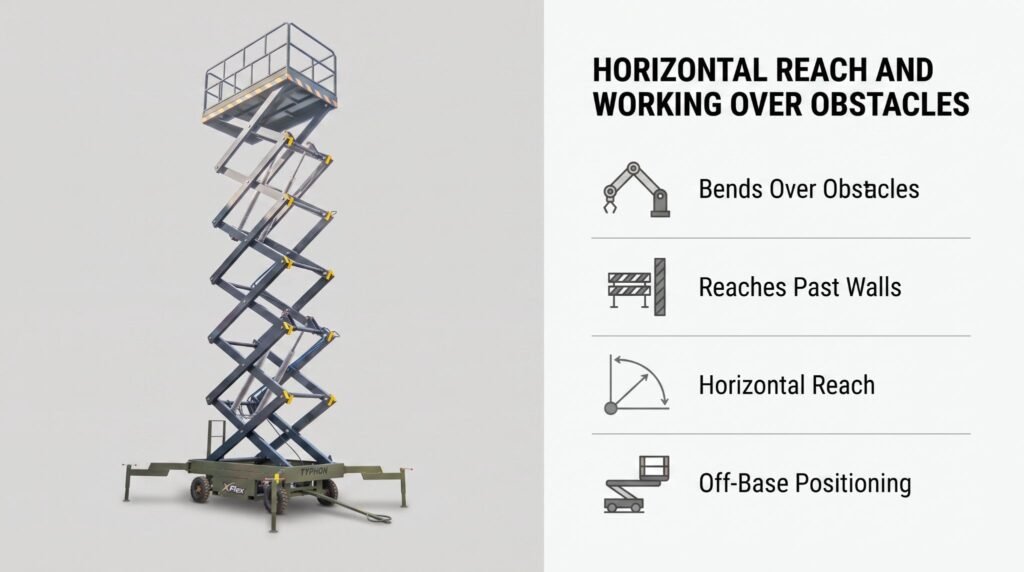
Boom baskets are smaller by design, usually built for one or two workers and limited tools, because the arm has to control that weight out at a distance. When you’re comparing options, check the scissor lift weight capacity against your real crew-plus-material load, since a bigger platform only helps if it carries what you actually put on it.
Height, Footprint, and Maneuverability
Boom lifts generally climb higher, with some models reaching heights a scissor lift can’t touch, and their arms grant access angles a straight vertical lift has no way to hit. That extra height and flexibility come with a larger, heavier footprint and a wider turning path.
Scissor lifts stay compact and roll cleanly through tight aisles and standard doorways, especially the slim electric models built for indoor work. If your job lives in confined interior space, that nimble footprint is worth as much as raw reach.
Takeaway: scissor lifts go straight up on a big platform in tight spaces, while boom lifts reach higher, out, and over with a smaller basket, so the shape of the access you need decides the machine.
When a Scissor Lift Is the Smarter Call
Some jobs are practically built for a scissor lift, and forcing a boom into them wastes money and floor space. The pattern is consistent: level ground, vertical work, and a crew that needs room to operate. Recognize that pattern and the choice makes itself.
Flat, Stable Surfaces
Scissor lifts perform best on firm, level ground, which is why they dominate finished floors, warehouse slabs, parking structures, and paved lots. On a stable surface, the machine’s wide wheelbase and low center of gravity give it steady, predictable support straight up to full height.
That stability is also a limit. Push a standard scissor lift onto soft, sloped, or broken ground and it loses its footing fast, since it wasn’t built to compensate for an uneven base. Match it to solid ground and it’s rock-steady; put it anywhere else and you’ve chosen the wrong tool. For work that involves working at height on uneven ground, a scissor lift is rarely the answer.
Indoor and Vertical-Access Jobs
Electric scissor lifts run clean and quiet, so they belong indoors where emissions and noise matter. Warehouses, retail interiors, arenas, and manufacturing floors are their home turf, and their compact frames slip through doorways and down aisles without a fight.
The jobs that fit are the ones directly overhead: ceiling installs, lighting and HVAC work, racking, painting, and inspections where the machine parks beneath the task. Whenever you can position the lift right under the work on a good floor, the vertical access is exactly what the job needs.
Multi-Worker and Material-Heavy Tasks
When a job needs two people and a load of material up top at the same time, the scissor lift’s platform earns its keep. A crew can spread out, keep tools within reach, and stage materials on deck instead of climbing down for every piece.
That capacity translates directly into productivity on long runs of overhead work. Fewer trips down, more hands working at height, and materials staged where they’re used all add up to a faster job.
Takeaway: choose a scissor lift for vertical work on flat, stable ground, especially indoors and whenever a crew needs a large platform for people and materials.
When a Boom Lift Is Worth the Investment
Other jobs simply defeat a scissor lift, and that’s where a boom lift stops being an upgrade and becomes a requirement. The signals are rough ground, obstacles in the way, and work you can’t park directly beneath. When you see those, reach for the arm.
Rough Terrain and Outdoor Sites
Rough-terrain boom lifts are engineered for the ground a scissor lift fears: dirt, gravel, slopes, and the uneven surfaces of active construction sites. Heavy-duty tires, higher clearance, and often four-wheel drive let them stay planted and safe where a vertical lift would tip or bog down.
Many models add leveling systems that keep the platform steady even when the base sits on a grade. That capability opens up outdoor work, from steel erection to exterior building maintenance, on sites that were never going to offer a smooth slab. If your ground is anything but flat, this is the machine.
Horizontal Reach and Working Over Obstacles
The boom’s defining strength is reaching where the machine can’t go. An articulating boom bends to lift a worker up and over a wall, a conveyor, landscaping, or parked equipment, placing the platform beside work that has no clear approach from below.
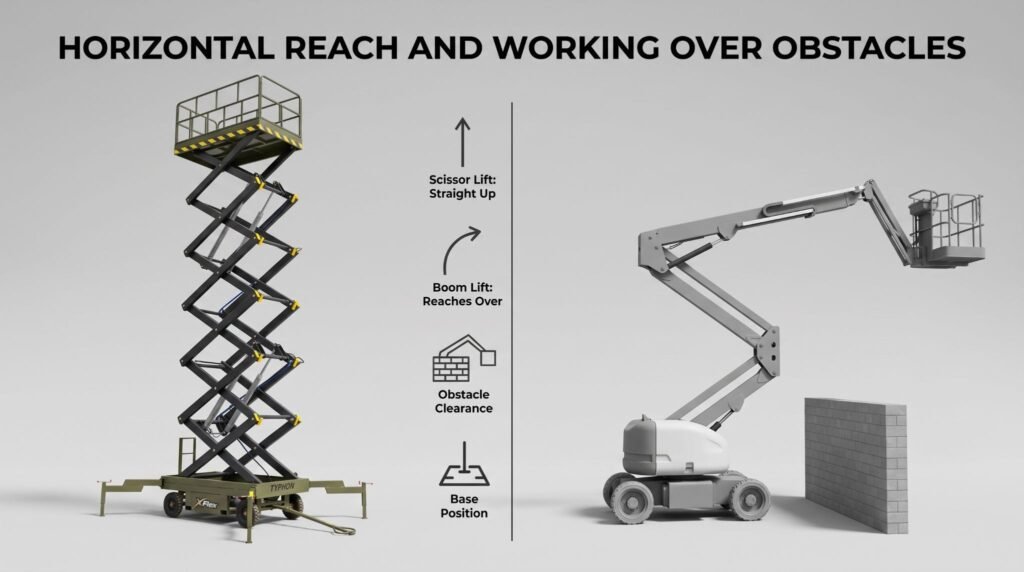
Telescoping booms push that reach even farther, extending long horizontal distances to hit points a scissor lift could never approach. For boom lift outreach at height across a gap or around an obstruction, no other machine does the job. When the work is genuinely out of vertical reach, the boom’s arm is the only tool that gets a person to it safely.
Maximum Height and Precise Positioning
When the job climbs beyond what a scissor lift can reach, boom lifts carry on, with models built for serious elevated work on tall structures. That height alone justifies the choice on high-rise maintenance, sign work, and tall industrial builds.
Precision matters just as much. A boom’s controls let an operator inch the basket into an exact spot and hold it there, which is what detailed work at height demands.
Takeaway: invest in a boom lift when you face rough terrain, need to reach out or over obstacles, or must work at heights and angles a straight vertical lift can’t touch.
Frequently Asked Questions
What is the main difference between a scissor lift and a boom lift?
A scissor lift raises a large platform straight up and down on folding supports, with no ability to reach sideways. A boom lift extends a smaller basket on an arm that reaches up, outward, and often over obstacles. In short, scissor lifts are for vertical access on flat ground, while boom lifts deliver height plus horizontal reach across varied terrain.
Can a scissor lift work on uneven or outdoor ground?
Standard scissor lifts are built for firm, level surfaces and lose stability quickly on soft, sloped, or broken ground. Some rough-terrain scissor models handle mild outdoor conditions, but for genuinely uneven sites, slopes, or the need to reach over obstacles, a rough-terrain boom lift is the safer and more capable choice. Always match the machine to your actual surface.
Which lift is better for indoor work?
An electric scissor lift usually wins indoors. It runs clean and quiet, fits through standard doorways and tight aisles, and offers a roomy platform for a crew and materials, ideal for ceiling, lighting, and HVAC work directly overhead. A boom lift only makes sense indoors when you must reach around an obstacle or into a spot the machine can’t park beneath.
Do boom lifts reach higher than scissor lifts?
Generally, yes. Boom lifts are available in taller working heights than most scissor lifts, and their arms add reach angles a vertical lift can’t achieve. If your job exceeds a scissor lift’s maximum height or requires horizontal outreach at elevation, a boom lift is typically the only machine that can safely place a worker at the task.
How do I choose between the two for my job?
Run four checks: the working height you need, whether you must reach out or over anything, the surface you’re working on, and how many workers and how much material goes up. Vertical work on flat ground with a full crew points to a scissor lift; height, outreach, obstacles, or rough terrain point to a boom lift. Then confirm access and power source fit your site.
Conclusion
Choosing between a scissor lift and a boom lift starts with understanding the job, not the machine. Think about the working height, whether you need to reach straight up or over obstacles, the type of ground you’ll be working on, and how many people, tools, or materials need to fit on the platform. Scissor lifts are the better choice for flat, stable surfaces and jobs that require vertical access with extra platform space. Boom lifts are designed for rough terrain, elevated work that extends beyond vertical reach, and tasks where obstacles stand between the operator and the work area. Evaluate these four factors before renting or buying, and the right machine becomes clear. You’ll work more efficiently, improve jobsite safety, and avoid the unnecessary costs that come with choosing the wrong equipment.