Skid Steer for Snow Removal and Property Maintenance
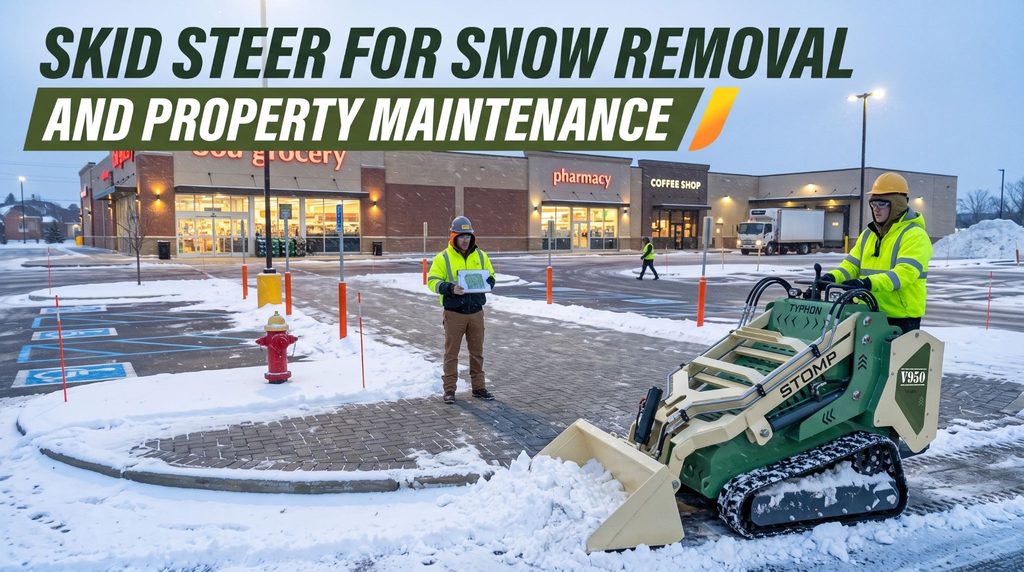
Clearing a commercial property after a heavy snowfall can become a race against the opening schedule. Main driveways, parking areas, loading zones, and pedestrian access routes all need attention before employees, delivery trucks, and customers arrive. A skid steer can move through these areas efficiently, pushing snow from travel lanes, clearing spaces between parked vehicles, and creating access to important work zones.
Attachment selection plays an important role in how effectively snow can be moved. A snow blade can push large amounts away from driveways and open areas, while a snow bucket can collect and relocate deeper piles. Compact dimensions also allow the machine to maneuver around parked vehicles, buildings, and other obstacles where larger equipment may have limited access.
Planning the clearing route and snow storage areas helps keep the property accessible throughout the day. Removing snow from traffic lanes first, opening loading areas, and placing accumulated piles away from entrances and visibility zones can improve site circulation. With the appropriate attachment and operating approach, a skid steer can support efficient snow removal across commercial properties after significant snowfall.
Clear Driveways and Access Areas
The first priority after a snowfall is opening the routes people and vehicles depend on. A skid steer can push or move accumulated snow from driveways, parking areas, roads, and access paths. That lets you restore safe access quickly, even after heavy accumulation.
Its compact design is a major advantage here. Many properties have narrow drives, tight corners, and paths squeezed between buildings, fences, and landscaped areas. Larger snow-clearing machines may have limited room to maneuver in these spaces. A skid steer can turn in a small footprint, work close to structures, and reach areas that would otherwise need hand shoveling.
Where you put the snow matters as much as how you move it. Plan stacking locations in advance so piles don’t block sightlines, cover drains, or crowd walkways. Choosing those spots before the storm keeps clearing efficient and prevents meltwater from refreezing across high-traffic areas.
Key takeaway: A skid steer’s compact design lets it push and move snow from driveways, parking areas, roads, and access paths where larger machines may have limited room to maneuver.
Select the Right Snow Attachment
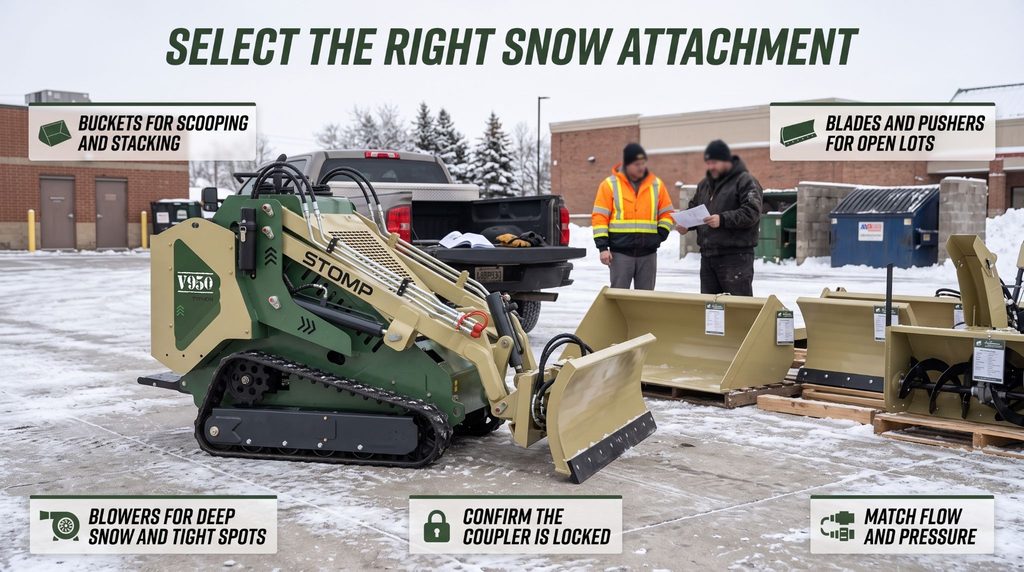
The attachment you choose shapes how well your skid steer clears snow. Buckets, blades, snow blowers, and other attachments each handle different snow-removal tasks, so matching the tool to the job has a direct effect on productivity.
Each option has its strengths. A bucket can scoop, carry, and stack snow, which helps when piles need to be moved or loaded. A blade pushes snow efficiently across open areas and angles it to one side, making it useful for long drives and wide lots. A snow blower throws snow away from the cleared area, which suits deep accumulation and places where there’s little room to pile snow.
Several factors should guide your choice. Consider snow depth, surface conditions, clearing distance, and the machine’s hydraulic capabilities. Hydraulically powered attachments such as snow blowers need compatible flow and pressure from the skid steer to work as intended. Compare the attachment manufacturer’s requirements against your machine’s specifications before winter arrives.
Key takeaway: Buckets, blades, and snow blowers perform different tasks, so choose attachments based on snow depth, surface conditions, clearing distance, and the machine’s hydraulic capabilities.
Maintain Parking and Commercial Areas
Large properties rarely need a single clearing pass. Parking spaces, loading zones, entrances, and service roads often require repeated clearing throughout a storm and afterward, as snow keeps falling, drifting, and being tracked in by traffic.
A maneuverable skid steer handles that workload well. It can move quickly between different areas of a property and switch between clearing tasks without delay. One pass might open a service road, the next might clear around parked vehicles, and another might keep a loading dock accessible for deliveries. That flexibility helps property managers keep critical areas open when demand is highest.
Prioritizing the work keeps the property functional. Entrances, emergency access routes, and loading zones usually come first, followed by main drive lanes and parking rows. Working in a planned sequence helps you avoid pushing snow back into areas you’ve already cleared and makes each round of clearing faster.
Key takeaway: Commercial properties often need repeated clearing around parking spaces, loading zones, entrances, and service roads, and a maneuverable skid steer can move between these areas and handle each task.
Protect Finished Surfaces
Snow hides what’s underneath, and careless clearing can leave lasting damage once it melts. Asphalt, concrete, pavers, and landscaped areas all need careful operation. Repairing gouged pavement, lifted pavers, or torn turf adds cost and can affect how a property looks and performs.
The right attachment is the first line of defense. Many blades and buckets can be fitted with cutting edges designed for snow work, and some are made to reduce contact with sensitive surfaces. Match the attachment and its setup to the surface you’re clearing, especially on decorative pavers or newer concrete.
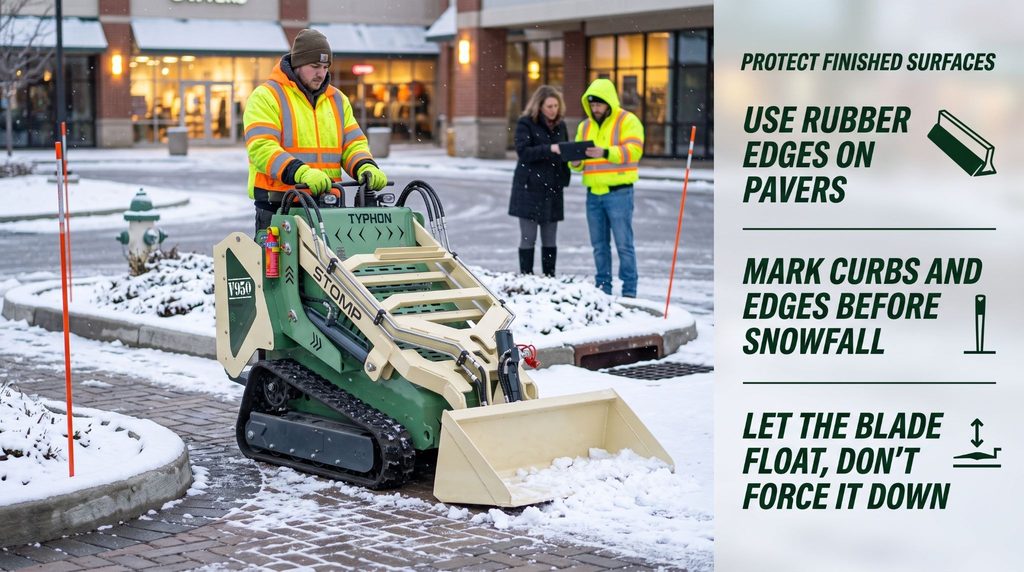
Operating technique matters just as much. Keep movements controlled, avoid driving the attachment down into the surface, and slow down near curbs, edges, and transitions between materials. Marking the edges of drives, walkways, and planting beds before snow falls helps you see where finished surfaces end and landscaping begins.
Key takeaway: Asphalt, concrete, pavers, and landscaped areas require careful operation, so use suitable attachments and controlled movements to reduce unnecessary scraping or surface damage.
Use the Machine Beyond Winter
A skid steer doesn’t have to sit idle once the snow is gone. Unlike single-purpose winter equipment, it can move straight into spring and summer work, which helps property owners and contractors get more value from the same investment.
Changing attachments turns the machine into a year-round maintenance tool. It can grade surfaces, support landscaping projects, handle debris after storms, and move soil, mulch, gravel, and other materials around the property. Spring cleanup, seasonal planting, drainage improvements, and fall leaf and debris removal all fit within its range.
That versatility also simplifies equipment planning. Instead of maintaining separate machines for different seasons, you can rely on one familiar platform and a set of attachments suited to your property’s needs. Operators stay comfortable with the controls, and the machine stays productive across the calendar.
Key takeaway: After snow removal ends, attachments allow a skid steer to support grading, landscaping, debris handling, material movement, and other property maintenance tasks year-round.
Inspect Before Winter Operation
Cold weather places added demands on equipment. Low temperatures can affect batteries, fluids, hydraulic performance, and starting systems, and a problem that goes unnoticed in mild weather can stop work on a freezing morning. A thorough inspection before operating helps catch these issues early.
Cover the key systems every time. Check tires or tracks for wear, damage, and proper condition for slippery surfaces. Confirm fluid levels and use fluids suited to cold-weather operation as recommended by the manufacturer. Inspect hydraulic components for leaks and secure connections, and test the battery, since cold temperatures reduce starting power.
Visibility and safety matter even more during winter work, which often happens in low light and poor weather. Make sure lights work properly, attachments are secure and undamaged, and safety systems function as intended. Allow the machine to warm up according to the manufacturer’s guidance before putting it under load.
Key takeaway: Cold conditions add demands on equipment, so check tires or tracks, fluids, hydraulic components, battery condition, lights, attachments, and safety systems before work to identify problems early.
Conclusion
A skid steer supports snow removal and year-round property maintenance by combining compact access, attachment versatility, and maneuverability across driveways, parking areas, loading zones, entrances, service roads, and other restricted spaces. Buckets, blades, and snow blowers should be matched to snow depth, surface type, clearing distance, and hydraulic requirements, while controlled movements help protect asphalt, concrete, pavers, curbs, and landscaped areas. Before winter work, operators should mark snow storage locations away from drains, walkways, sightlines, and planting areas, establish clearing priorities, inspect tires or tracks, fluid levels, hydraulic connections, battery, lights, attachments, and safety systems, and warm the machine according to manufacturer procedures. After winter, the skid steer can be fitted with suitable attachments for grading, landscaping, debris removal, and material handling, allowing one machine to support property maintenance throughout the year. Matching the attachment, operating technique, machine condition, and site requirements helps maintain safe, efficient, and reliable performance across seasonal work.
Frequently Asked Questions
Can a skid steer be used for snow removal?
Yes. Skid steers are well suited to snow removal and can use attachments such as blades, buckets, and snow blowers. A blade pushes snow across drives and parking lots, a bucket can scoop, carry, and stack snow, while a snow blower throws snow away from the work area when accumulation is deep or stacking space is limited. The machine’s compact size and tight turning also make it useful around buildings, vehicles, and landscaping. Match the attachment to snow depth and clearing conditions, and confirm hydraulic attachments meet the skid steer’s flow and pressure requirements.
Can one skid steer handle year-round property maintenance?
Yes. A skid steer can support different seasonal tasks by changing attachments. In spring, it can handle cleanup and ground preparation, while summer work may include grading, moving soil or gravel, and drainage projects. In fall, it can help clear leaves and storm debris, and winter attachments can handle snow removal. Using one machine can simplify equipment planning and reduce the need for separate seasonal equipment. The key is selecting compatible attachments that match the property’s needs and the skid steer’s hydraulic and connection requirements.
How can operators protect paved surfaces?
Use attachments and operating techniques suited to the surface being cleared. Asphalt, concrete, and pavers can be scratched or damaged if a blade or bucket is forced aggressively into the surface. Use suitable cutting edges and keep movements smooth, especially near curbs, edges, and surface transitions. Marking driveways, walkways, and planting beds before snowfall can also help operators identify hidden boundaries. Controlled operation and proper attachment selection help reduce surface damage and costly repairs.
Does cold weather affect skid steer operation?
Yes. Cold temperatures can reduce battery starting power, thicken fluids, and make engine and hydraulic systems respond more slowly. Use fluids recommended for the operating temperature and check the battery, tires or tracks, hydraulic components, lights, attachments, and safety systems before winter operation. Allow the machine to warm up according to the manufacturer’s guidance before applying heavy loads. Regular inspections and proper warm-up procedures help maintain reliable performance in cold conditions.