The Backyard Project That Convinced Me to Buy a Mini Excavator
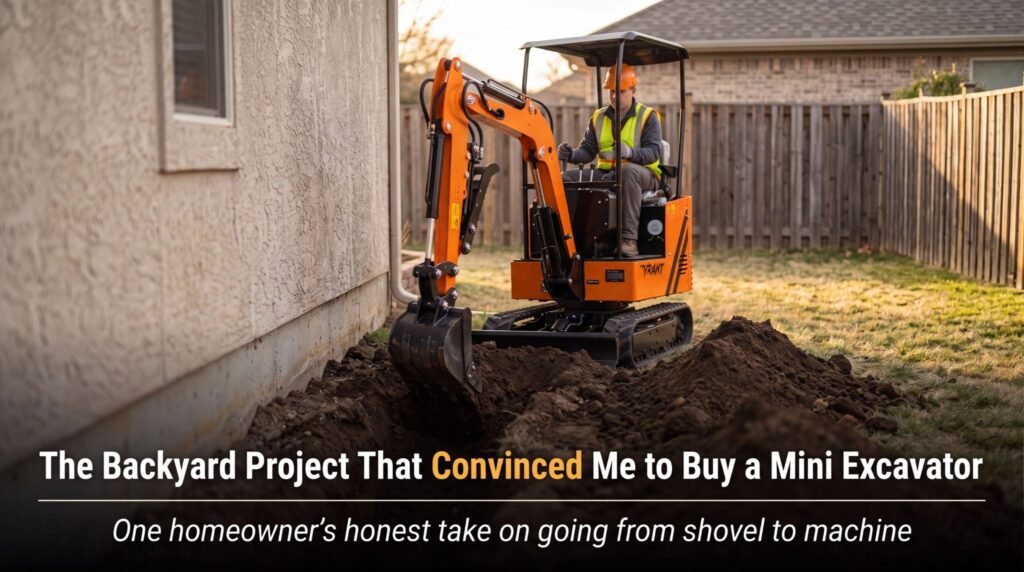
I spent the better part of a Saturday on my knees in the backyard, hand-digging a drainage trench that was supposed to take “just a few hours.” Every winter, water pooled against the back of my house and seeped into the basement, so I finally committed to running a proper drain line from the low spot out to the ditch at the property edge. Armed with a shovel, a mattock, and more optimism than sense, I started digging. By noon I’d managed maybe fifteen feet of a hundred-foot run, my hands were blistered, and I’d hit a mat of tree roots I couldn’t cut through. By evening, I’d barely moved and I was staring at a project that would eat every weekend for a month.
That day changed how I thought about backyard work. I’d assumed a big machine was overkill for a homeowner, that renting a trencher or hiring a crew was the only sensible path. But that trench, and the two projects that followed, slowly convinced me that owning a compact machine wasn’t extravagant. It was the smartest tool decision I’d ever make. Here’s what that drainage project taught me, how the machine transformed the work, what it cost me to figure out, and how I’d advise anyone weighing the same choice.
Why the Hand-Dug Trench Nearly Broke Me
Understanding the challenges of manual excavation highlights the value of using the right equipment. As projects become larger and more demanding, a mini excavator can significantly improve productivity and reduce labor. If you’re comparing equipment options, learning how to choose the right mini excavator can help you make a more informed decision.
The Time and Physical Cost
Hand-digging a trench sounds simple until you’re actually doing it. A hundred-foot run at proper depth means moving several tons of soil, one shovelful at a time, and the math turns brutal fast. My “few hours” estimate was off by weeks, and every hour of it was hard on my back, knees, and hands.
The physical toll wasn’t just uncomfortable, it was a real limit on progress. I could only work so long before I had to stop, so the project stretched across weekends and stalled every time it rained. What looked like a doable weekend job on paper became an open-ended slog that drained my motivation.
Fighting Roots, Rock, and Hard Ground
The bigger problem was the ground itself. A shovel handles soft topsoil fine, but the moment I hit compacted clay and a network of tree roots, I was stuck. I spent hours hacking at roots with a mattock and prying at rocks I couldn’t budge, making inches of progress at a time.
This is where I realized the difference between light gardening and real excavation. The obstacles hiding under the surface are exactly what defeat manual tools, and they’re precisely what a machine is built to power through. My shovel wasn’t underpowered for the job; it was the wrong category of tool entirely.
Takeaway: Hand-digging a long trench through roots and hard ground cost far more time and physical effort than I’d imagined, which made it clear the real problem wasn’t my effort but the tool I was using.
How the Mini Excavator Transformed the Work
Renting a mini excavator completely changed the pace and efficiency of the project. Tasks that had previously taken weeks of manual effort were completed in just a few hours, highlighting the significant productivity gains that compact equipment can provide. That experience also demonstrated the long-term value of ownership for projects requiring frequent excavation. For contractors with recurring digging needs, investing in a compact excavator can reduce labor demands, improve jobsite efficiency, and provide greater control over project schedules.
Digging Depth and Speed I Couldn’t Match by Hand
The first thing that struck me was the sheer pace. What took me a full day by hand, the machine did in minutes, cutting a clean, consistent trench at a depth I’d have struggled to reach with a shovel. The bucket bit through the same clay that had stopped me cold, and the roots that ate my afternoons snapped like twigs.
That speed changed the whole calculation of what’s possible in a backyard. Suddenly a hundred-foot trench wasn’t a month-long ordeal; it was a morning’s work. Projects I’d written off as too big to tackle myself became genuinely within reach, and that shift in what felt doable was the real revelation.
Precision and Control in a Tight Space
I’d worried a machine would be clumsy in a fenced backyard, but the opposite was true. The compact size slipped through my gate with room to spare, and the controls let me place the bucket exactly where I wanted it. I could dig right along the foundation without damaging it and steer around the utilities I’d carefully marked first.

That precision mattered more than raw power. Before running the machine, I checked for buried lines the way any homeowner should; guidance on how to locate underground utilities before digging is worth reading before any trenching project. With the lines marked, I could work confidently and accurately, cutting exactly the trench I needed without the guesswork and strain of doing it by hand.
Doing More Than Just Digging
What sealed my thinking was realizing the machine wasn’t a one-trick tool. Once the trench was done, I used the same excavator to backfill it, grade the disturbed ground smooth, and even pull a stubborn stump I’d been avoiding for years. One machine handled tasks that would otherwise have needed several tools and a lot more labor.
That versatility is what turned a rental into a purchase in my mind. A machine that digs, lifts, backfills, and grades earns its keep across dozens of backyard jobs, not just one. I started making a mental list of every project I’d postponed, and the list was long enough to justify owning the machine outright.
Takeaway: The mini excavator finished in an afternoon what had stalled me for weeks, worked with surprising precision in a tight backyard, and handled far more than digging, which is exactly what convinced me it was worth owning rather than renting.
What Owning One Actually Cost Me to Learn
Deciding to buy was one thing; buying well was another. I made a few assumptions early on that a little research corrected, and sharing them here might save you the same trial and error. This is the practical side of the story that the excitement of that first afternoon glossed over.
Rent-Versus-Buy Math That Made Sense
The numbers pushed me toward owning faster than I expected. I added up what I’d spent on rentals and what I’d have kept spending on my backlog of projects, and the total crept toward the cost of a machine I’d own outright. For a homeowner with an ongoing list of jobs, that math often tips toward buying.
The turning point was honesty about how much I’d actually use it. An occasional one-off job doesn’t justify a purchase, since renting covers that fine. But drainage, landscaping, stump removal, footings for a shed, and a future patio added up to enough steady work that ownership clearly paid off over time.
Sizing the Machine to Backyard Reality
My instinct was to buy the smallest, cheapest machine, but I learned to size for the work instead. I needed enough dig depth for proper drainage, enough power to handle roots and clay, and a footprint small enough to fit through a standard gate. Matching those needs kept me from buying a machine that would fall short on the jobs that mattered most.
I also learned to think about attachments early. A hydraulic thumb made grabbing stumps and rock far easier, and an auger opened up post-hole work I hadn’t even planned for. Choosing a machine with the hydraulic capacity to run those tools meant one purchase covered a much wider range of future projects.
Support and Reliability I Didn’t Think About
The detail I nearly overlooked was what happens after the sale. A backyard machine still needs fluids, filters, and the occasional part, and a purchase means little if you can’t get support when you need it. I learned to weigh build quality, parts availability, and dependable service alongside the price.
When comparing equipment options, prioritize overall value rather than focusing solely on the initial purchase price. Evaluating machine specifications, available attachments, warranty coverage, and after-sales support can help you select equipment that meets your long-term operational needs. Whether you’re investing in a mini excavator or a compact excavator, choosing a machine backed by reliable support and service helps maximize productivity, reduce downtime, and deliver lasting value across future projects.
Takeaway: Buying well came down to honest rent-versus-buy math, sizing the machine to my real backyard needs and attachments, and weighing support and reliability, so the purchase served every project on my list rather than just the first one.
How to Know If a Mini Excavator Is Right for You
My story is specific, but the decision behind it is one plenty of homeowners and small contractors face. Here’s how I’d frame the choice now, having lived through the shovel, the rental, and the purchase. Use this as a simple gut check before you commit.
Reading Your Own Project List
Start by writing down every project you’ve been putting off. If your list is a single small job, a rental almost certainly makes more sense. But if you see drainage, grading, landscaping, stump removal, footings, and trenching stacking up, that pattern is the strongest signal that ownership will pay off.
Be honest about the ground you’re working, too. Soft soil and light digging rarely justify a machine, but hard clay, rock, and roots are exactly where a mini excavator earns its keep. My backyard’s stubborn ground was half the reason the purchase made sense; yours might tell the same story.
Weighing Effort, Time, and Enjoyment
Not every reason to buy shows up on a spreadsheet. The hours of backbreaking labor a machine saves have real value, especially if you’d rather spend weekends finishing projects than nursing blisters. For me, getting my time and my back back was worth as much as the dollars.