How Platform Size and Load Capacity Affect Battery Demand
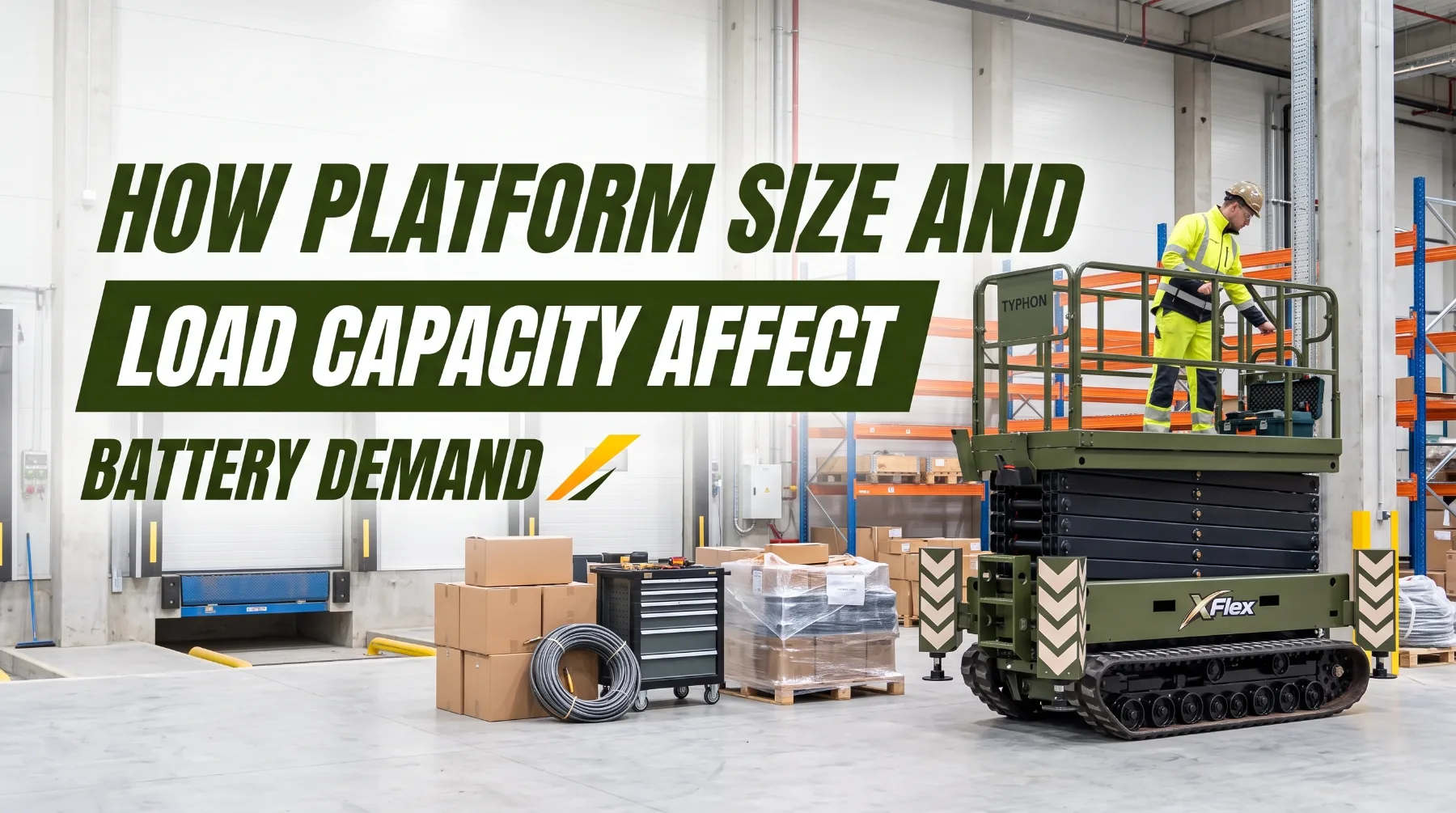 Battery performance is a key consideration when selecting an electric scissor lift, especially when the machine will spend long hours moving, lifting, and carrying workers or materials. Platform dimensions and rated load capacity are often viewed separately from power consumption, but both can influence how much energy the lift requires during daily operation. A larger working area can add weight and increase travel resistance, while heavier loads require more energy during lifting cycles.
These factors become more noticeable as operating conditions become demanding. Frequent lifting, extended travel, and higher platform loads can increase battery consumption and reduce the available working time between charges. Matching the battery system with the lift’s platform configuration, load requirements, travel demands, and expected duty cycle can help maintain consistent performance while avoiding unnecessary battery stress. This guide looks at how platform size and load affect energy use and how to choose a battery capacity suited to actual jobsite requirements.
Why a Bigger Platform Pulls More From the Battery
Platform size is easy to think of purely in terms of workspace, room for more tools, materials, or a second worker. But every square foot of platform is also mass the lift has to raise and lower, over and over, throughout the day. A larger platform is heavier by design, and that extra structural weight becomes a permanent tax on the battery before you’ve loaded a single tool.
The scissor mechanism amplifies this. Raising the platform means the hydraulic system has to lift not just the load but the entire deck, rails, and extension assembly. A wider, longer platform carries more of that dead weight up and down with each elevation change, so the motor driving the hydraulic pump draws more current on every lift. Across dozens of cycles in a shift, those extra draws add up into a meaningful share of the battery’s total energy budget.
Here’s why that matters: two lifts with identical batteries can deliver very different runtimes if one carries a substantially larger platform. The bigger deck isn’t free capacity, it’s a standing energy cost that competes with the work you actually want to accomplish. When you size a battery, the platform’s own weight belongs in the calculation, not just the rated load you plan to carry.
How Heavier Loads Strain the Hydraulic System and Battery
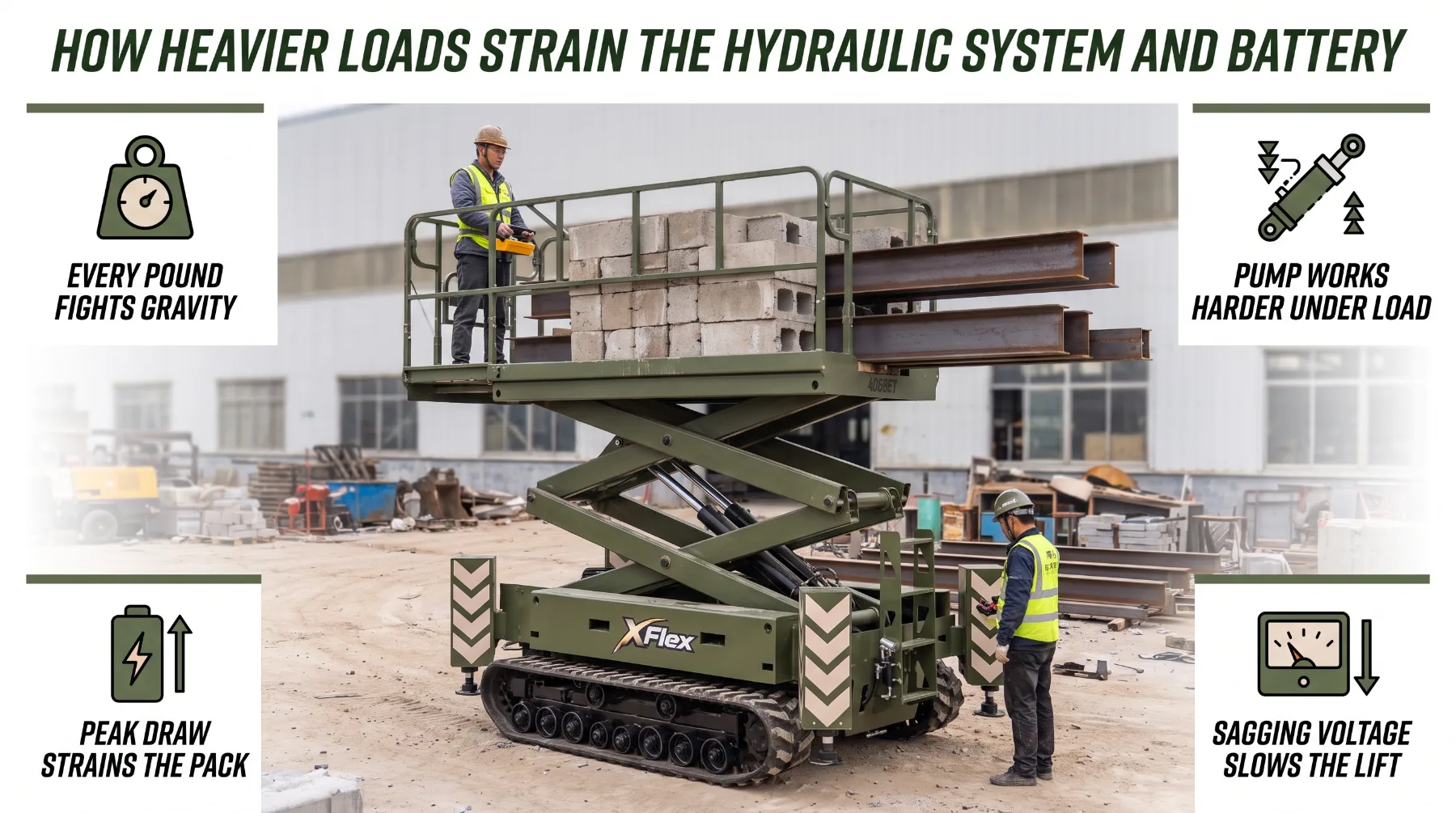 Load capacity is where the connection between weight and energy becomes most obvious. Every pound on the platform is a pound the hydraulic cylinders must raise against gravity, and that lifting force comes directly from the electric motor turning the hydraulic pump. The heavier the load, the harder the pump works, and the more current it pulls from the battery to hold pressure through the lift.
The demand isn’t linear with convenience, either. Lifting a near-maximum load asks the motor for sustained high output through the entire rise, and that peak draw is where batteries feel the strain most acutely. A pack that comfortably handles light loads can sag under repeated heavy lifts, delivering lower voltage exactly when the machine needs the most force. That voltage sag slows the lift and pulls the battery deeper into each discharge cycle.
The takeaway: heavy lifting is the single most demanding thing a scissor lift asks of its battery. A crew that regularly works near the lift’s rated capacity will burn through stored energy far faster than the spec sheet’s optimistic runtime suggests. If your work involves heavy materials at height, the battery has to be sized against those peak loads, not the average.
How Platform Size Affects Travel and Repositioning Energy
Safety and safe operation become especially important when an electric scissor lift is traveling between work areas. A larger platform can increase the machine’s overall weight, requiring the drive motors to work harder during acceleration, ramp travel, and positioning. When workers or materials are also on the platform, the added load can increase energy demand and affect how the lift responds while moving.
The effect is more noticeable on demanding surfaces. Moving a fully loaded lift across rough ground, up an incline, or over a threshold can require more power than traveling on a smooth, level surface. Frequent repositioning can therefore consume more battery energy, while poor load distribution, excessive capacity, or unsuitable travel conditions can create additional safety concerns. Following rated capacity and operating limits helps maintain safe operation while reducing unnecessary battery drain.
When you estimate a lift’s daily energy needs, travel isn’t a rounding error, especially with a large platform. A wide deck that repositions constantly across difficult ground can consume a surprising share of the battery before it does any lifting at all. Factor both the machine’s size and its movement pattern into the energy budget, or the runtime will fall short of expectations.
The Relationship Between Load Capacity and Battery Sizing
Load capacity and battery capacity are two halves of one design decision, and manufacturers treat them that way. A lift rated to carry more weight needs a battery capable of supplying the higher current that heavy lifts demand, not just once but repeatedly across a full shift. This is why higher-capacity machines typically ship with larger battery packs, the battery is scaled to answer the work the platform can generate.
The number that matters here is usable energy against realistic demand. Battery capacity, measured in amp-hours at a given voltage or more directly in kilowatt-hours, defines the total energy budget the machine has to spend. Every heavy lift, every travel move, and the platform’s own weight draw against that budget. A battery sized to barely finish a fresh-out-of-the-box shift with light loads will fall short the moment loads climb or the pack ages, since capacity naturally fades over time.
Bottom line: battery sizing has to answer the peak realistic combination of platform size and load, with margin for aging and daily reserve. A lift that carries heavy loads on a large platform needs genuine energy headroom, because both factors pull from the same pack at the same time. Sizing for the best-case day is how operations end up with mid-shift charging breaks they never planned for.
How to Match Battery Capacity to Platform and Load Demands
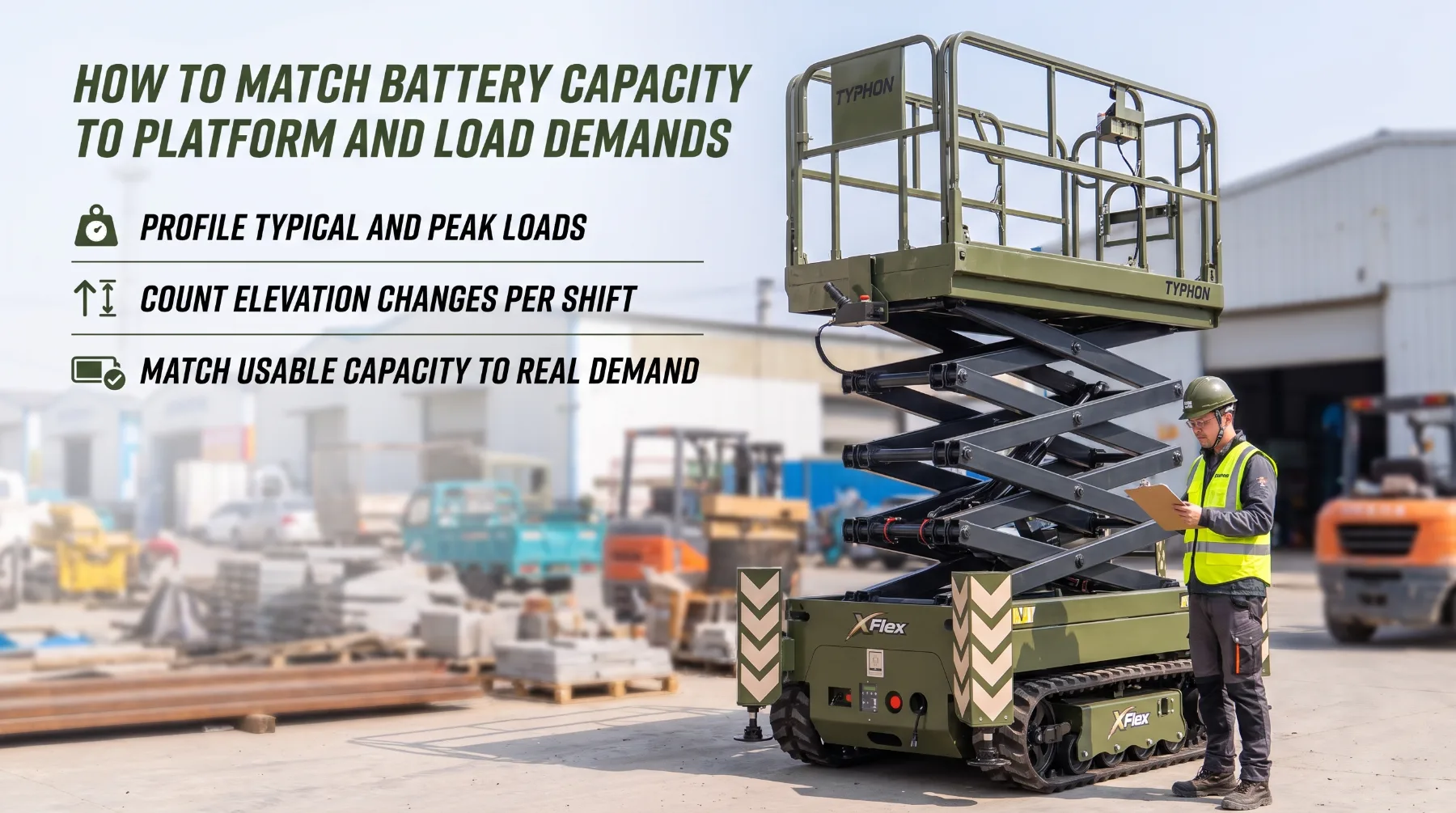 Matching the battery correctly is a disciplined process, not a hopeful guess, and it starts before the purchase. The goal is straightforward: make sure the usable battery capacity comfortably exceeds the energy your real platform and load demands require across the intended run time.
Start by profiling the actual work. Note the typical and peak loads the platform will carry, count the elevation changes across a representative shift, and record how often the lift repositions and over what kind of ground. A big platform that lifts heavy loads and travels constantly sits at the demanding end of the spectrum and needs capacity to match. A light-load, park-and-work job sits at the gentle end and can run leaner.
Next, translate that profile into an energy requirement and weigh it against the manufacturer’s published runtime and capacity figures. Those specifications only become meaningful once you compare them to your measured demand rather than a generic assumption. Build in margin for two realities that trip up buyers: batteries lose capacity as they age, and no crew should drain a pack to empty every shift. A sensible target leaves a comfortable reserve at the end of the hardest day the machine will regularly face.
Finally, account for your charging strategy as part of the match. If the operation can support opportunity charging during breaks, a slightly smaller pack may cover a heavy duty cycle because it tops up through the day. If the lift must run a full shift on a single charge, capacity has to carry the entire load and travel demand unaided. Best of all, verify it on real work: run the loaded lift through a genuine shift and confirm it finishes with reserve. Steady performance under your true platform and load conditions is the clearest sign the battery is matched to the job.
Conclusion
Platform size and load capacity aren’t separate from battery demand, they define it. A larger platform carries permanent structural weight the hydraulics must raise on every cycle and the drive motors must move on every reposition, while heavier loads drive peak current draws that strain the battery hardest of all. Both factors pull from the same energy budget at the same time, so a machine built to carry more on a bigger deck genuinely needs more stored energy to deliver a full, reliable shift.
Put this into practice with a clear sequence. Profile your real loads, elevation changes, and travel pattern; translate that into an honest energy requirement; size the battery with margin for aging and daily reserve; and pair the capacity with a charging strategy that fits your shift. Then confirm it on the work the lift will actually do. Match battery capacity deliberately to your platform size and load demands, and the lift will reward you with dependable working time, longer battery life, and lower cost across its service life.
Frequently Asked Questions
Does a larger scissor lift platform really use more battery power?
Yes. A larger platform is heavier by design, so the hydraulic system draws more current to raise it on every lift cycle, and the drive motors pull more current to move the heavier machine when repositioning. That extra weight is a standing energy cost the battery pays all day, before you add any load. Two lifts with identical batteries can deliver noticeably different runtimes if one carries a substantially bigger platform, which is why the deck’s own weight belongs in any battery sizing decision.
Why does lifting heavier loads drain the battery faster?
Every pound on the platform is the weight the hydraulic cylinders must raise against gravity, and that force comes from the electric motor turning the hydraulic pump. Heavier loads make the pump work harder and pull more current, with the highest draws occurring during near-maximum lifts. Those peak demands strain the battery most, can cause voltage sag that slows the machine, and pull the pack deeper into each discharge. Crews working near the lift’s rated capacity burn through stored energy far faster than the spec sheet’s runtime suggests.
How do I choose the right battery capacity for my platform size and loads?
Start by profiling your real work: note typical and peak loads, count elevation changes across a representative shift, and record how often the lift repositions and over what ground. Translate that into an energy requirement and compare it against the manufacturer’s capacity and runtime figures, then add margin for battery aging and daily reserve so you never drain the pack to empty. Factor in whether you can charge during breaks, and confirm the match by running the loaded lift through a genuine shift to verify it finishes with reserve.