How to Choose the Right TYPHON TERROR Mini Excavator for Your Job
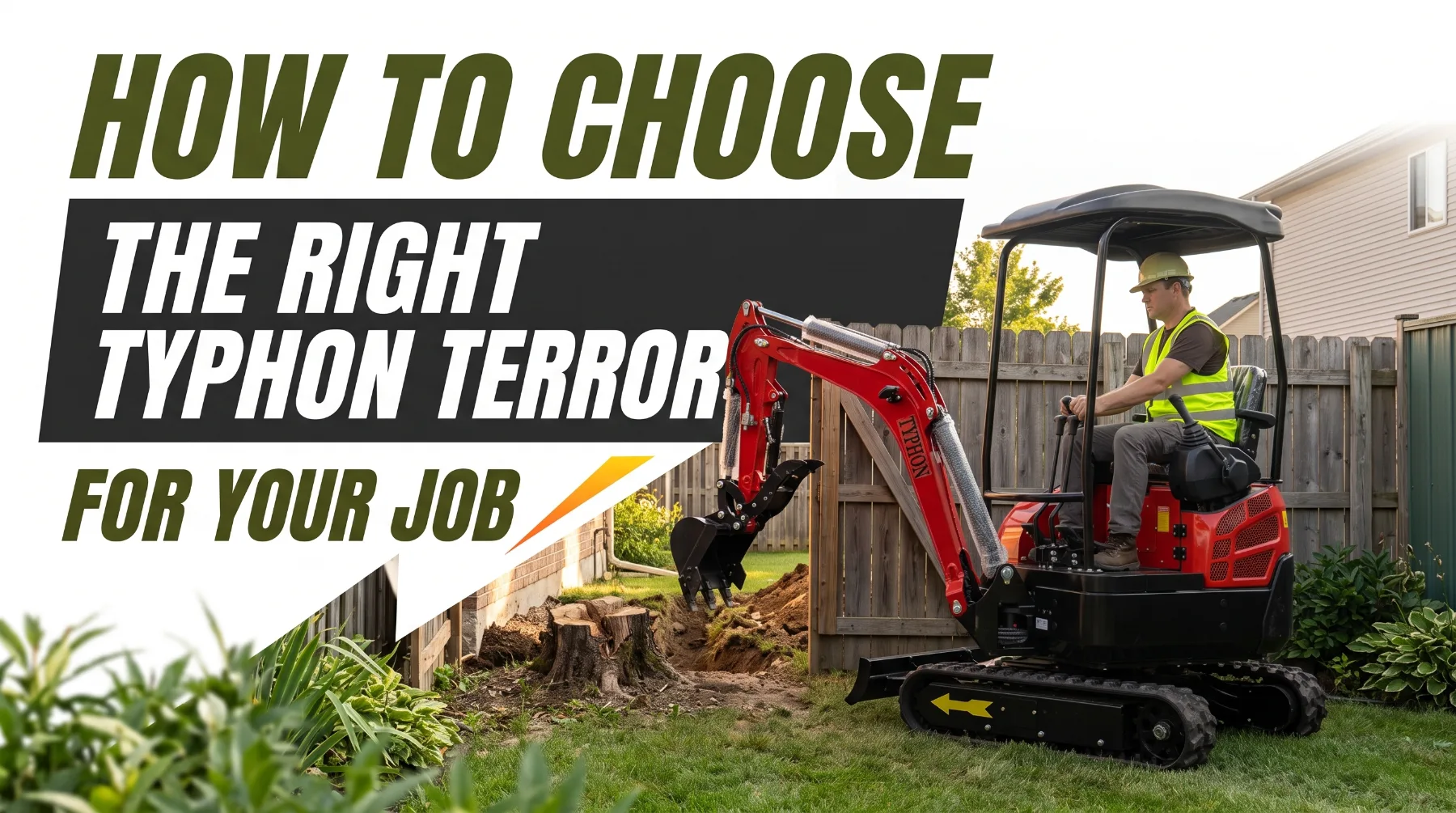
A landscaper stands at the edge of a backyard renovation with a tight side gate, a drainage trench to dig, and a stump that needs pulling before the weekend rush. He rented a machine last month that was too heavy for the soft lawn and too wide to fit through the gate, so half the day went to hand-carrying tools around the house and the job ran long. This time he wants to buy, not rent, and the moment he starts shopping he finds a wall of TYPHON TERROR models, each with a different weight, engine, and attachment set. One reads 1 ton gas, another reads 4,000 pounds diesel, and the prices swing from a few thousand dollars to well over fourteen. Picking the wrong one again would cost him time, money, and a second trip to the dealer, so getting the match right the first time matters more than the sticker.
Choosing the right TYPHON TERROR mini excavator comes down to matching the machine to the work in front of you, and the decision usually rests on a handful of factors you can weigh before you ever place an order. Sizing it correctly keeps the job moving, protects your budget, and puts the right power and reach where you need them. This guide walks through the six factors that decide which TYPHON TERROR fits your job:
- Job size and the weight class that suits it
- Engine type, gas versus Kubota diesel
- Attachment needs and bundle options
- Workspace constraints and track design
- Operator comfort and cabin features
- Budget set against long-term value
Here’s how to weigh each one and land on the right machine.
Sizing the Machine to the Job at Hand
Scope decides everything else, so the first question to settle is how big the work actually is before you look at a single spec. A light day of garden trenching, fence-post holes, and small grading calls for a one-ton class machine, and the TERROR XI at roughly 1 ton with a 13.5 hp gas engine or the TYPHON TERROR ONE STORM in the same weight range handle that load without tearing up soft ground. These smaller diggers move easily, transport on a modest trailer, and cost far less to run on quick residential work.
Heavier projects change the math completely. Foundation digging, utility trenching, and steady commercial excavation reward the extra reach and breakout force of a 4,000 pound machine like the TERROR XVIII with its Kubota D902 diesel, or the TERROR XIX for operators who want retractable tracks on a similar frame. When the work climbs toward 2.7 tons of demanding trench and site duty, the TERROR XXV with its 25.1 hp Kubota D1105 gives you the muscle to keep pace all day. Buying a machine one class too small stalls you on the tough jobs, while going too large wastes fuel and mobility on the light ones. Key takeaway: measure the heaviest job you’ll do regularly, then match the weight class to it, since the right size is the single factor that shapes every other choice you make.
Weighing Gas Against Kubota Diesel Power
Fuel is where two very different TYPHON TERROR philosophies split, and the engine you pick sets the tone for cost, power, and how hard you can push the machine. Gas models built around the Briggs & Stratton 13.5 hp engine, found on the TERROR XI and the ONE STORM, start easily, cost less up front, and suit light, intermittent use where you’re not running the digger for eight straight hours. For a homeowner or a part-time landscaper, that gas engine keeps the purchase affordable and the maintenance simple.
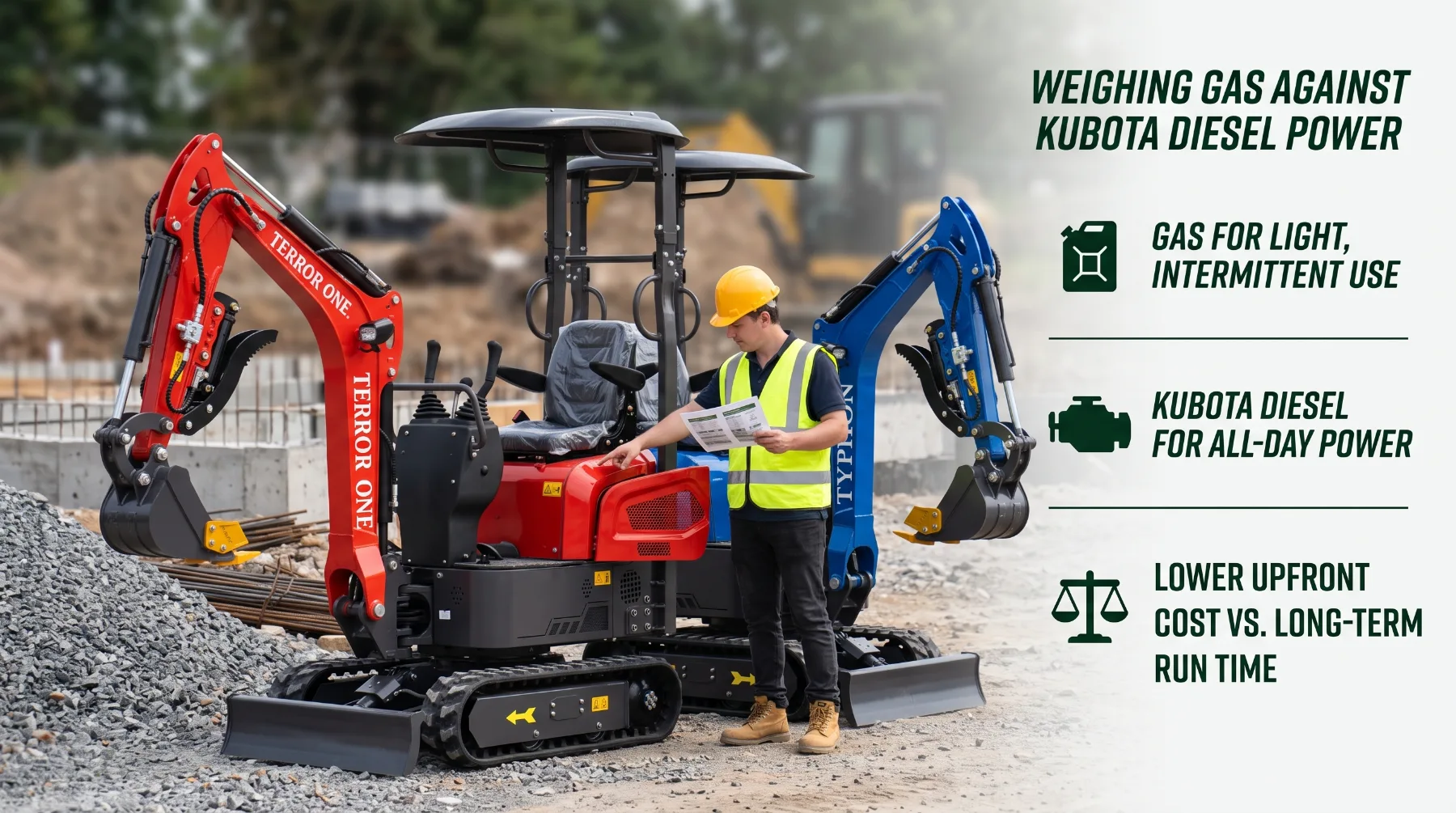
Diesel tells a longer-haul story. The Kubota D902 that powers the TERROR XVIII and XIX, along with the larger D1105 in the TERROR XXV, delivers more torque, better fuel economy under sustained load, and the durability that heavy daily work demands. A diesel engine earns its higher price on job sites where the machine runs hard for full shifts, since it holds power through tough digging and tends to last longer between major services. Choosing gas for a commercial workload leaves you underpowered, while paying for diesel on occasional backyard jobs ties up money you didn’t need to spend. Key takeaway: pick gas for light, occasional work and Kubota diesel for heavy, sustained use, since the engine decides both what the machine can endure and what it costs you to own.
Matching Attachments to the Work You Do
Versatility often separates a good purchase from a great one, and TYPHON TERROR machines lean hard into it with bundles that ship with as many as 13 attachments. A single excavator that arrives with buckets in several widths, an auger, a ripper, a grapple, a thumb, and a rake turns one machine into a small fleet of tools, letting you dig, drill, grab, and grade without renting extras. Many TERROR XI and TERROR XVIII listings include these 13-attachment sets, which is why they move so well with buyers who want to cover a wide range of tasks out of the gate.
Think carefully about which tools your work actually demands. A digging bucket and a hydraulic thumb cover most trenching and material handling, an auger earns its keep on fence and deck jobs, and a grapple or rake pays off in land clearing and cleanup. Paying for a full bundle makes sense when your jobs vary week to week, while a leaner set of attachments keeps costs down if you do the same handful of tasks repeatedly. The key is buying the tools you’ll use, not the longest list on the page. Key takeaway: map your common tasks to specific attachments before you buy, since a well-chosen bundle multiplies what one TYPHON TERROR can do while a padded one just pads the price.
Fitting the Excavator into Tight Spaces
Access controls the job more than most buyers expect, because a machine that can’t reach the work is worth nothing on the day. Narrow gates, fenced backyards, indoor demolition, and crowded urban lots all demand a compact footprint, and this is where the one-ton class TERROR XI and ONE STORM shine, slipping through openings that stop a larger digger cold. Their light weight also spares soft lawns and finished surfaces from the rutting a heavier machine leaves behind.
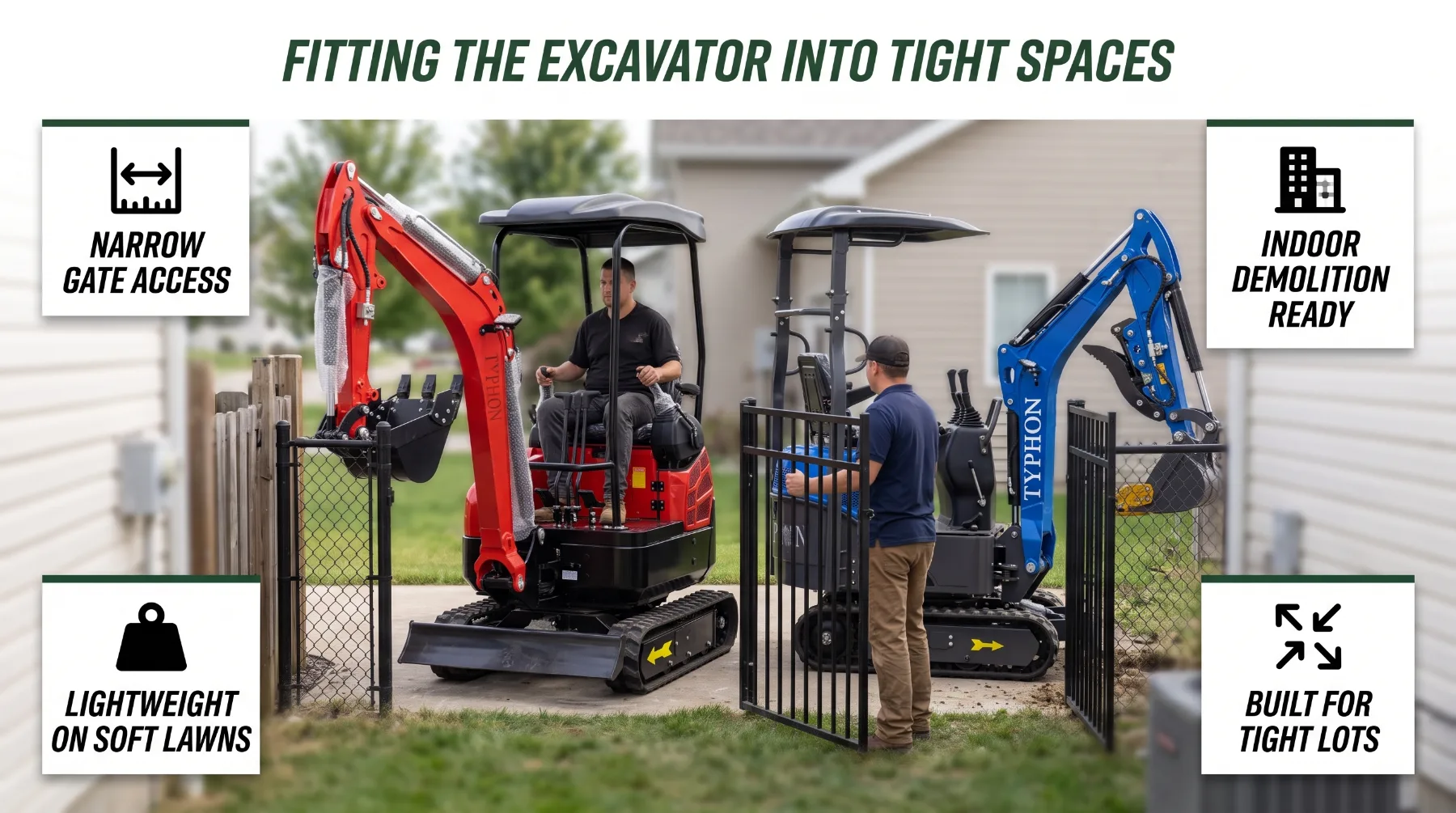
Retractable tracks solve the tight-space problem without forcing you down a size. The TERROR XIX and other models with variable-width undercarriages pull their tracks in to squeeze through a gate, then widen them on site for the stability heavier digging needs. That flexibility lets a 4,000 pound machine work jobs a fixed-width excavator of the same class could never enter. Measure your tightest access point, from gate widths to doorways to the gap between structures, before you commit, since a machine that won’t fit turns into an expensive paperweight parked on the trailer. Key takeaway: measure every access point on your typical sites and favor a compact frame or retractable tracks, since reaching the work is the first requirement any excavator has to meet.
Keeping the Operator Comfortable All Day
Comfort quietly shapes productivity, and it becomes a real factor the moment your jobs stretch into long shifts or run through harsh weather. Open-station TYPHON TERROR models keep the price low and suit short jobs in mild conditions, but hours in the sun, cold, dust, or rain wear an operator down and slow the whole crew. When someone spends full days in the seat, an exposed machine costs you in fatigue even when it saves you at purchase.
Enclosed cabins answer that problem directly. The TERROR XVIII Prestige and similar cabin-equipped models offer an AC and heater cabin that keeps the operator cool in summer, warm in winter, and shielded from the elements year round. A comfortable operator stays sharper, works longer, and makes fewer mistakes, which pays back the cabin’s added cost on any site where the machine runs steadily. For occasional light use the open station is fine, but for daily commercial work the climate-controlled cab quickly justifies itself. Key takeaway: choose an open station for short, mild-weather jobs and an AC and heater cabin for long shifts in tough conditions, since a comfortable operator is a faster and safer one.
Balancing Price Against Long-Term Value
Cost is the factor everyone starts with, yet the smartest buyers judge value rather than the sticker alone. TYPHON TERROR machines span a wide range, with gas one-ton diggers like the TERROR XI landing near $4,200 to $4,900, mid-range bundled models climbing into the $7,000 area, and fully equipped diesel machines such as the TERROR XVIII Prestige and TERROR XIX reaching roughly $12,500 to $14,500. That spread means there’s a TYPHON TERROR for nearly any budget, but the cheapest option isn’t always the least expensive to own.
Look past the purchase price to what the machine returns. A low-cost gas model saves thousands up front and pays off if your work stays light and occasional, while a pricier diesel machine with a cabin and a full attachment set earns its keep through durability, versatility, and comfort on heavy daily jobs. Factor in fuel economy, resale strength, and the cost of renting attachments you’d otherwise own, and the higher-priced machine often proves cheaper over years of real use. Match the spend to how hard and how often you’ll run the digger, not to the lowest number you can find. Key takeaway: weigh purchase price against durability, versatility, and running cost, since the best value TYPHON TERROR is the one that fits your workload rather than simply the one that costs the least.
Conclusion
Choosing the right TYPHON TERROR mini excavator is rarely a guess once you work through the factors in order, from the broadest to the finest. Start with job size, since the weight class you need drives every other decision, then settle the engine question by matching gas to light work and Kubota diesel to heavy daily use. Line up the attachments your tasks actually demand, confirm the machine fits your tightest access points or offers retractable tracks, and decide whether long shifts justify an AC and heater cabin. Finally, weigh price against durability, versatility, and running cost rather than chasing the lowest sticker. Follow that sequence, and you’ll match the machine to the work instead of forcing the work around the machine. Before you buy, measure your heaviest job, your tightest gate, and your yearly hours in the seat so the excavator you choose earns its keep from the first dig. When you’re ready to put a dependable TYPHON TERROR to work, or need help matching a model to your projects, reach out to a trusted equipment specialist who can pair the right machine with the results your jobs depend on.
Frequently Asked Questions
Should I choose a gas or diesel TYPHON TERROR mini excavator?
It depends on how hard and how often you’ll run the machine. Gas models built on the 13.5 hp Briggs & Stratton engine, like the TERROR XI and ONE STORM, cost less up front, start easily, and suit light, occasional work such as backyard trenching and fence-post holes. Kubota diesel models, including the TERROR XVIII, XIX, and XXV, deliver more torque, better fuel economy under sustained load, and the durability of heavy daily work demands. For part-time or residential use, gas keeps the purchase affordable. For full-shift commercial digging, diesel earns its higher price through power and longevity.
What size TYPHON TERROR do I need for my job?
Match the weight class to the heaviest work you’ll do regularly. A one-ton machine like the TERROR XI or ONE STORM handles light garden trenching, small grading, and tight residential lots without tearing up soft ground. Step up to a 4,000 pound TERROR XVIII or XIX for foundation work, utility trenching, and steady commercial digging, and reach for the 2.7-ton TERROR XXV when the job demands sustained muscle. Buying one class too small stalls you on tough jobs, while going too large wastes fuel and mobility on light ones, so size to your typical workload.
Are the 13-attachment bundles worth it?
For most buyers, yes, provided the tools match your work. A bundle that ships with multiple bucket widths, an auger, a hydraulic thumb, a grapple, and a rake turns one TYPHON TERROR into a small fleet of tools and spares you the cost of renting extras. That versatility pays off when your jobs vary week to week. If you repeat the same handful of tasks, though, a leaner attachment set keeps the price down without leaving you short. The goal is to buy the tools you’ll actually use rather than the longest list on the listing.