
Trencher Ultimate Guide
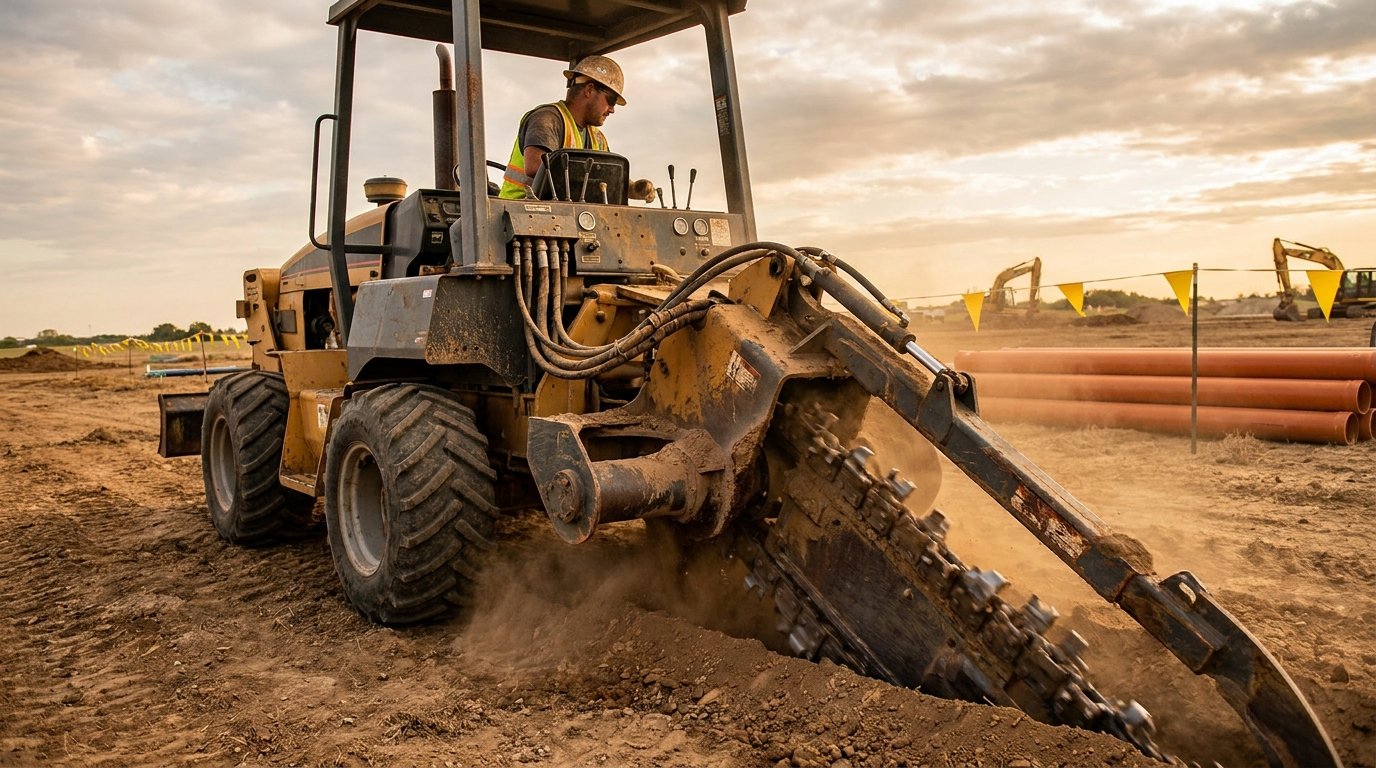
A Beginner-to-Advanced Learning Manual for Operators, Contractors, Utility Workers, Landscaping Teams, Construction Crews, and Heavy Equipment Enthusiasts
Table of Contents
- 1. Introduction & History
- 2. What Is a Trencher?
- 3. Main Components & Anatomy
- 4. How Trenchers Work (Physics)
- 5. Types: Chain vs. Wheel
- 6. Mobility & Attachments
- 7. Applications & Industries
- 8. Specifications & Selection
- 9. Safety & Best Practices
- 10. Basic Operating Instructions
- 11. Soil Conditions & Digging Teeth
- 12. Utility Locating & Hazards
- 13. Trenching Patterns & Efficiency
- 14. Depth & Width Control
- 15. Transporting & Loading
- 16. Maintenance & Service Guide
- 17. Troubleshooting Common Problems
- 18. Buying Guide: Renting vs. Buying
- 19. Future Trends
- 20. Glossary of Terms
1. Introduction & History of Trenching Machines
In the world of heavy industrial equipment, few machines offer the specialized efficiency of a trencher. Designed to create continuous, linear excavations for utility placement, trenchers are the backbone of modern infrastructure. At Trenchers.net, we focus on the intersection of raw mechanical power and precision engineering found in the Typhon lineup.
The mechanical trencher was born from the need to move beyond manual labor for public works. The earliest ancestors were massive, steam-powered wheel units used in the late 19th century for sewer and water line projects. As internal combustion engines evolved, machines became more mobile. The mid-20th century introduced the Chain Trencher, which revolutionized utility installation by allowing for deeper, narrower cuts in diverse soil conditions. Today, Typhon machinery utilizes advanced hydrostatic drives and carbide-tipped teeth, enabling operators to slice through frozen earth and solid rock with surgical accuracy.
2. What Is a Trencher?
A trencher is a piece of construction equipment primarily used to dig trenches for the purpose of laying pipes, cables, or drainage. Unlike a standard excavator, which removes soil in large "buckets," a trencher uses a continuous digging motion—either via a chain or a wheel—to create a trench with uniform width and depth. This specialization results in less "spoil" (removed dirt) and faster installation times for linear utilities.
3. Main Components and Anatomy
Understanding the anatomy of your Typhon machine is essential for both operation and maintenance. Each component is designed to withstand extreme abrasive forces.
- The Digging Boom: The heavy metal arm that is lowered into the ground to determine the depth of the trench.
- Digging Chain: The heart of the machine. It carries the teeth and rotates around the boom to excavate material.
- Digging Teeth: Specialized cutting tools (Shark teeth, Cup teeth) bolted to the chain to handle specific soil geologies.
- The Auger: A screw-like attachment that moves the excavated soil (spoils) away from the edge of the trench to prevent cave-ins.
- The Crumper: A metal shoe located at the rear of the boom that clears loose soil from the bottom of the trench, ensuring a clean bed for pipes or cables.
- Hydrostatic System: The hydraulic power plant that allows for infinitely variable speeds and high-torque performance.
4. How Trenchers Work: The Physics of the Cut
The operation of a trencher is a balance between Chain Speed and Ground Speed. As the digging chain rotates, the teeth impact the soil, breaking it into small fragments. The hydrostatic system manages the torque; if the machine encounters a buried rock, the hydraulic pressure spikes, signaling the operator to adjust the ground speed.
The vertical force ($F_v$) required to penetrate the soil is a function of the tooth geometry and the boom angle ($\theta$). The formula for digging resistance can be expressed as:
$$F_{total} = F_{cutting} + F_{friction} + F_{lift}$$
By maintaining the optimal boom angle (typically between 60° and 65°), the operator ensures that the maximum amount of energy is directed into the cutting face, minimizing machine wear and fuel consumption.
5. Types of Trenchers: Chain vs. Wheel
The method of excavation is the most fundamental choice when selecting a Typhon trencher. While both systems create linear cuts, the geology of the site—from the soft soils of agricultural land to the rocky substrates found in urban infrastructure projects—will dictate which mechanical configuration is most efficient.
Chain Trenchers
Utilizing a digging chain wrapped around a metal boom, these machines resemble massive chainsaws. They are the most versatile option in the heavy equipment industry.
- Variable Depth: Adjustable booms allow for precision at varying depths.
- Hard Ground Performance: Exceptional at handling heavy roots, frozen ground, and solid rock when equipped with carbide teeth.
- Narrow Cuts: Ideal for fiber-optic and residential utility installation.
Wheel Trenchers
These utilize a large metal wheel equipped with digging buckets. They are the preferred choice for high-volume, long-distance production.
- High Speed: Significantly faster than chain models in soft to medium soils.
- Clean Finish: Creates a cleaner trench floor with fewer spoils falling back into the cut.
- Large Excavations: Capable of cutting wider and deeper trenches for major oil, gas, and water pipelines.
6. Walk-Behind, Ride-On, and Attachments
Mobility and footprint are critical considerations for projects in densely populated urban centers like Phnom Penh. The scale of the machine must match the constraints of the work environment.
- Walk-Behind Trenchers: Compact, high-maneuverability units typically ranging from 12 to 30 HP. These are the gold standard for residential landscaping and "last-mile" fiber installation where space is at a premium.
- Ride-On Trenchers: Powerful industrial platforms (40 to 120+ HP) designed for multi-mile utility projects. These often feature 4-wheel steering and can be equipped with front-mounted backfill blades.
- Trencher Attachments: Specialized booms that mount onto Typhon mini excavators or loaders. This offers 2-in-1 versatility for contractors who need to excavate and trench with a single power unit.
7. Common Applications and Industries
Trenchers are essential across several critical sectors, providing a faster and more cost-effective alternative to traditional excavators for linear work.
- Utilities: Laying electrical conduits, high-pressure gas lines, and fiber-optic communication cables.
- Agriculture: Installing sub-surface drainage systems and massive irrigation networks to manage water flow.
- Construction: Creating foundations, footings, and retaining wall trenches for commercial developments.
- Landscaping: Efficiently installing sprinklers, outdoor lighting, and landscape edging with minimal surface disruption.
8. Understanding Specifications & Selection
Deciphering the Technical Guide
When selecting Typhon machinery, pay close attention to these core metrics to ensure the machine matches your project requirements:
- Dig Depth & Width: The absolute maximum vertical and horizontal reach of the digging boom.
- Horsepower (HP): The raw power available to drive the chain through resistant material.
- Chain Tensile Strength: The amount of force the chain can withstand before mechanical failure occurs.
- Ground Drive System: Hydrostatic systems offer smoother speed control compared to mechanical drives.
Selecting the right machine is a balance between Site Geometry and Soil Type. For long, straight utility runs in rural fields, a large wheel trencher offers the best ROI. However, for complex urban layouts with multiple underground obstructions, a compact chain trencher with pilot-operated steering provides the precision needed to avoid utility strikes. At Trenchers.net, we recommend evaluating the "Total Cost of Operation," including tooth wear and fuel consumption, before final fleet acquisition.
9. Trencher Safety Rules and Best Practices
A trencher is a uniquely powerful machine; unlike an excavator that moves in cycles, a trencher provides continuous, high-torque cutting action. This creates significant hazards for both the operator and ground personnel. Safety with Typhon equipment begins with a 360-degree awareness of the "Crush Zone" and the "Ejection Zone"—the area where the chain could throw rocks at high velocity.
The "5-Foot" Rule and Shoring
Never enter a trench deeper than 5 feet (1.5 meters) unless it has been properly shored, shielded, or sloped. In unstable or sandy soils, cave-ins can occur at even shallower depths. Always ensure the machine is parked at a safe distance from the trench edge to prevent "surcharge loading," which can cause the walls to collapse under the machine's weight.
Personal Protective Equipment (PPE)
Operating high-vibration, open-chain machinery requires specialized gear:
- Hearing Protection: Mandatory due to the sustained decibel levels of the chain impacting soil.
- Eye Protection: Wrap-around safety glasses to protect against spoils ejected by the auger.
- Snug-Fit Clothing: Never wear loose clothing or jewelry near a rotating digging chain; entanglement is a leading cause of severe injury.
- Steel-Toed Boots: Essential for ground crews managing spoils or utility placement.
10. Basic Operating Instructions: The Start-Up
Before engaging the cut, ensure the machine is on stable ground. Lower the boom until the teeth are just hovering above the surface.
- Set Engine RPM: High-production trenching requires consistent engine power to maintain hydraulic flow.
- Engage the Chain: Start the chain rotation before the boom touches the ground to prevent "kickback."
- Plunge the Boom: Slowly lower the boom to the desired depth. For Typhon models, the ideal digging angle is typically between 60° and 65° for maximum "Crumper" shoe efficiency.
11. Soil Conditions & Digging Teeth
The ground is never uniform. A single 500-foot run can transition from sandy loam to abrasive sandstone. Not all soil is created equal, and matching your digging teeth to the geology is critical for reducing drivetrain wear and fuel consumption.
- Sandy Soils: Require lower chain speeds to prevent the teeth from "cavitating" and failing to lift spoils.
- Heavy Clay: The stickiness of clay can "gum up" the chain; using self-cleaning cup teeth is essential here.
- Rocky Terrain: Requires the "Sledgehammer" approach—low ground speed and high torque to chip away at the rock face.
Ideal for soft, wet soils and sand. They act as "shovels" to lift material out of the trench and onto the auger.
Carbide-tipped teeth designed to "chip" away at hard-packed clay, frozen ground, and solid rock.
A mix of Cup and Shark teeth, providing a 2-in-1 solution for sites with varying soil layers.
12. Utility Locating and Underground Hazards
The greatest threat to a trenching project is an unmapped utility strike. Gas lines, electrical conduits, and fiber-optic cables often reside just inches below the surface. Every utility installation is a high-stakes search for what isn't on the map.
- Call Before You Dig: Use local utility marking services to flag the site.
- Hand-Digging: Within the "Tolerance Zone" (usually 18-24 inches on either side of a mark), you must use hand tools to expose the utility before the trencher passes.
- Potholing: Use a vacuum excavator or shovel to visually verify the depth of a utility at the point where your trench will cross it. If your Typhon machine's chain "bounces" suddenly, it may have struck a plastic conduit; stop immediately and investigate before continuing.
13. Trenching Patterns and Efficiency
Efficiency is won in the turns. When trenching a complex layout, always dig your longest straight runs first. Intersecting trenches should be approached with the boom raised, then plunged into the existing cut to ensure a seamless connection. This prevents the "dead zone" of unexcavated earth often left at corners.
In urban environments, space is a premium. Using a 12-in-1 Mini Excavator Attachment Combo allows for maximum versatility. When trenching in narrow corridors:
- The "Offset" Cut: Some Typhon models allow the boom to shift to the side, permitting digging flush against walls or curbs.
- Spoil Management: In cities, spoils must be loaded directly into a truck or moved away instantly to keep traffic lanes clear.
- Cross-Trenching: When intersecting an existing trench, always stop the chain and lift the boom to avoid damaging the previously laid utility.
14. Depth, Width Control, and Floating Booms
Precision depth is critical for gravity-fed drainage systems. Typhon trenchers utilize a boom angle sensor to help operators maintain a consistent grade.
- Width Control: The width is determined by the "Tooth Station" layout on the chain. You can widen a trench by adding "spacers" or "outboard teeth" to the chain assembly.
- Depth Management: To maintain a clean trench bottom, the boom must be deep enough for the Crumper shoe to exert light downward pressure, effectively acting as a vacuum for loose dirt.
Advanced operation involves the "Floating Boom" technique. This requires adjusting hydraulic down-pressure in real-time to prevent the machine from "walking" out of the cut when encountering hard rock. Advanced operators use the sound of the engine and the vibration in the controls to detect a stalled chain before the relief valve pops, preserving the longevity of the hydrostatic drive.
15. Transporting and Loading Trenchers
A trencher's unique weight distribution—concentrated primarily in the rear boom and engine block—makes loading and transport a high-risk operation. Whether you are using a Typhon walk-behind or a large ride-on unit, the physics of stability must be respected. Always load the machine with the heavy end pointing uphill to prevent the machine from tipping backward on the ramps.
- Tie-Down Points: Only use the designated D-rings on the chassis. Never secure chains over the boom or the digging chain itself.
- Boom Positioning: The boom should be fully lowered and rested on a wooden block or the trailer deck to relieve hydraulic pressure during transit.
- Weight Distribution: Ensure 60% of the weight is positioned forward of the trailer axles to prevent "trailer sway" at high speeds.
16. Maintenance and Service Guide
A trencher is effectively a high-torque abrasion machine. Because it operates in a constant cloud of dust and grit, its maintenance intervals are more frequent than those of a standard loader or excavator. Professional maintenance for the Typhon fleet focuses on three core systems.
A loose chain can "slap" and damage the boom rollers, while a tight chain causes excessive wear on the drive sprockets. The "Rule of Thumb" is generally two inches of "sag" between the boom and the chain when the boom is horizontal.
Trenchers rely on high-pressure hydrostatic systems. Change hydraulic filters every 250 hours and use a particle counter to ensure the oil remains within ISO cleanliness standards.
Never run teeth until they are flush with the chain link. Worn teeth reduce digging speed and force the machine to work harder, increasing fuel consumption by up to 20%.
17. Troubleshooting Common Problems
In the field, downtime is the enemy of profitability. Operators should be trained to perform basic diagnostics using the Typhon diagnostic port and hydraulic pressure gauges.
| Issue | Potential Cause | Solution |
|---|---|---|
| Chain stops under load | Relief valve setting too low or worn pump. | Check hydraulic pressure at test port; adjust relief valve. |
| Machine "bounces" while digging | Chain speed too high or ground speed too fast. | Reduce RPM and engage the "creep" drive more slowly. |
| Excessive chain vibration | Worn drive sprocket or missing teeth. | Inspect chain assembly; replace worn sprockets immediately. |
18. Trencher Buying Guide: Renting vs. Buying
19. Future Trends in Trenching Technology
The future of trenching is digital and sustainable. We are seeing a rapid shift toward GPS-Guided Depth Control, where the machine automatically adjusts the boom to match a 3D site plan, ensuring perfect drainage slopes without manual surveying. Additionally, Lithium-Ion Electric Trenchers are entering the urban market in places like Phnom Penh, offering silent operation for night-time utility work and eliminating job site emissions.