High-End Mini Excavator Buying Guide: TYPHON KUVUO 2.7 and 4.0
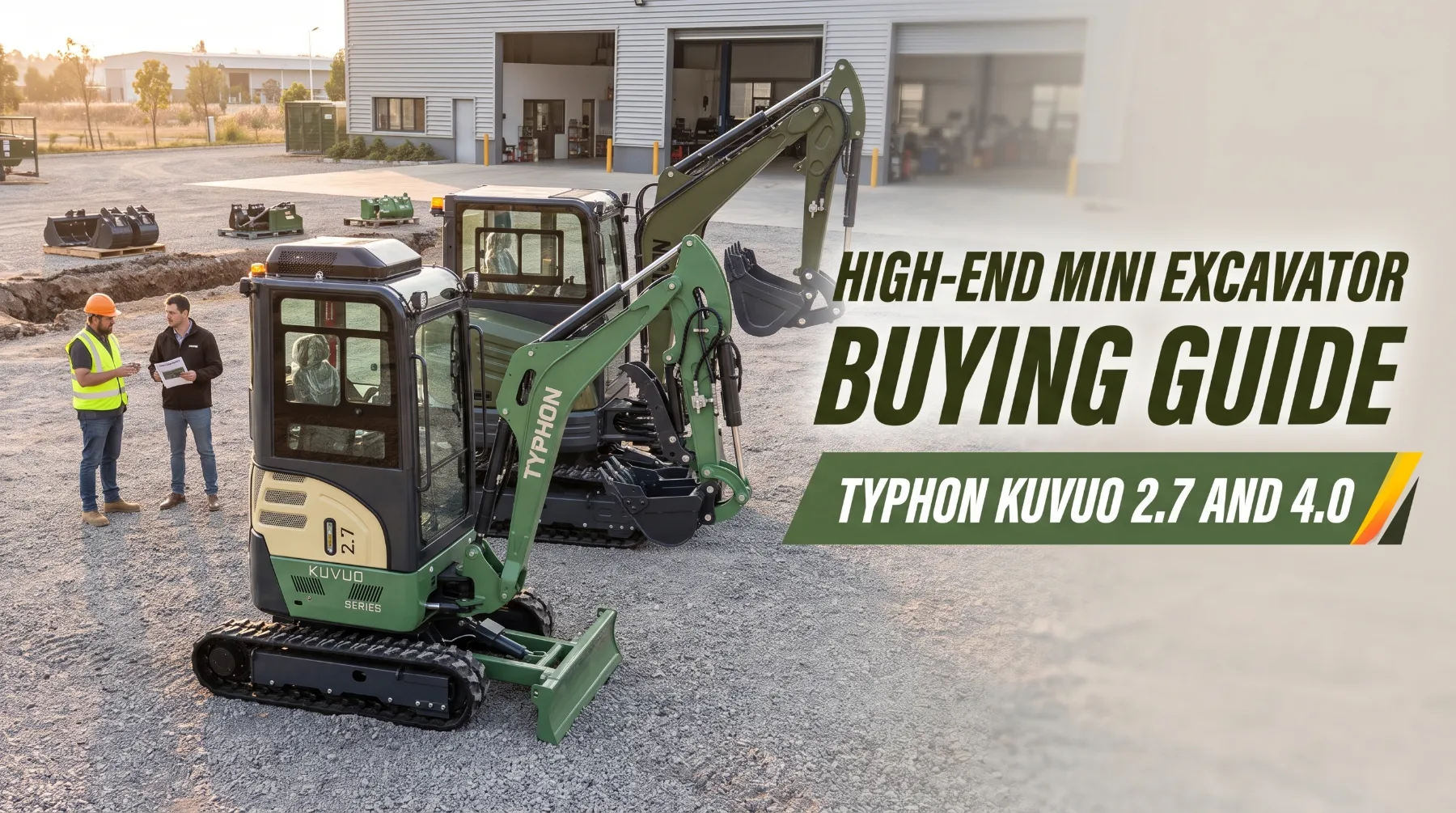
A premium mini excavator is a long-term investment. The machine you choose affects how fast crews finish trenches, how precisely they work near foundations, and how comfortable operators stay through a full shift. Buying one means looking past paint and price to hydraulic technology, digging performance, machine capacity, and operator comfort.
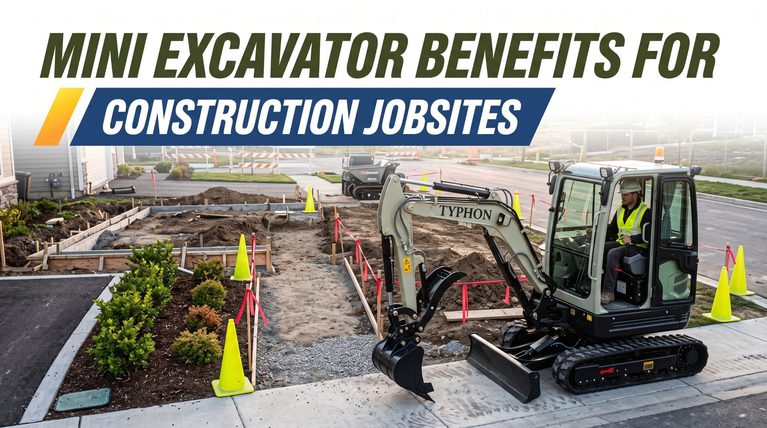
The TYPHON KUVUO 2.7 and KUVUO 4.0 give contractors two premium compact excavators to compare. The KUVUO 2.7 combines a variable-displacement axial piston pump, full pilot controls, and an enclosed cab with heating and air conditioning. The KUVUO 4.0 is the larger model in the series, built for buyers who need greater machine capacity. Knowing how they differ helps you match the right machine to your workload and jobsite conditions.
Compare Hydraulic Pump Technology
The hydraulic pump is the heart of an excavator’s working performance. It turns engine power into the oil flow that moves the boom, arm, bucket, swing, and attachments. Pump design shapes how smoothly the machine responds and how efficiently it uses power.
The KUVUO 2.7 features a variable-displacement axial piston pump rated at 28 ml per revolution, with a total flow of approximately 17.91 GPM at around 2,973 PSI. A variable-displacement pump adjusts its output to match system demand. That supports refined low-speed movement for detailed digging, while still delivering strong flow when the work calls for it.
When comparing the two KUVUO models, review the pump configuration, rated flow, and operating pressure of each. Don’t assume the KUVUO 4.0 shares the same figures as the 2.7. If you run hydraulic attachments such as augers or breakers, also confirm auxiliary flow and pressure against the attachment manufacturer’s requirements.
Key takeaway: The KUVUO 2.7’s variable-displacement axial piston pump supports precise, efficient hydraulic control. Confirm pump type, flow, and pressure on each model you evaluate.
Identify the Features of a High-End Mini Excavator
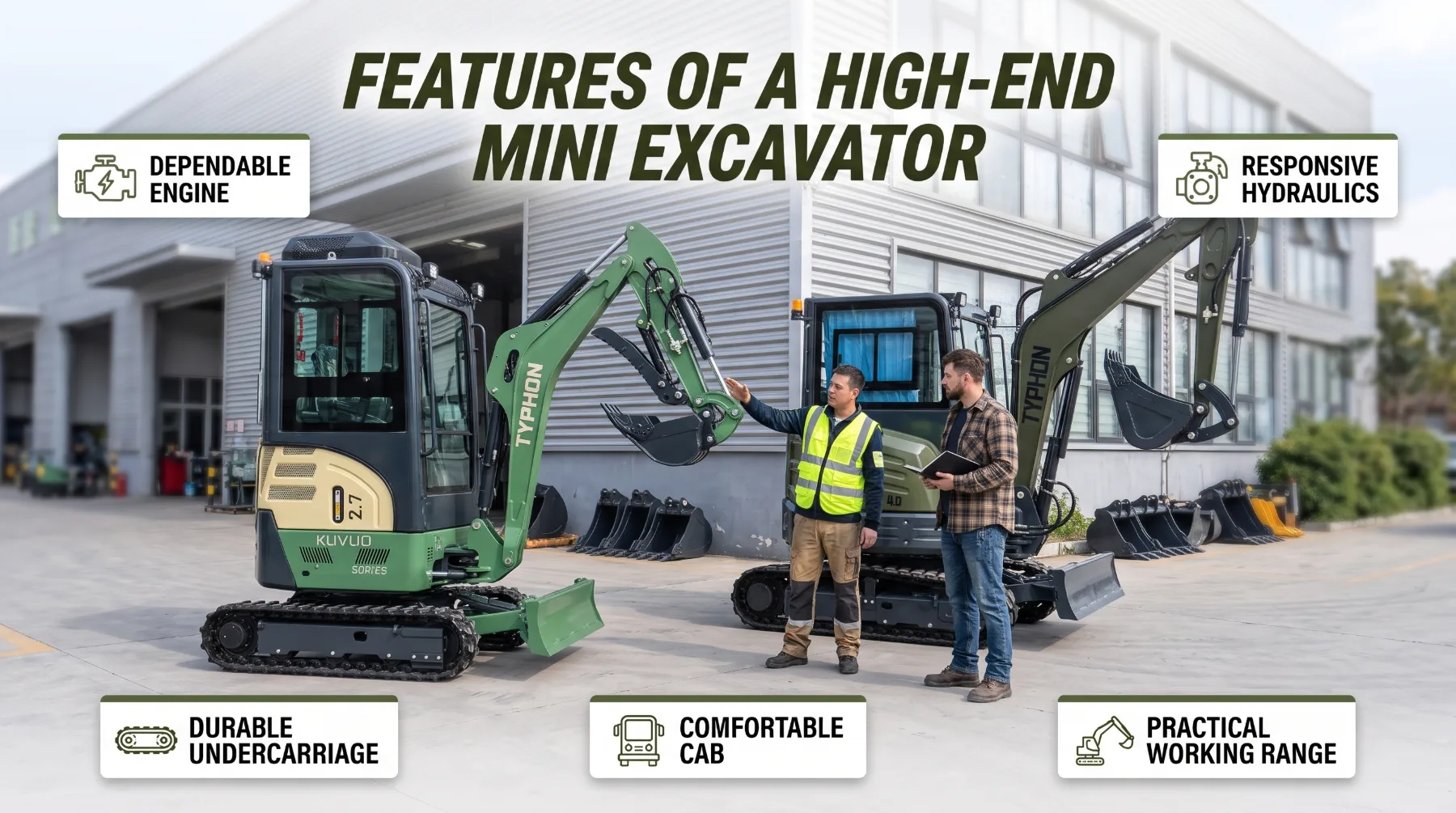
A high-end mini excavator brings together dependable components, responsive hydraulics, practical dimensions, and comfortable controls. No single feature makes a machine premium. Quality shows in how well these systems work together over thousands of operating hours.
Start your evaluation with the core systems. Review the engine, the hydraulic pump, the undercarriage, the working range, and the available cab equipment. Each one affects daily output, operating costs, and how the machine holds up under steady use.
Avoid judging quality by appearance or operating weight alone. A heavier machine is not automatically a better one, and a clean finish says little about hydraulic response. Ask for the specification sheet, compare the documented equipment, and see the machine run before making a decision.
Key takeaway: Judge a premium mini excavator by how its engine, hydraulics, undercarriage, working range, and cab perform together, not by appearance or weight.
Evaluate Digging Depth and Reach
Digging depth and working reach determine what jobs a machine can complete without repositioning. These figures affect foundation work, utility trenching, drainage installation, and material removal. A machine that falls short on either one slows your crew and adds extra moves to every job.
The KUVUO 2.7 has a specified digging depth of approximately 6.07 feet and a reach of approximately 9.94 feet. That range suits a wide variety of residential, landscaping, and utility tasks. It covers many water line, irrigation, drainage, and footing projects common in compact excavation work.
Compare these numbers with the verified specifications for the KUVUO 4.0 before deciding. Then measure them against your real projects. Review the trench depths, setback distances, and spoil placement your typical jobs require, and choose the machine that covers them with practical margin rather than at its absolute limit.
Key takeaway: The KUVUO 2.7 offers about 6.07 feet of digging depth and 9.94 feet of reach. Compare both models against the depths and distances your regular projects demand.
Consider Machine Weight and Jobsite Access
Operating weight, track width, transport dimensions, and stability all influence where an excavator can work. These factors decide whether a machine fits through a backyard gate, sits safely on a finished driveway, or travels on your existing trailer. Overlooking them can turn a capable machine into a poor fit.
A compact machine is easier to position in restricted spaces such as residential yards, narrow side lots, and established landscapes. It also tends to simplify transport and reduce ground disturbance. A larger model, on the other hand, offers advantages for heavier excavation, bigger daily volumes, and greater stability with a loaded bucket.
Before buying, check your typical access points, trailer capacity, and towing setup. Compare the overall width, transport dimensions, and verified operating weight of the KUVUO 2.7 and 4.0. The right choice balances the access your sites allow with the capacity your work requires.
Key takeaway: Match machine size to your jobsite access and transport setup. Compact models fit tight spaces, while larger models support heavier excavation.
Review Cab Comfort and Controls
Operator comfort is a productivity feature, not a luxury. An operator who stays warm, cool, and focused works more accurately through the last hour of a long shift. On a premium mini excavator, the cab and controls deserve the same attention as the hydraulics.
The KUVUO 2.7 includes an enclosed cab with heating and air conditioning. The enclosure reduces exposure to wind, rain, cold, and heat, while climate control helps keep glass clear and operators alert. Sealing and filtration vary by design, so treat the cab as one part of your dust control plan on concrete, rock, or demolition work.
Full pilot controls on the KUVUO 2.7 send low-pressure hydraulic signals to the main valves. That keeps joystick effort light and delivers proportional response, so small inputs produce small, measured movements. Combined with independent boom swing, operators can dig parallel to walls and fences without repositioning. Confirm the exact cab and control equipment on the KUVUO 4.0 configuration you plan to buy.
Key takeaway: The KUVUO 2.7’s enclosed cab, climate control, and full pilot controls support comfortable, precise work. Verify cab and control features on each model in writing.
Match the Model to Your Workload
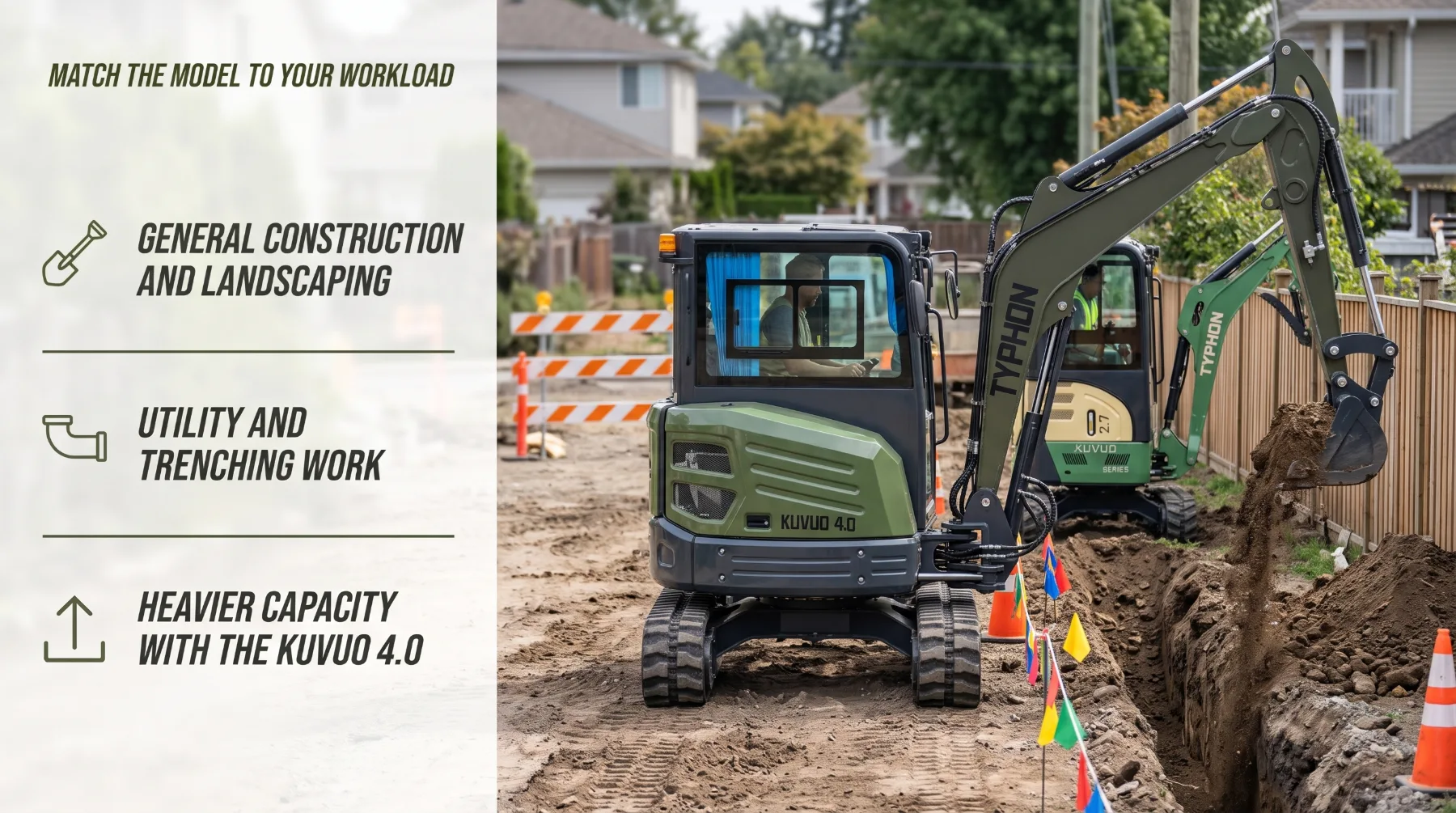
The best mini excavator is the one that fits the work you do most often. Start with an honest review of your projects. Consider typical trench depths, daily material volumes, site access, shift length, and the attachments you run.
The KUVUO 2.7 suits contractors handling general construction, landscaping, trenching, and utility work. Its documented digging range, piston pump hydraulics, and operator-focused cab support detailed work in residential and commercial settings. The KUVUO 4.0 provides a larger option for buyers who need greater machine capacity for heavier digging and bigger production days.
Compare verified specifications for both models against the demands of your regular projects. Then schedule a hands-on demonstration with the operators who will run the machine daily. Have them dig to your usual depth, work through combined movements, and evaluate visibility and comfort. Their feedback often confirms the right choice faster than any specification sheet.
Key takeaway: Choose the KUVUO 2.7 for versatile general and utility work, or the KUVUO 4.0 for greater capacity. Confirm the fit with verified specs and an operator-led demonstration.
Conclusion
Selecting the right high-end mini excavator requires balancing hydraulic performance, working range, machine dimensions, and operator comfort with the demands of your regular projects. The TYPHON KUVUO 2.7 features a variable-displacement axial piston pump designed to support responsive hydraulic operation, a digging depth of about 6.07 feet, and a reach of roughly 9.94 feet. Full pilot controls help operators perform precise movements, while the enclosed cab with heating and air conditioning supports comfort in changing weather conditions. The KUVUO 4.0 extends the series for contractors who require greater capacity for more demanding excavation work. However, the best option depends on your typical digging depth, reach requirements, site access, attachment needs, and transport limitations. Buyers should start by reviewing the tasks their machines perform most often, including trenching, foundation preparation, drainage, landscaping, and material loading. Compare verified specifications and working-range diagrams for both models, and confirm pump technology, hydraulic ratings, cab equipment, and control features for the exact configuration. Transport weight, trailer compatibility, maintenance requirements, warranty coverage, parts availability, and local service support should also factor into the decision. A hands-on demonstration on representative ground allows operators to assess visibility, control response, stability, and digging performance under realistic conditions. Comparing these practical results with the documented specifications helps you select a KUVUO excavator that meets current job requirements while supporting productivity, reliable operation, and future business growth.
Frequently Asked Questions
What makes a mini excavator high-end?
A high-end mini excavator combines advanced hydraulic technology, dependable components, practical digging performance, responsive controls, and operator comfort. Features such as a variable-displacement piston pump, precise joystick controls, and an enclosed cab with heating and air conditioning can improve control and working conditions. Buyers should evaluate how these features work together rather than judging a machine by one specification alone. Reliability, service requirements, and suitability for regular jobsite tasks also contribute to long-term value.
What pump does the KUVUO 2.7 use?
The TYPHON KUVUO 2.7 features a variable-displacement axial piston pump rated at 28 ml per revolution, with approximately 17.91 GPM flow at around 2,973 PSI. This hydraulic system supports digging and other hydraulic functions while adjusting output to operating demands. When comparing excavators, buyers should also consider how the pump works with the engine, control system, and attachments. Confirm published specifications and hydraulic compatibility for the intended applications before making a purchase.
Should buyers compare digging depth or reach first?
Both digging depth and reach are important, but the priority depends on the work you perform most often. Deep trenching and excavation below ground level require sufficient digging depth, while working across wider areas or placing spoil farther from the machine depends more on reach. Buyers should also compare digging height, unloading height, and the overall working range. Reviewing the machine’s working-range diagram against typical project dimensions helps determine whether it can complete tasks without constant repositioning.
Is a larger excavator always better?
No. The best excavator size depends on digging requirements, lifting capacity, jobsite access, transport limits, and workload. A larger machine may offer greater capacity and reach, but it can be harder to transport and maneuver in confined residential areas. A compact model may work more efficiently where space is limited and access routes are narrow. Buyers should compare operating weight, dimensions, digging performance, and transport requirements to choose a machine that fits their regular projects.
Reference: For equipment safety protocols and jobsite regulations, visit the Occupational Safety and Health Administration (OSHA).