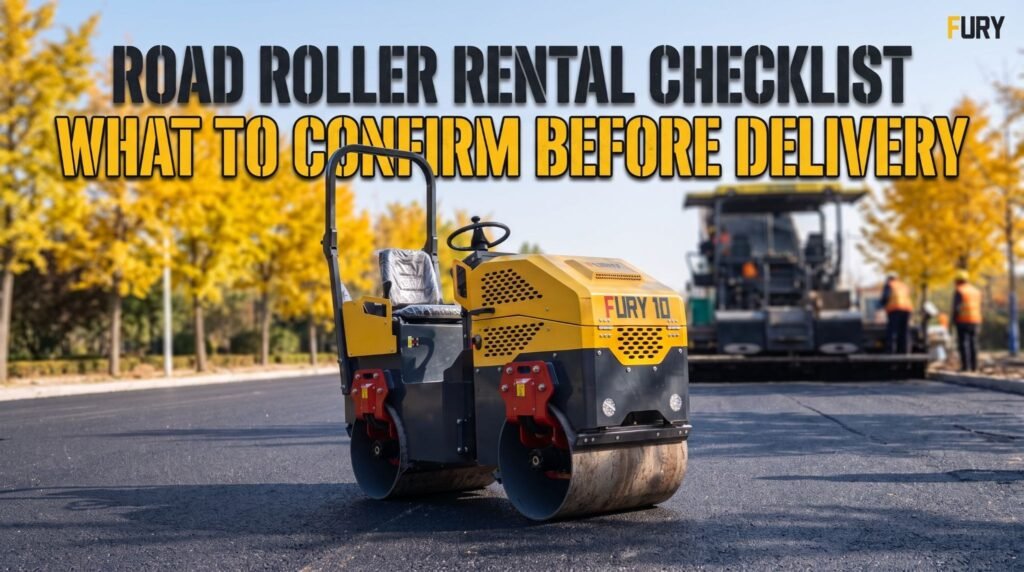
Road Roller Rental Checklist: What to Confirm Before Delivery
A paving contractor books a roller over the phone on a Friday, gives the yard a rough idea of the job, and calls it done. Monday morning the truck arrives with a machine that’s too wide for the site gate, low on hydraulic fluid, and fitted with a smooth drum when the clay subgrade really needed a padfoot. The crew loses half a day sorting it out, the rental clock keeps ticking, and the compaction schedule slips before a single pass gets made. That scramble traces back to one missing step: confirming the details before the roller ever left the yard.
Renting the right road roller isn’t about grabbing whatever’s available. A short checklist run before delivery keeps you from paying for the wrong machine, an unsafe one, or one that can’t even reach the work. This guide walks through matching the roller to your job, confirming its specs, reading the rental agreement, inspecting the machine on arrival, verifying fuel and site access, and lining up operator support. Here’s what to confirm before the delivery truck pulls up.
Matching the Machine to the Work Ahead
Job type points you toward the right roller faster than anything else, so picture the work before you book. Highway and large-lot paving calls for a full-size double drum vibratory roller that covers ground quickly, while a driveway, walkway, or backyard patio suits a compact machine that fits tight access and treads gently near finished surfaces. Naming the job first keeps the yard from sending too much machine or too little.
Material matters just as much as the job. Asphalt and granular fill reward a smooth drum, deep clay and cohesive soils demand a padfoot drum that kneads below the surface, and a finish pass on paving benefits from pneumatic tires that seal the mat. Tell the rental yard exactly what you’re compacting so they load the correct drum type instead of guessing.
Key point: Confirm both the roller type and its size against your job and material before you sign anything. A machine mismatched to the work wastes rental days and rework hours no discount can win back.
Confirming Capacity and Compaction Specs
Numbers decide whether a roller actually performs on your lift, so ask for them upfront. Verify the machine’s operating weight suits your material and lift thickness, since a roller too light won’t reach density and one too heavy can damage a thin base or a finished surface. Match the weight to the work rather than assuming any roller in the class will do.
Vibration capability deserves a direct question too. Confirm the roller offers the amplitude and frequency settings your job needs, because deep base courses call for stronger vibration while thin finish passes want gentle static rolling. Drum width factors in as well, since a wider drum covers ground faster on open jobs while a narrower one navigates tight residential work.
Run through these specs before you commit:
- Operating weight matched to your material and lift depth
- Drum type (smooth, padfoot, or pneumatic) suited to what you’re compacting
- Vibration settings covering both your base and finish passes
- Drum width appropriate to your site’s space and pace
- Compaction rating confirmed against the density your job spec demands
Ask the yard to confirm each figure in writing where they can. Locking the specs down early keeps the delivered machine capable of the density your project actually requires.
Reading the Rental Agreement Line by Line
Terms decide what a rental really costs, so read the agreement before you sign rather than after a surprise charge lands. Confirm the rental period, the daily or weekly rate, and exactly when the clock starts and stops, since some yards bill from dispatch while others bill from delivery. Knowing those boundaries keeps the invoice matching the quote.
Extra costs hide in the fine print more often than crews expect. Check who covers delivery and pickup, whether fuel comes back full or gets billed, and how the yard handles overtime hours if the job runs long. Damage and insurance terms deserve the same attention, so clarify what the deposit covers and whether your own policy or a rental protection plan handles a mishap on site.
What this means: treat the agreement as part of the machine, not a formality. A clear contract read carefully upfront prevents the billing disputes and coverage gaps that turn a smooth rental sour.
Inspecting the Machine on Arrival
Delivery day is your last chance to catch problems before they become your problem, so walk the machine before you sign the receipt. Look underneath for oil or hydraulic leaks, check the drums and scraper bars for excessive wear or damage, and confirm the tires or drive components look sound. A leak or a cracked drum spotted now is the yard’s issue; missed, it can become yours.
Function checks round out the inspection. Start the machine, confirm it runs clean without smoke or unusual noise, and test the drive, steering, and vibration system through their full range. Verify the lights, backup alarm, and any safety systems all work, since a roller that fails a function check on arrival should go back before it ever turns a pass.
Document what you find right there on the spot. Photograph any existing damage, note it on the delivery paperwork, and get the driver to acknowledge it before they leave. Key point: an inspection recorded at delivery protects you from being charged for wear and damage that arrived with the machine, so never wave the truck off without walking the roller first.
Confirming Fuel Type and Site Access
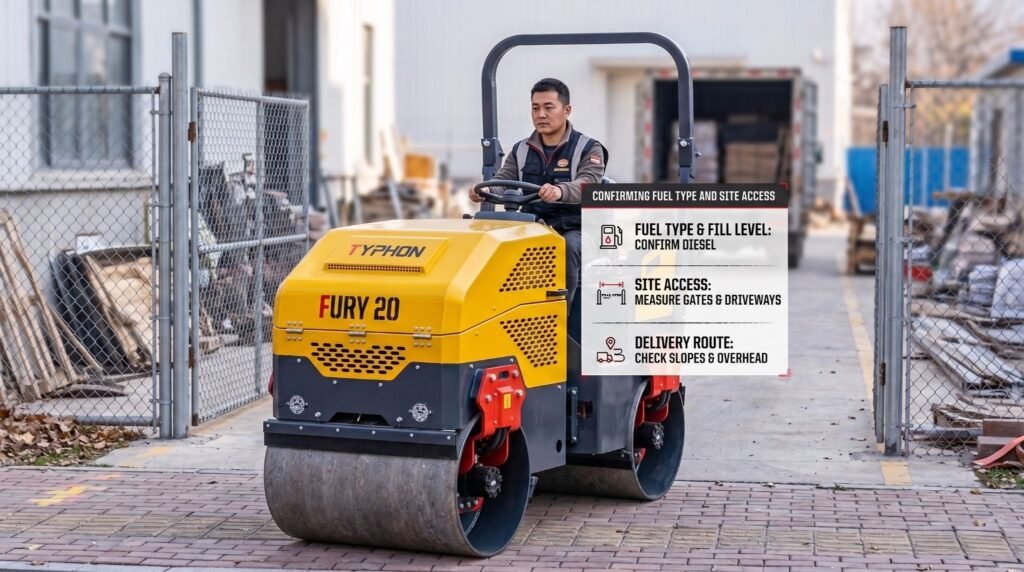
Fuel details prevent a machine that can’t run, so confirm them before delivery. Verify the roller’s fuel type, usually diesel, and clarify whether it arrives full and what condition it must return in. Knowing this ahead of time lets you stage fuel on site so the crew isn’t stalled waiting on a delivery mid-shift.
Access decides whether the machine even reaches the work, and it’s the detail rushed bookings skip most. Measure your site gates, driveways, and any tight passages against the roller’s width, then confirm the delivery truck and trailer can actually reach the drop point. Soft ground, slopes, and overhead obstacles all shape a safe unload, so scout the route the machine will travel before it arrives.
Consider a crew that books a full-size roller for a fenced backyard job only to find the machine won’t clear the side gate. That whole rental day evaporates on a problem a two-minute measurement would have caught. What this means: matching the machine’s dimensions and the truck’s route to your real site keeps delivery from turning into an expensive dead end.
Verifying Operator Training and Support
Operator capability protects both the job and the crew, so confirm who’s running the machine before it arrives. Make sure your operator knows this roller’s controls, vibration settings, and safe operating limits, since an unfamiliar machine handled carelessly damages surfaces, compacts poorly, and risks a rollover on a slope. A quick orientation on any unfamiliar model pays for itself in clean passes.
Support from the rental yard rounds out a smooth job. Confirm what happens if the machine breaks down mid-rental, how fast the yard responds, and whether they supply a replacement to keep you working. Ask for the operator’s manual and a rundown of the machine’s settings, and get a contact number for service questions that come up on site.
Key point: a reliable machine and a knowledgeable operator go together. Line up training and confirm the yard’s support before delivery, and a small hiccup stays a phone call rather than a lost day.
Conclusion
Renting a road roller goes smoothly when you confirm the details before the truck arrives rather than after. Match the machine type and size to your job and material, verify the operating weight, drum type, and vibration settings against the density your project demands, and read the rental agreement line by line so the rate, period, and extra costs hold no surprises. Inspect the roller thoroughly on arrival, document any damage before you sign, and confirm the fuel type and that both the machine and delivery truck can actually reach your site. Line up a trained operator and clear yard support, and a minor issue stays minor. Run this checklist before every rental, and you protect your schedule, your budget, and the quality of the surface you’re paid to deliver. When you’re ready to rent a dependable road roller matched to your job, reach out to a trusted equipment specialist who can pair a reliable machine with the results your projects depend on.
Frequently Asked Questions
What should I check before renting a road roller?
Confirm the roller type and size suit your job and material, verify the operating weight and vibration settings meet your compaction needs, and read the rental agreement for rate, period, and extra costs. On delivery, inspect the machine for leaks and wear, test its functions, document any damage, and confirm the fuel type and that both the machine and truck can reach your site.
How do I know what size road roller I need for my rental?
Match the machine to your job and material. Highway and large-lot paving suits a full-size double drum vibratory roller, while driveways and tight residential work call for a compact machine. Smooth drums finish asphalt and granular fill, padfoot drums compact deep clay, and pneumatic tires seal paved surfaces. Tell the rental yard exactly what you’re compacting so they send the right machine.
What happens if a rented road roller breaks down on the job?
That depends on your rental agreement, so confirm the terms before delivery. Ask the yard how fast they respond to breakdowns, whether they supply a replacement machine to keep you working, and who covers repair costs for normal wear versus operator damage. Keep a service contact number on hand so a mid-rental problem stays a quick phone call rather than a lost day.