Wheel Loader vs Backhoe: Which Machine Is Right for Your Work?
Choosing between a wheel loader and a backhoe can be confusing, especially if you are buying equipment for construction, landscaping, farming, road work, or property maintenance. Both machines are useful. Both can move material. Both can work on different jobsites. But they are not the same machine, and they are not built for the same main purpose.
A wheel loader is mainly built for loading, lifting, carrying, and moving loose materials. It is strong, stable, fast, and very useful when you need to handle soil, gravel, sand, mulch, feed, pallets, or construction material. A backhoe is more of a digging and utility machine. It has a loader bucket in the front and a digging arm in the back, which makes it useful for trenching, small excavation, utility work, and jobs where you need both digging and light loading.
The best choice depends on your work. If most of your job is moving material from one place to another, a wheel loader is usually the better machine. If your job needs digging trenches, breaking soil, and doing small excavation while still having a front bucket, a backhoe may be more practical.
This guide explains the difference between a wheel loader and a backhoe in simple English, so you can choose the right machine for your job.
What Is a Wheel Loader?
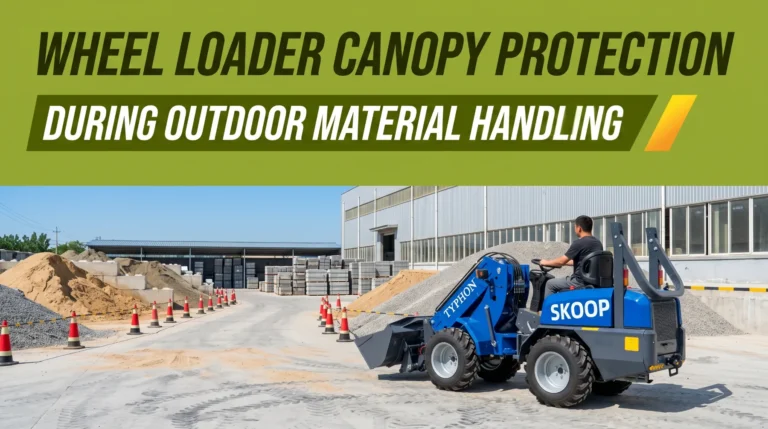
A wheel loader is a heavy equipment machine with four wheels and a large front bucket. Its main job is to scoop, lift, carry, and load materials. You often see wheel loaders at construction sites, farms, landscaping yards, warehouses, road projects, recycling yards, and material handling areas.
The front bucket is the main working tool on a wheel loader. Operators use it to move loose materials such as soil, gravel, sand, snow, wood chips, feed, debris, and construction waste. The machine drives into the material pile, fills the bucket, lifts it, carries the load, and dumps it into a truck, container, pile, or another work area.
Wheel loaders are popular because they are fast and efficient for loading work. They can move more material in less time compared with smaller machines. Many wheel loaders also support attachments, which can make them useful for more than just bucket work. Depending on the model, a wheel loader can use forks, grapples, snow blades, sweepers, bale spears, and other tools.
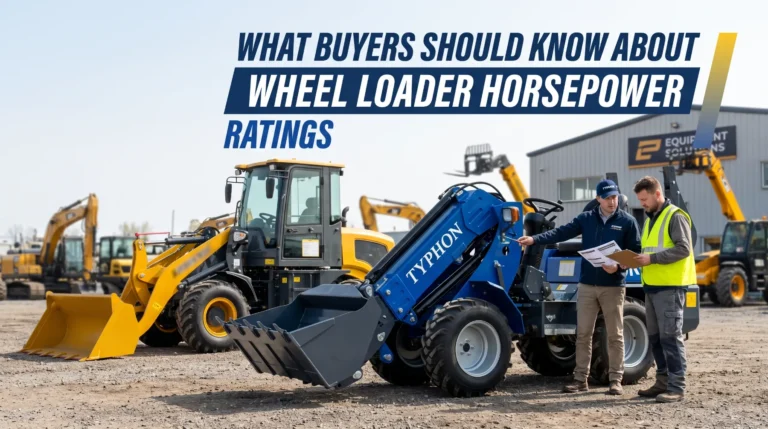
A compact wheel loader is a smaller version that works well in tight spaces, farms, small construction sites, landscaping yards, and property maintenance jobs. A larger wheel loader is better for bigger construction projects, quarry work, roadwork, and high-volume material handling.
The biggest strength of a wheel loader is simple: it is excellent at moving material quickly.
What Is a Backhoe?
A backhoe, often called a backhoe loader, is a machine with two main working ends. The front has a loader bucket, and the rear has a digging arm with a small bucket. This design makes the backhoe useful for both digging and loading.
The front loader bucket can move soil, gravel, sand, and other loose materials. The rear backhoe arm can dig trenches, holes, drainage lines, utility lines, small foundations, and other excavation areas. Because of this, backhoes are often used by contractors, utility crews, municipalities, farms, and property owners who need one machine that can handle several types of jobs.
A backhoe is not usually as strong as a dedicated excavator for digging. It is also not usually as efficient as a wheel loader for loading large amounts of material. But its strength is versatility. It can dig with the rear arm, then turn around and use the front bucket to move or clean up the material.
Backhoes are especially useful for jobs where you do not want to bring two machines to the site. For example, if you need to dig a trench and then backfill it, a backhoe can do both. If you need to repair a small drainage line, remove soil, and clean the area afterward, a backhoe can be a practical choice.
The biggest strength of a backhoe is flexibility for digging and utility work.
Wheel Loader vs Backhoe: Main Difference
The main difference between a wheel loader and a backhoe is their primary purpose.
A wheel loader is mainly designed for loading and material handling. Its front bucket is large, strong, and made for moving volume. It is built to travel around the jobsite, pick up material, carry it, and dump it quickly. It is the better machine when your main work is loading trucks, feeding material, clearing piles, handling pallets with forks, or moving heavy loose material across a work area.
A backhoe is mainly designed for digging plus light loading. It has a front loader bucket, but the rear digging arm is what makes it different. The backhoe can dig trenches, holes, and utility lines. It can also use the front bucket for cleanup and material movement. It is the better machine when your work needs excavation, trenching, and general jobsite utility.
Think of it this way: a wheel loader is stronger for moving material. A backhoe is more useful when digging is part of the job.
This difference matters because many buyers choose the wrong machine by only looking at the bucket. A backhoe has a front bucket, but that does not mean it can replace a wheel loader for heavy loading work. A wheel loader can move material, but it cannot dig trenches like a backhoe unless it has special attachments, and even then, it will not work the same way as a rear backhoe arm.
Before choosing, ask yourself what the machine will do most of the time. If 70% of the work is loading, carrying, and dumping, choose a wheel loader. If 70% of the work is digging, trenching, and small excavation, choose a backhoe.
Which Machine Is Better for Loading Materials?
For loading materials, the wheel loader is usually the better choice.
Wheel loaders are built for repeated loading cycles. They can drive into a pile, scoop a large amount of material, lift it high, and dump it into a truck or storage area. Their design gives them good stability, strong lifting power, and faster movement across the jobsite. This makes them very useful for moving sand, gravel, soil, mulch, feed, snow, and construction debris.
A wheel loader also usually has better visibility toward the bucket during loading work. The front bucket is the main tool, so the whole machine is designed around that task. The operator can work faster and more smoothly when loading trucks or moving piles.
Backhoes can also load material with the front bucket, but they are not as efficient for high-volume loading. The front loader on a backhoe is useful for cleanup, small material movement, and backfilling trenches. But if the job requires constant loading all day, a backhoe may feel slower and less productive compared with a wheel loader.
For example, if you run a landscaping yard and need to load mulch, soil, compost, or gravel into customer trucks, a wheel loader is the better machine. If you operate a farm and need to move feed, manure, soil, hay, or materials around the property, a compact wheel loader may be more efficient. If you manage a construction site and need to load dump trucks or move large piles of material, a wheel loader will usually save more time.
A backhoe is better when loading is only part of the work, not the main task.
Which Machine Is Better for Digging?
For digging, the backhoe is usually the better choice.
A backhoe has a rear digging arm that can reach down into the ground, pull soil toward the machine, and create trenches or holes. This makes it useful for digging utility lines, drainage trenches, small foundations, septic work, landscaping trenches, and repair jobs.
The digging arm gives the backhoe a major advantage over a wheel loader. A wheel loader bucket is made to scoop from the front, not dig deep trenches. It can scrape, level, and scoop loose material, but it is not designed to reach down into the ground like a backhoe arm.
A wheel loader can do light digging or surface-level earthmoving in some conditions, especially with the right bucket or attachment. But it is not the right machine for deep trenching or precise excavation. If your job requires digging a narrow trench for a pipe, cable, or drainage system, the backhoe is the more practical machine.
Backhoes are also useful for working in places where you need to dig and then quickly use the front bucket to move soil. For small contractors, this can be very convenient. The operator can dig with the rear arm, rotate the seat, then use the front loader to move or backfill material.
However, if digging is your main work every day, you may also compare a backhoe with a mini excavator or full-size excavator. A dedicated excavator is often better for serious digging. But between a wheel loader and a backhoe, the backhoe clearly wins for excavation work.
Attachments and Jobsite Flexibility
Both wheel loaders and backhoes can use attachments, but they are flexible in different ways.
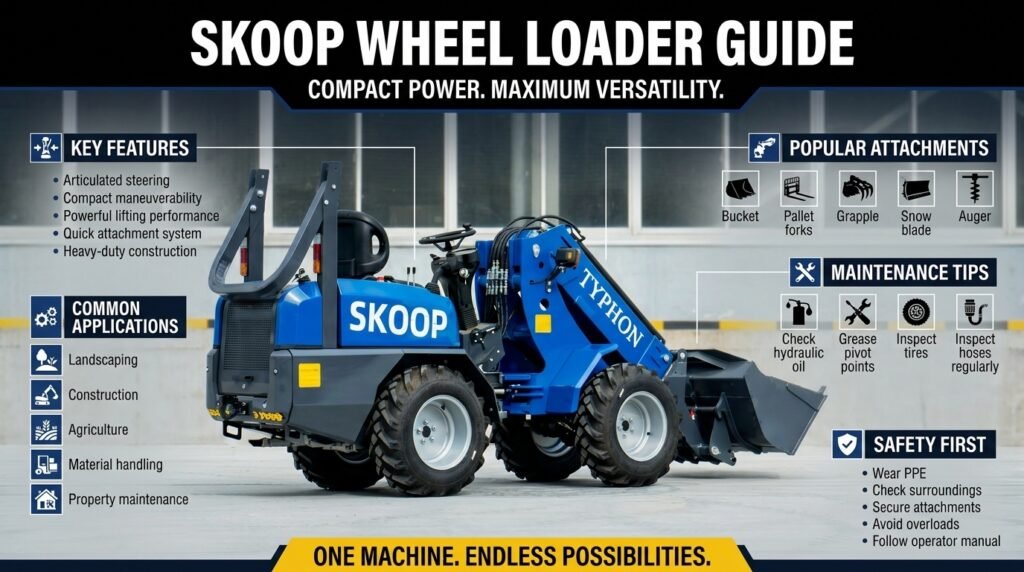
A wheel loader can often use attachments such as pallet forks, material buckets, snow pushers, grapples, sweepers, bale spears, and blades. This makes it useful for farms, warehouses, construction yards, landscaping businesses, and snow removal work. With pallet forks, a wheel loader can move materials like pallets, blocks, lumber, and bagged goods. With a grapple, it can handle brush, logs, scrap, or bulky materials. With a snow blade or snow pusher, it can clear roads, parking lots, and yards.
This makes the wheel loader a strong choice for businesses that need material handling more than excavation. It can become a loading machine, lifting machine, cleanup machine, and yard machine depending on the attachment.
A backhoe can also use attachments on both ends. The rear digging arm may support buckets of different sizes, hydraulic breakers, augers, rippers, and other digging tools. The front loader can use buckets, forks, and other front tools depending on the machine design. This makes a backhoe useful for trenching, breaking, drilling, lifting, and cleanup work.
The difference is the type of flexibility. A wheel loader is flexible for handling materials. A backhoe is flexible for digging and utility work.
For example, if you need to move pallets, load gravel, clear snow, carry feed, and handle loose material, a wheel loader gives you better daily productivity. If you need to dig trenches, repair underground pipes, drill post holes, break small concrete areas, and backfill soil, a backhoe gives you better jobsite flexibility.
The right attachment system can make either machine more valuable, but the base machine still matters. Do not choose a backhoe only because it can carry a bucket. Do not choose a wheel loader only because it can scrape soil. Choose the machine based on the work it was mainly built to do.
Wheel Loader vs Backhoe for Construction Work
In construction, both machines can be useful, but they support different tasks.
A wheel loader is better for moving materials around the site. It can load trucks, carry gravel, move sand, transport soil, clear debris, and support road base preparation. On larger sites, wheel loaders are often used to keep materials moving efficiently. They are especially useful when there are repeated loading cycles throughout the day.
A backhoe is better for smaller excavation and utility work. It can dig trenches for pipes, electrical lines, drainage systems, and small foundations. It can also use its front bucket to move soil after digging. This makes it useful for contractors who need one machine to handle mixed tasks on smaller projects.
For roadwork, a wheel loader may be better for moving aggregate, loading materials, and clearing areas. A backhoe may be better for drainage repair, roadside digging, and utility trenching.
For building construction, a wheel loader may be better for site cleanup, loading trucks, and moving material. A backhoe may be better for digging trenches, small footings, and underground line work.
If your construction business already has an excavator, a wheel loader may be a better support machine because it improves loading and material movement. If you do not have any digging machine and need one machine for many small jobs, a backhoe may be more useful.
Wheel Loader vs Backhoe for Farm Work
On farms, the wheel loader is often a strong choice because many farm jobs involve lifting, carrying, and loading.
A compact wheel loader can move feed, manure, soil, hay, gravel, pallets, and other farm materials. It can also work with attachments like pallet forks, bale spears, buckets, and snow tools. The machine can move around the property quickly and handle daily material tasks with less effort.
For livestock farms, a wheel loader can help clean barns, move bedding, load feed, and handle manure. For crop farms, it can move pallets, seed bags, soil, fertilizer, and materials around the yard. For orchards or property farms, compact wheel loaders can help with general maintenance, loading, and cleanup.
A backhoe can also be useful on a farm, especially if the farm needs digging work. It can dig drainage trenches, repair water lines, remove stumps, dig holes, and maintain small ditches. If the farm has many underground utility or drainage tasks, a backhoe can be valuable.
The choice depends on daily use. If you mostly move material every day, choose a wheel loader. If you mostly dig or repair land and utilities, choose a backhoe. Many farms may benefit more from a wheel loader because material handling is usually more frequent than trenching.
Wheel Loader vs Backhoe for Landscaping
For landscaping, both machines can be useful depending on the type of business.
A wheel loader is better for moving mulch, soil, gravel, stone, compost, and pallets. It is also useful in landscape supply yards where materials are loaded into trucks or trailers many times per day. A compact wheel loader can move around tighter areas and reduce manual labor.
For hardscaping work, a wheel loader with forks can help move pallets of pavers, blocks, stones, and other materials. With a bucket, it can move base material, sand, and soil. This makes it very useful for businesses that handle a lot of materials.
A backhoe is better for digging tasks in landscaping. It can dig holes, trenches, drainage lines, pond areas, and small excavation zones. It can also remove stumps and help with land shaping. If the landscaping work includes drainage installation, utility lines, or frequent digging, a backhoe can be a smart choice.
If your landscaping business mainly installs materials and moves heavy loads, a wheel loader may give better productivity. If your business does more excavation, trenching, and drainage work, a backhoe may be better.

Wheel Loader vs Backhoe for Property Maintenance
For large property owners, resorts, municipalities, and maintenance teams, the choice depends on the type of work happening most often.
A wheel loader is useful for moving materials, clearing debris, maintaining roads, loading trucks, moving pallets, and handling snow or storm cleanup. It is a strong general material machine for properties with yards, roads, storage areas, and outdoor work.
A backhoe is useful for repairing drainage, digging around utilities, maintaining ditches, and handling small excavation jobs. It can be very practical for municipalities or maintenance crews that need to respond to different types of repair work.
If the property often needs material movement, road maintenance, cleanup, and loading, a wheel loader is usually better. If the property often needs digging, drainage repair, and trench work, a backhoe is better.
Operator Comfort and Ease of Use
A wheel loader is generally easier to understand for loading work. The operator drives, scoops, lifts, carries, and dumps. For someone who mainly needs to move material, the workflow is simple and efficient.
A backhoe can take more skill because the operator uses both the front loader and the rear digging arm. Digging with a backhoe requires control, patience, and practice. The operator must understand how to position the machine, use stabilizers, control the rear arm, and dig safely.
This does not mean a backhoe is too difficult. Many operators use backhoes every day. But for a beginner buyer, a wheel loader may feel simpler if the job is mainly material handling.
Visibility is also different. A wheel loader gives strong front-focused visibility for bucket and loading work. A backhoe requires the operator to work from both directions. When digging, the operator faces the rear. When loading, the operator faces the front.
For businesses training new operators, the simpler machine may save time. If you need fast loading and general yard work, a wheel loader may be easier to train on. If your work requires digging, the backhoe is worth learning.
Speed and Productivity
Wheel loaders are usually faster for moving materials around a jobsite. Their design supports travel, loading cycles, and repeated carrying work. They can scoop material, move it across the site, and dump it quickly.
Backhoes are productive in a different way. They save time when the job requires both digging and loading. Instead of bringing a separate excavator and loader, one backhoe can handle smaller mixed tasks. This can be efficient for small contractors or repair crews.
But if the task is only loading, the backhoe is usually not as fast. If the task is only digging, a dedicated excavator may be faster than a backhoe. The backhoe’s advantage is doing multiple tasks with one machine, not being the best at every single task.
For high-volume loading, choose a wheel loader. For mixed utility work, choose a backhoe.
Lifting Power and Stability
Wheel loaders are usually stronger and more stable for lifting and carrying materials. Their frame, tires, bucket design, and weight balance are built around front-end loading. This makes them useful for heavy material handling.
Backhoes can lift with the front loader and sometimes with the rear arm, but lifting is not their main strength compared with a wheel loader. They are more focused on digging and utility work. A backhoe can handle many lifting tasks, but it may not be the best choice for daily heavy material handling.
If you need to load trucks, carry pallets, move large amounts of material, or lift heavy loose material often, a wheel loader is usually the safer and more productive choice. If lifting is occasional and digging is more important, a backhoe can still work well.
Always check the machine’s rated lifting capacity, bucket capacity, operating weight, reach, and attachment limits before buying. Do not guess based on machine size alone.
Cost and Buying Decision
A wheel loader may be a better investment if it will be used every day for loading and material handling. The time saved from faster loading cycles can make the machine more valuable over time. Businesses that move material daily often get strong value from a wheel loader.
A backhoe may be a better investment if you need one machine for many different job types. Small contractors, farms, municipalities, and property owners may like a backhoe because it can dig, load, backfill, and clean up without needing multiple machines.
The mistake is buying based only on price. A cheaper machine is not always cheaper if it slows down the work. A more expensive machine is not always better if it does not match the job. The best machine is the one that does your main work efficiently and safely.
Before buying, think about your daily tasks, jobsite size, material type, digging needs, lifting needs, transport needs, operator skill, attachment needs, and maintenance support.
Maintenance and Long-Term Use
Both wheel loaders and backhoes need regular maintenance. This includes checking fluids, grease points, tires, hydraulic systems, filters, pins, bushings, brakes, lights, and attachments.
A wheel loader often has heavy wear around the bucket, tires, lifting arms, hydraulic cylinders, and articulation area. Since wheel loaders are used for repeated loading, the bucket edge and loader arms should be inspected regularly.
A backhoe has more working parts because it has a front loader and rear digging arm. The rear boom, dipper, bucket, stabilizers, pins, bushings, and hydraulic lines all need attention. If the backhoe is used for hard digging, these parts can wear over time.
For long-term ownership, simple maintenance habits matter. Operators should check the machine before work, avoid overloading, use the right attachment, grease moving joints, and repair small issues before they become expensive problems.
If your team is small or new to equipment ownership, consider which machine your team can maintain properly. A backhoe may need more attention because it has more working functions. A wheel loader may be simpler if your main work is loading and carrying.
Which Machine Is Better for Small Businesses?
For small businesses, the best choice depends on the service you offer.
If you run a landscape supply yard, farm, warehouse yard, snow removal business, or material handling operation, a wheel loader may be better. It helps with daily loading, carrying, lifting, and cleanup. It can reduce manual labor and improve speed.
If you run a small construction, utility repair, drainage, or excavation business, a backhoe may be better. It gives you digging ability and front bucket support in one machine. This is helpful when you need to complete different types of work without bringing multiple machines.
For a business that does both material handling and digging, the decision becomes harder. In that case, look at which task makes more money or happens more often. If you dig trenches every week but only load material sometimes, choose the backhoe. If you load material every day and only dig sometimes, choose the wheel loader.
Common Mistakes When Choosing Between a Wheel Loader and Backhoe
One common mistake is thinking a backhoe can replace a wheel loader for heavy loading work. A backhoe has a front bucket, but it is not usually as productive as a wheel loader for constant loading. If your work is mainly moving large amounts of material, a wheel loader is the better tool.
Another mistake is thinking a wheel loader can replace a backhoe for digging. A wheel loader can scoop and scrape, but it does not have the rear digging arm needed for trenching and deep excavation. If digging is important, a backhoe is more suitable.
Some buyers also choose based only on machine size. A bigger machine is not always better. A large wheel loader may not fit a small yard. A backhoe may not be efficient if the site only needs loading. Match the machine size to your space, material, and work style.
Another mistake is ignoring attachments. The right attachment can make a machine much more useful. But attachments should support the machine’s main purpose, not force the machine to do work it was not designed for.
Wheel Loader vs Backhoe: Which One Should You Choose?
Choose a wheel loader if your main work is loading, lifting, carrying, and moving material. It is the better choice for gravel, sand, soil, mulch, feed, pallets, snow, debris, and general material handling. It is faster and more efficient when the job requires repeated loading cycles.
Choose a backhoe if your main work includes digging, trenching, utility repair, drainage work, and small excavation. It is more flexible for jobs where you need a rear digging arm and a front bucket in one machine.
For construction material handling, farms, landscaping yards, warehouses, and property maintenance, a wheel loader is often the better daily-use machine. For utility work, trenching, small excavation, and mixed contractor jobs, a backhoe may be the better choice.
The simple rule is this: if you move more than you dig, choose a wheel loader. If you dig more than you move, choose a backhoe.
Conclusion
The wheel loader vs backhoe decision comes down to the type of work you do most often. A wheel loader is built for loading, lifting, carrying, and moving materials quickly. It is strong, stable, and productive for material handling jobs. A backhoe is built for digging and utility work while still offering front bucket support. It is useful when you need one machine that can dig, backfill, and handle small loading tasks.
For buyers who work with soil, gravel, mulch, pallets, feed, snow, or jobsite materials every day, a wheel loader is usually the better choice. For buyers who need to dig trenches, repair drainage, install utilities, or handle small excavation jobs, a backhoe is usually more practical.
Before buying, think about your real daily work, not just what the machine looks like. The right machine should save time, reduce labor, improve safety, and match your jobsite needs.