
Trencher vs Skid Steer Trencher Attachment: Which One Should You Choose?
Trenching is a common job in construction, landscaping, farming, utility work, drainage installation, and property maintenance. Whether you are installing pipes, cables, irrigation lines, drainage channels, or fence systems, the right trenching equipment can save time and reduce labor.
Two common options are a dedicated trencher and a skid steer trencher attachment.
A dedicated trencher is a machine built mainly for trenching. A skid steer trencher attachment is a tool that connects to a skid steer loader or compact track loader, turning that loader into a trenching machine.
Both options can dig trenches, but they are not the same. The better choice depends on your job type, soil condition, trench size, equipment budget, and whether you already own a skid steer.
For buyers who already use a compact loader, a skid steer trencher attachment can be a smart way to add trenching power without buying another full machine. For users who trench every day, a dedicated trencher may still be the better long-term choice.
What Is a Dedicated Trencher?
A dedicated trencher is a machine designed mainly for cutting trenches into the ground. It usually has a digging chain, teeth, boom, engine, and drive system built specifically for trenching work.
Dedicated trenchers come in different sizes. Some are small walk-behind trenchers for landscaping and irrigation work. Others are larger ride-on trenchers for utility installation, drainage systems, and long trenching projects.
A dedicated trencher is often used for:
- Irrigation lines
- Drainage pipes
- Electrical cables
- Fiber optic lines
- Water lines
- Gas line preparation
- Farm drainage
- Landscape trenching
- Utility installation
The main point of a dedicated trencher is simple: it is built to dig trenches efficiently and consistently.
What Is a Skid Steer Trencher Attachment?
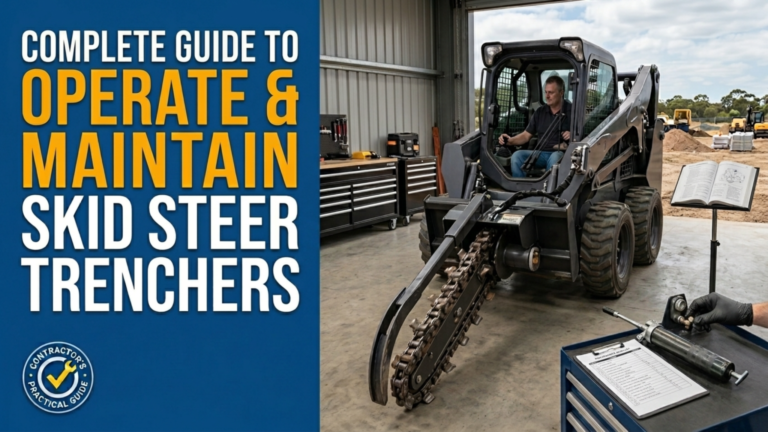
A skid steer trencher attachment is a trenching tool that connects to the front of a skid steer loader or compact track loader. It usually uses the machine’s hydraulic system to power the trenching chain.
Instead of buying a separate trenching machine, the operator connects the attachment to the loader and uses the skid steer as the power unit.
A skid steer trencher attachment is useful for:
- Site preparation
- Drainage trenching
- Utility trenching
- Irrigation line work
- Landscape jobs
- Farm trenching
- Small construction projects
- Cable or pipe installation
- General digging support
This option is popular because skid steers are already flexible machines. A skid steer can use buckets, forks, grapples, sweepers, augers, breakers, and trenchers. That means one machine can support many different jobs with different attachments.
Dedicated Trencher Advantages
A dedicated trencher has several strong advantages, especially for users who do trenching work often.
1. Built Specifically for Trenching
The biggest advantage of a dedicated trencher is that the whole machine is designed for trenching. The weight balance, controls, chain position, engine power, and visibility are made for trench work.
This can make the machine smoother and more efficient when digging long, straight trenches.
2. Better for High-Volume Trenching
If your business trenches every day, a dedicated trencher can be more productive. It is made for repeated trenching and can often complete long trenching runs with less setup.
This is useful for utility contractors, irrigation companies, and crews that install cables, pipes, or drainage systems regularly.
3. More Trench Size Options
Dedicated trenchers often come with different boom and chain setups. Some machines can cut deeper or wider trenches than smaller attachments.
For larger trenching jobs, a dedicated trencher may give more control over trench width, depth, and production speed.
4. Easier for Long Straight Runs
For long, straight trenches, dedicated trenchers can be easier to guide. Ride-on trenchers are built to track forward steadily while cutting.
This can help when trench alignment matters.
5. Less Wear on Your Skid Steer
Using a dedicated trencher keeps trenching stress away from your skid steer loader. Trenching is a demanding job, especially in hard or rocky ground. A separate machine means your skid steer can stay available for loading, grading, cleanup, and other work.
Dedicated Trencher Disadvantages
A dedicated trencher is useful, but it also has some disadvantages.
1. Higher Equipment Cost
Buying a dedicated trencher means buying another full machine. That includes the engine, drive system, tracks or wheels, hydraulic parts, and maintenance needs.
For small contractors or property owners, this may be expensive if trenching is not a daily task.
2. One Main Purpose
A dedicated trencher is mainly used for trenching. It may be very good at that job, but it is not as flexible as a skid steer.
When trenching work is finished, the machine may sit unused unless another trenching job comes in.
3. More Storage and Transport Needs
Another machine means more storage space and more transport planning. If you already carry a skid steer to the jobsite, bringing a separate trencher may require another trailer or extra hauling space.
4. More Maintenance
Every machine needs maintenance. A dedicated trencher has its own engine, fluids, filters, chain, teeth, tracks or tires, and service schedule.
This adds ownership cost over time.
5. Not Always Practical for Small Jobs
For small trenching jobs, a dedicated trencher may be more machine than needed. If the job only requires short trenching runs, a skid steer attachment may be faster and more practical.

Skid Steer Trencher Attachment Advantages
A skid steer trencher attachment has strong advantages for buyers who already own or use a skid steer loader.
1. Adds More Value to One Machine
The biggest advantage is versatility. A skid steer is already a powerful compact loader platform. By adding a trencher attachment, the same machine can dig trenches without needing another full unit.
This helps contractors get more value from the loader they already own.
2. Lower Cost Than Buying Another Machine
A trencher attachment usually costs less than a dedicated trencher. For small contractors, landscapers, farms, and property maintenance crews, this can be a smarter investment.
Instead of buying and maintaining another engine-powered machine, they can use the skid steer’s existing hydraulic system.
3. Fast Attachment Hookup
Most skid steer attachments are designed for quick connection. If the loader has the right quick attach system and hydraulic setup, the operator can switch from bucket work to trenching without a complicated setup.
This is useful on jobsites where the machine needs to dig, trench, move material, grade, and clean up in the same day.
4. Good for Compact Loader Jobs
A skid steer trencher attachment is useful for site prep, drainage work, utility lines, landscape trenching, and small construction jobs.
It works well when the trenching job is part of a larger jobsite task. For example, the skid steer can trench for drainage, then switch to a bucket for backfilling and cleanup.
5. Strong Loader Stability
A skid steer or compact track loader gives the trencher attachment a strong base. This can be helpful when cutting through tougher soil, depending on the machine’s size, hydraulic power, and ground condition.
6. Better Use of Existing Equipment
Many businesses already own skid steers. Adding a trencher attachment allows them to expand services without buying another machine.
A landscaping company, for example, can offer drainage trenching, irrigation trenching, and light utility preparation by adding the right attachment.
Skid Steer Trencher Attachment Disadvantages
A skid steer trencher attachment is practical, but it is not perfect for every job.
1. Depends on Skid Steer Hydraulic Power
The attachment depends on the loader’s hydraulic flow and pressure. If the skid steer does not provide enough hydraulic power, the trencher may cut slowly or struggle in harder ground.
Before buying, always check hydraulic compatibility.
2. May Not Match Dedicated Trencher Efficiency
For long trenching jobs, a dedicated trencher may still be faster and smoother. A skid steer attachment is very useful, but the loader is not designed only for trenching.
For crews that trench all day, every day, a dedicated trencher may offer better productivity.
3. Visibility Can Be Different
Because the trencher is mounted at the front of the skid steer, visibility depends on the loader design, operator position, and attachment angle.
Some operators may need practice to keep trench lines straight and controlled.
4. Adds Wear to the Loader
Trenching puts load on the skid steer hydraulic system, attachment plate, tires or tracks, and drive components. If used heavily, it can increase wear on the loader.
Regular maintenance becomes more important.
5. Not Ideal for Every Soil Condition
Hard rock, frozen ground, large roots, and heavy clay can reduce trenching performance. The right chain, teeth, and machine power are important.
A small skid steer with a trencher attachment may not perform well in demanding ground conditions.
Featured Attachment: TYPHON Skid Steer Loader Trencher Attachment USA
The TYPHON Skid Steer Loader Trencher Attachment USA is built for operators who want to turn a compact skid steer loader into a sharper jobsite tool for trenching and site preparation.
This attachment is designed for practical worksite use, giving skid steer owners a focused tool for digging, cutting, clearing, cleanup, and compact loader support.
It fits buyers who want a rugged attachment that looks professional, connects to a skid steer platform, and helps add more value to one machine.
What This Attachment Is Made For
The TYPHON Skid Steer Loader Trencher Attachment is useful for:
- Trenching
- Site preparation
- Drainage work
- Digging support
- Cutting soil lines
- Clearing work areas
- Cleanup support
- Compact loader jobs
- Utility preparation
- Landscape trenching
It is a useful attachment choice for crews who need practical performance, rugged presentation, and steady daily control.
Why It Makes Sense for Skid Steer Owners
The main benefit is simple: it helps turn a skid steer into a trenching machine.
Instead of using the loader only for bucket work, grading, or material movement, operators can connect the trencher attachment and use the same machine for trenching work.
This can help crews:
- Add focused capability for site prep
- Get more use from compact loader platforms
- Handle trenching without buying another full machine
- Switch between loader tasks and trenching tasks
- Support digging, cutting, clearing, and cleanup work
- Improve jobsite flexibility
For small contractors and property maintenance teams, this is valuable because one machine can support more services.
Practical Buyer-Friendly Value
The TYPHON trencher attachment is positioned as a practical tool for buyers who compare equipment by purpose, usefulness, strength, and everyday value.
It is not just about looking rugged. The value comes from how it helps the operator complete real work.
A good skid steer trencher attachment should feel useful from the first hookup, lift, or trenching pass. It should support the job instead of making the operator fight the equipment.
For buyers who need a compact loader attachment for trenching, grading support, digging support, cutting, clearing, and cleanup, this type of attachment can make strong sense.
Delivery and Support Points
The product listing also mentions:
- Estimated delivery up to 4 business days
- Free shipping and returns on orders over $200
- USA-focused product positioning
- Designed for skid steer loader support
- Built for practical jobsite use
These points can help buyers who want fast access, clear buying support, and a useful skid steer attachment for worksite tasks.
Dedicated Trencher vs Skid Steer Trencher Attachment Comparison
| Feature | Dedicated Trencher | Skid Steer Trencher Attachment |
|---|---|---|
| Main Purpose | Built only for trenching | Adds trenching to a skid steer |
| Best For | Frequent trenching work | Multi-task jobsites |
| Cost | Usually higher | Usually lower than buying another machine |
| Versatility | Limited | High, if you already own a skid steer |
| Transport | Requires moving another machine | Uses existing skid steer setup |
| Maintenance | Separate engine and machine maintenance | Attachment maintenance + skid steer maintenance |
| Productivity | Better for long trenching runs | Better for mixed tasks and shorter jobs |
| Setup | Machine is always ready for trenching | Requires attachment hookup |
| Best Buyer | Utility and trenching contractors | Contractors, landscapers, farms, site prep crews |
Which One Is Better for Your Job?
The better choice depends on how often you trench and what kind of work you do.
Choose a dedicated trencher if:
- You trench every day
- You need long straight trenching runs
- You handle utility work often
- You need deeper or wider trench options
- You want a machine built only for trenching
- You have enough budget, storage, and transport capacity
Choose a skid steer trencher attachment if:
- You already own a skid steer
- You need trenching only sometimes
- You want more value from one machine
- You handle mixed jobs like digging, grading, and cleanup
- You want a lower-cost option than buying another machine
- You need a compact loader attachment for site prep
- You work in landscaping, farms, drainage, or property maintenance
For many small contractors, the skid steer trencher attachment is the more practical choice. It adds useful capability without requiring another complete machine.
For high-volume trenching contractors, a dedicated trencher may still be the better long-term investment.
Final Buying Tips
Before choosing between a dedicated trencher and a skid steer trencher attachment, check the real work you need to do.
Ask these questions:
- How often do you trench?
- How deep does the trench need to be?
- How wide does the trench need to be?
- What type of soil do you work in?
- Is the ground soft, rocky, compacted, or full of roots?
- Do you already own a skid steer?
- Does your skid steer have enough hydraulic power?
- Do you need one machine for many jobs?
- Do you have space to store another machine?
- How will you transport the equipment?
- Is the job mostly trenching, or is trenching only one part of the project?
If trenching is your main business, a dedicated trencher may be worth the investment.
If trenching is only part of your jobsite work, a skid steer trencher attachment can be a smarter and more flexible option.
Conclusion
A dedicated trencher and a skid steer trencher attachment can both dig trenches, but they serve different buyers.
A dedicated trencher is best for users who need high-volume trenching, long trench runs, and a machine built only for that purpose. It can be more productive for daily trenching work, but it also costs more, needs more maintenance, and has limited use outside trenching.
A skid steer trencher attachment is best for buyers who already use a skid steer and want to add trenching capability to one compact loader platform. It is practical for site prep, drainage work, landscaping, farming, utility preparation, and mixed jobsite tasks.
The TYPHON Skid Steer Loader Trencher Attachment USA fits buyers who want a rugged, practical attachment for compact loader support. It helps turn a skid steer into a more useful jobsite tool for digging, cutting, clearing, cleanup, and trenching work.
For small contractors, landscapers, farms, and property maintenance crews, the skid steer trencher attachment can be the better value. For full-time trenching crews, a dedicated trencher may still be the stronger choice.