Trench Depth vs. Trench Width: What Matters Most?
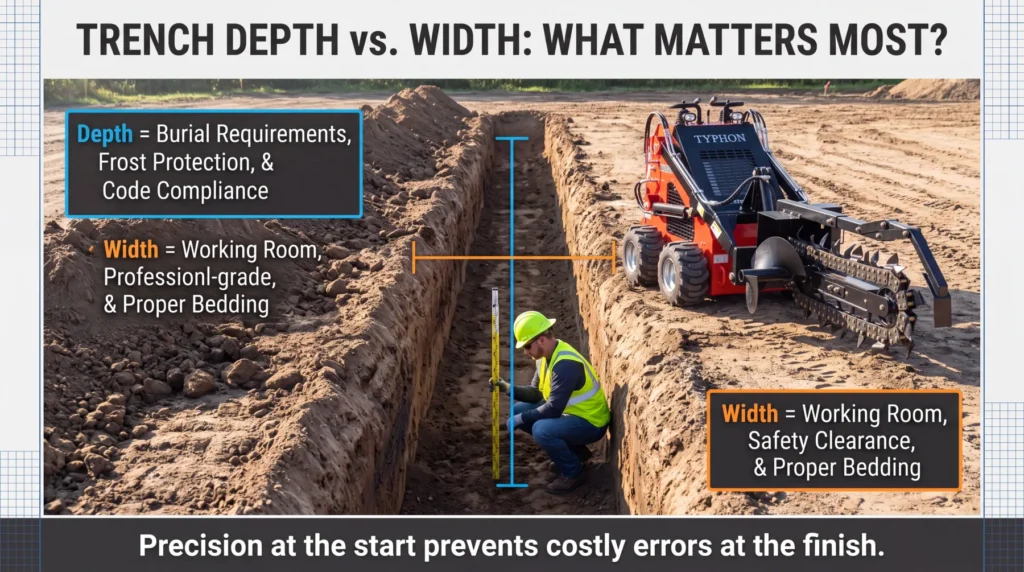
The layout is marked, the pipe is ready, and the excavator is in position. Before the first bucket of soil comes out, one decision sets the course for the entire project: how deep should the trench be, and how wide does it need to be?
Although these measurements seem straightforward, they influence far more than where the trench is dug. The wrong depth can leave utilities vulnerable to frost, traffic loads, or code violations. An incorrect width can limit installation space, increase the risk of cave-ins, or make it difficult for crews to work safely. Small miscalculations at the start often lead to costly delays, extra excavation, and failed inspections.
Depth and width work together, but their importance shifts depending on the project. A deep utility installation may be governed primarily by burial requirements, while a shallower trench may depend more on providing enough room for safe access, proper bedding, and compaction. In this guide, you’ll learn how to determine the right balance by considering soil conditions, utility specifications, excavation equipment, and jobsite safety requirements, helping you build trenches that are efficient, compliant, and reliable from start to finish.
Why Depth and Width Are Different Decisions
Trench depth and trench width answer two different questions, and treating them as one is where a lot of problems start. Depth is about how far down you need to go. Width is about how much room you need across. Each one responds to its own set of drivers, and knowing which is which keeps you from over-digging one while shortchanging the other.
The required depth is usually determined by the utility being installed, local regulations, frost lines, or the structural needs of the project. Width, however, depends on factors such as the size of the pipe or conduit, the type of excavation equipment, the need for bedding and backfill, and whether workers must safely enter the trench. While both dimensions influence the overall excavation, they serve different purposes and should always be planned independently rather than estimated together.
What Drives Trench Depth
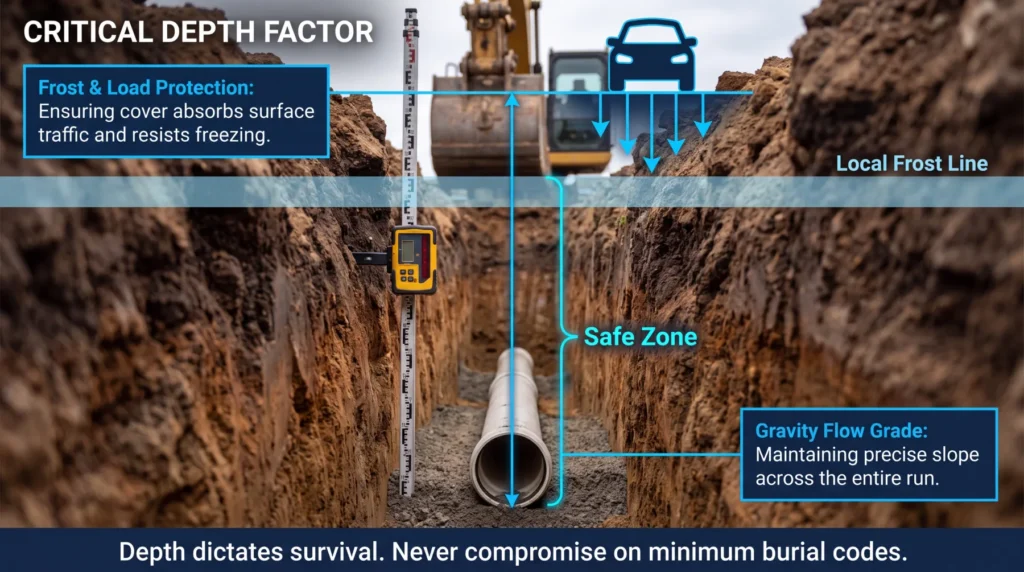
Depth is dictated mostly by what you’re placing in the ground and the conditions it has to survive. Water and sewer lines need to sit below the local frost line so they don’t freeze and rupture in winter. Utilities under roadways or parking lots need enough cover to handle the weight of traffic passing overhead. Gravity-fed systems like storm and sanitary sewer need a precise depth and slope so the line drains the way it should.
That means depth isn’t a number you pick for convenience. It comes from code, from the utility’s requirements, and from the ground conditions on your site. Once those factors set your target depth, the rest of your trench planning has to work around it.
What Drives Trench Width
Width answers a different question entirely: how much room does the work require? A large-diameter pipe needs a trench wide enough to lower it in, surround it with bedding material, and compact that material along both sides. A tight, narrow trench that barely clears the pipe leaves no room to do the job right.
Width also depends on whether people need to enter the trench. A worker connecting a pipe, setting fittings, or inspecting the line needs safe room to move. And as you’ll see, the deeper the trench, the more width often becomes a safety requirement rather than just a convenience.
When Trench Depth Matters Most
Some excavation projects are driven primarily by trench depth because it determines whether the installation will perform safely and meet code requirements. Water lines, sewer pipes, electrical conduits, and drainage systems often have minimum burial depths based on local regulations, frost conditions, or expected surface loads.
A trench that isn’t deep enough can leave underground utilities vulnerable to freezing, damage from traffic, or future excavation work. Although the trench must still be wide enough for installation and backfilling, depth is the factor that most directly affects the long-term reliability and protection of the utility.
Frost Protection and Load Requirements
For water lines and pressurized utilities, burial depth is often a matter of survival. A line placed above the frost line can freeze, expand, and burst, leaving you to excavate and repair in the worst possible conditions. Local code sets a minimum burial depth for exactly this reason, and hitting it is non-negotiable.
Load protection works the same way. A utility running beneath a driveway, road, or heavy-traffic area needs enough soil cover to absorb the weight passing over it. Too little cover, and repeated loads can crack the pipe or conduit over time. In these jobs, depth protects your investment long after the trench is backfilled.
Grade, Slope, and Gravity Systems
Gravity-fed systems raise the stakes in depth even further. Storm drains and sanitary sewer lines rely on a consistent slope to move flow in the right direction. That slope depends on precise depth along the entire run, so even small errors compound over distance and can leave a line that drains slowly or backs up.
This is where depth control becomes exacting work. You’re not just hitting a single target number; you’re maintaining a steady grade from one end of the trench to the other. A dependable machine with smooth, precise control makes all the difference, letting the operator hold grade cleanly instead of chasing corrections pass after pass.
When Trench Width Matters Most
Some projects place greater importance on trench width because it provides the space needed for safe and efficient installation. Larger pipes, multiple utility lines, bedding materials, and compaction equipment all require adequate clearance to ensure the work can be completed properly.
A trench that is too narrow can make installation difficult, reduce worker mobility, and increase safety risks when entry is required. Even when the excavation depth is already determined by project specifications, choosing the correct width helps improve productivity, supports proper backfilling, and creates a safer working environment.
Pipe Size, Bedding, and Installation Room
A large-diameter pipe changes everything about a trench. You need enough width to lower the pipe into place, then surround and support it with properly placed and compacted bedding material. Skimp on width, and you can’t get bedding around the pipe evenly, which leaves it poorly supported and prone to settling or damage down the road.
The installation room matters just as much. Workers need space to align sections, seat fittings, and connect joints without fighting the trench walls. A trench sized only to the pipe’s outside diameter looks efficient on paper but makes the actual work slow, sloppy, and sometimes impossible to complete to spec.
Worker Access and Safe Movement
The moment a person needs to enter a trench, width becomes a safety issue. A worker needs room to stand, move, and work without being pinned against the wall, and enough space to exit quickly if something goes wrong. Cramped trenches don’t just slow the job; they put people at real risk.
This is especially true on deeper trenches, where the danger of a collapse climbs sharply. Adequate width gives workers space to operate and gives protective systems like trench boxes room to fit. When people are in the hole, width stops being about productivity and becomes about getting everyone home safe.
How Soil Stability and Safety Rules Connect the Two
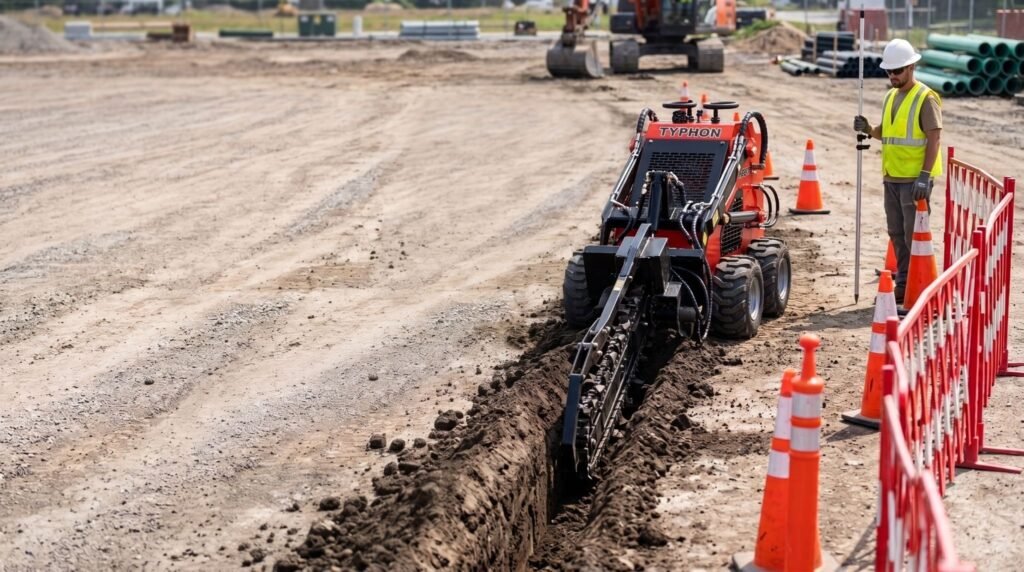
Trench depth and width are planned separately, but soil conditions and safety requirements bring them together. As excavation goes deeper, the pressure on trench walls increases, making soil stability a critical factor in determining how the trench should be excavated.
Different soil types, groundwater conditions, and safety regulations may require wider trenches to accommodate sloping, benching, or protective systems such as trench boxes and shoring. Balancing both depth and width helps reduce the risk of cave-ins, keeps workers safe, and ensures the excavation complies with jobsite safety standards.
Soil Type and Wall Stability
Not all ground holds a vertical wall the same way. Stable, cohesive soil can stand at a steeper angle for a time, while loose, sandy, or previously disturbed soil wants to slide back into the hole almost immediately. The deeper you dig, the more soil weight presses on those walls, and the more likely an unstable wall is to fail.
That relationship forces width and depth together. To keep walls from collapsing, crews often slope or bench the sides back, which means the deeper the trench, the wider the opening at the top has to be. In loose soil, a deep trench can end up far wider at grade than the pipe alone would ever require, purely to keep the walls standing.
Safety Regulations and Protective Systems
Trench safety rules exist because collapses kill workers with almost no warning. Once a trench reaches a regulated depth, protective measures become mandatory: sloping the walls, benching them, or installing a protective system like a trench box or shoring. A competent person on site is responsible for evaluating soil conditions and confirming the trench is safe before anyone enters.
These requirements directly shape both of your numbers. Sloping and benching widen the trench as depth increases. A trench box sets a minimum width so the box fits and workers can operate inside it. Ignoring these rules isn’t just a code violation; it’s a gamble with lives, and no schedule pressure justifies it.
Conclusion
Trench depth and width serve different purposes, but successful excavation depends on planning them together. The required depth is typically determined by utility specifications, frost protection, drainage requirements, or local codes, while the necessary width depends on pipe size, installation space, worker access, and excavation methods. Soil conditions and safety requirements influence both dimensions, especially as deeper excavations often require sloping, shoring, or trench boxes to maintain a safe and stable work area.
Careful planning before excavation helps reduce delays, improve installation quality, and keep the project compliant with safety standards. Instead of relying on estimates, evaluate the utility requirements, soil conditions, equipment capabilities, and jobsite hazards to determine the appropriate trench dimensions. With the right combination of planning and equipment, you can complete trenching work more efficiently, pass inspections with confidence, and create a safer environment for everyone on site.
Frequently Asked Questions
How does soil type affect trench depth and width?
Soil type determines how stable the trench walls remain during excavation. Stable soils can support steeper walls, while loose or sandy soils often require wider trenches with sloping, benching, or protective systems to prevent collapse.
How do I choose the right equipment for trenching?
Choose equipment based on the required trench depth, width, and soil conditions. Matching the correct excavator size and bucket width helps improve digging accuracy, reduce over-excavation, and increase productivity.
Should trench depth or width be planned first?
Start by determining the required trench depth based on utility specifications and local regulations. Then calculate the necessary width to allow for safe installation, proper backfilling, and any required protective systems.