How Bucket Capacity and Engine Power Work Together
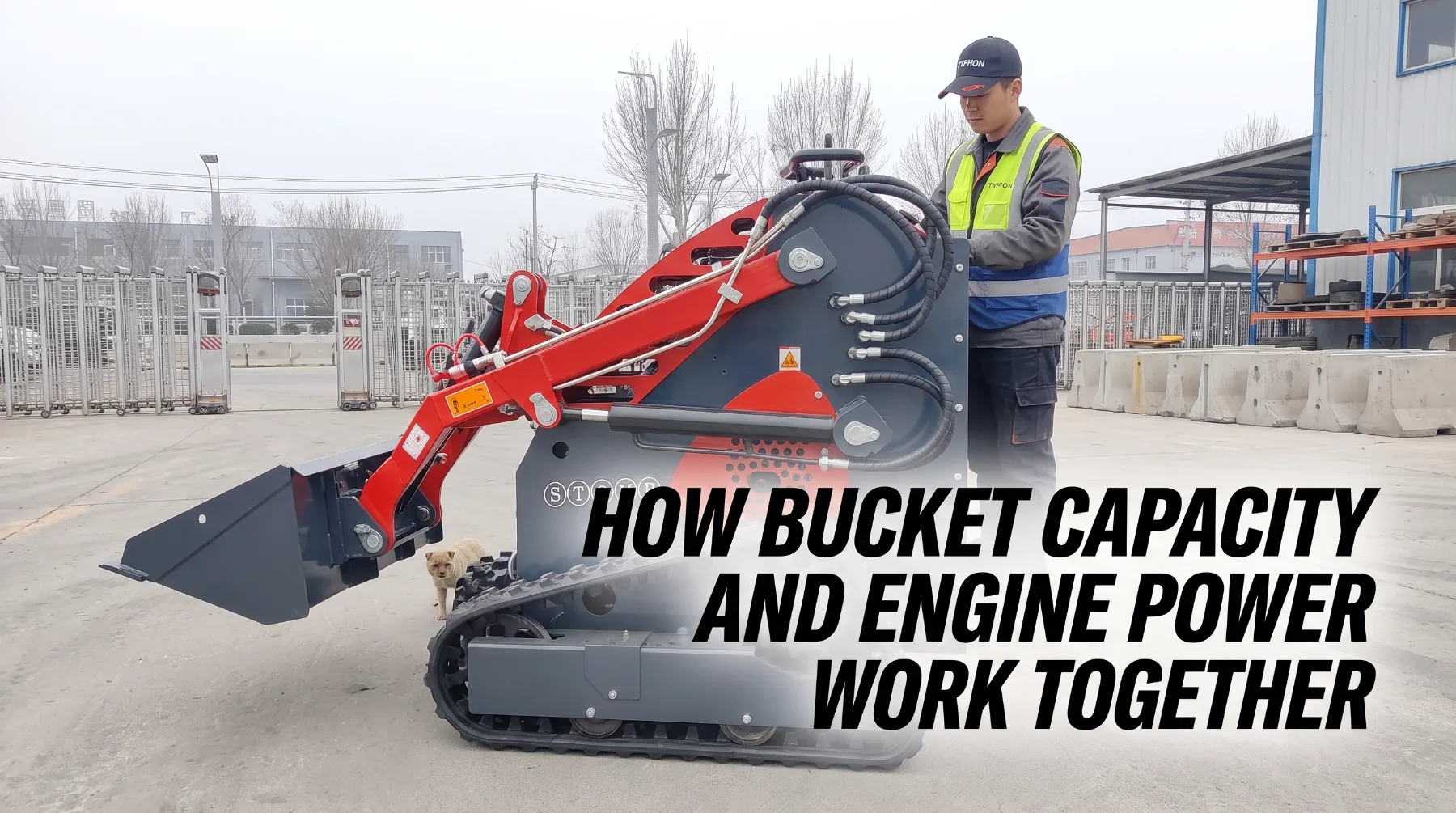 A skid steer’s bucket size determines how much material can be moved in each cycle, but choosing a larger bucket does not automatically increase productivity. As bucket capacity grows, the machine has to handle more material, which places greater demands on its engine, hydraulic system, lifting mechanism, and overall operating capacity. A bucket that is too large for the machine can make lifting and carrying more difficult, especially when working with dense materials such as wet soil, gravel, sand, or crushed stone.
The right combination comes from matching bucket capacity with engine power, hydraulic performance, and rated operating capacity. When these factors are properly balanced, the skid steer can fill the bucket effectively, lift the load with better control, and maintain efficient cycle times throughout the job. When the bucket is oversized for the machine, performance can suffer through slower lifting, reduced maneuverability, higher fuel consumption, and greater strain on components. Understanding this relationship helps operators and buyers choose a bucket that makes full use of the skid steer’s capabilities without asking the machine to handle more than it is designed for.
Why the Pairing Is Engineered, Not Arbitrary
Manufacturers do not choose bucket sizes arbitrarily. A skid steer is engineered around a combination of rated operating capacity, hydraulic flow, engine output, and overall machine weight, with each factor influencing how the loader performs under load. The standard bucket is selected to work within that balance, allowing the machine to fill, lift, carry, and dump material while maintaining stability, control, and efficient cycle times.
When the bucket is changed, that balance can shift. A larger bucket may increase the amount of material moved per cycle, but it can also add weight and encourage heavier loads than the machine is designed to handle. A smaller bucket may reduce the load on the machine but limit the amount of material moved with each pass. These effects are not always obvious from the basic specifications, which is why bucket selection should be considered alongside the machine’s operating capacity, hydraulic system, and engine performance.
What Happens to Cycle Time When the Balance Is Off
Cycle time is one of the clearest indicators of skid steer productivity. A machine can carry a large bucket, but if it takes longer to fill, lift, travel, dump, or return, the extra capacity may not translate into more material moved per hour. Engine power, hydraulic response, and load weight all influence how quickly the machine can complete each part of the work cycle.
A properly matched bucket allows the skid steer to move through the entire cycle at a consistent pace without excessive strain or loss of performance. An oversized bucket can have the opposite effect, especially when filled with dense material. The machine may lift more slowly, recover engine speed between movements, or travel at reduced speed under load. Even though each pass carries more material, the longer cycle can reduce overall throughput. In practical terms, the most productive bucket is not always the one that carries the most material, but the one that allows the machine to complete more efficient cycles throughout the day.
How Matched Specs Protect the Drivetrain
Operating beyond the machine’s intended load range can affect much more than productivity. When a bucket consistently carries more material than the skid steer is designed to handle, major systems are placed under greater and more frequent stress. The hydrostatic drive system, lift arm pins, hydraulic lines, cylinders, and engine cooling system may all have to work harder to maintain performance under heavy loads.
Over time, repeated operation near or beyond these limits can increase component wear, shorten maintenance intervals, and raise the risk of unexpected downtime. The effects may not be noticeable during a single cycle, but they can become significant when the machine works this way every day. Matching the bucket to the skid steer’s rated capacity and available power helps keep the machine operating within its intended load range, reducing unnecessary stress and supporting more reliable long-term performance.
What the Operator Notices First
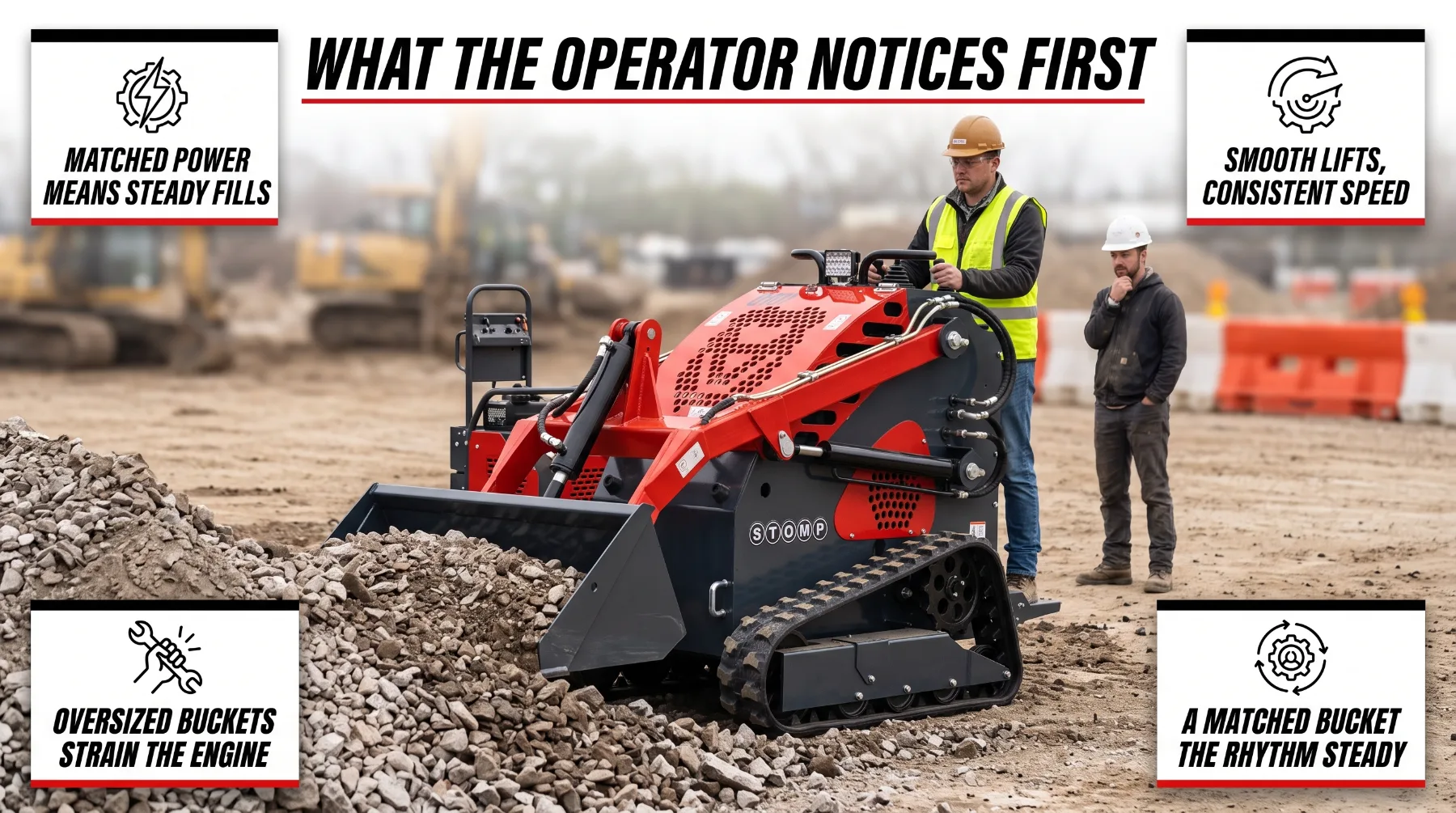 Before productivity numbers reveal a problem, the operator often notices the mismatch through the controls. A properly matched skid steer can enter a pile with steady power, fill the bucket without excessive engine load, lift the material smoothly, and maintain consistent travel speed. That predictable response allows the operator to maintain a steady working rhythm and concentrate on accurate loading, positioning, and material placement rather than constantly adjusting for the machine’s limitations.
An oversized bucket can interrupt that rhythm. The operator may need to take lighter cuts, reduce travel speed, feather the controls, or pause briefly while the engine recovers under load. These adjustments may seem minor during individual cycles, but they add up over hours of operation. A bucket that matches the machine’s power and capacity allows the operator to work more naturally and consistently, helping maintain productivity while reducing unnecessary effort throughout the shift.
The Hidden Cost of Going Too Small
An undersized bucket can create a different kind of inefficiency. While it may place less demand on the machine, using a bucket that is far below the skid steer’s available capacity can reduce the amount of material moved with each cycle. The engine and hydraulic system may have more capability than the task requires, while the operator must make additional trips to move the same total volume.
Each individual cycle may feel smooth and easy, but the extra cycles can extend the overall job time. More loading, traveling, dumping, and returning means more operating hours, fuel consumption, and machine hours to complete the same amount of work. Over a full shift or large project, that unused capacity can become a significant productivity loss. The goal is not simply to avoid an oversized bucket, but to choose a bucket that makes effective use of the skid steer’s available power and lifting capability.
Fuel Consumption Across the Shift
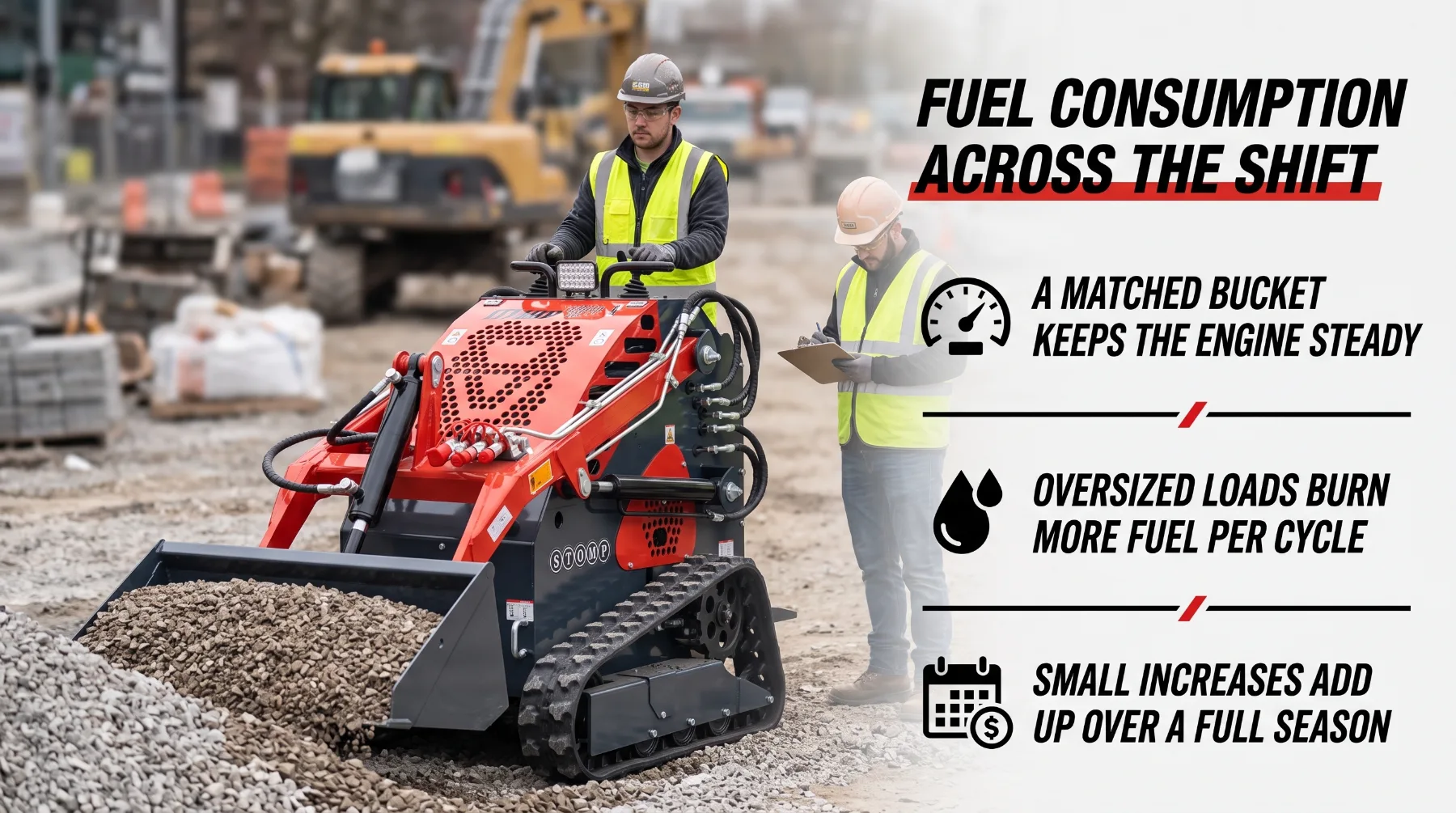 Fuel consumption also reflects how well the skid steer’s power is matched to the work being performed. With a correctly sized bucket, the engine can handle loading, lifting, and traveling without being placed under unnecessary strain. The machine can maintain steady engine speed and hydraulic performance, allowing it to complete each cycle efficiently rather than constantly working against an excessive load.
An oversized bucket can increase fuel consumption by making every part of the cycle more demanding. The engine may need to work harder to fill the bucket, lift the added weight, and maintain travel performance, increasing fuel use over repeated cycles. Across a full workday or operating season, those small increases can add up to a significant operating cost. A properly matched bucket can help the machine move a productive volume of material while using available power more efficiently, making fuel consumption an important part of the overall bucket-sizing decision.
How to Evaluate the Match Before You Commit
The most reliable way to assess whether a bucket and engine are well matched is to watch the machine work through a complete cycle on the material you actually use. Drive into the pile at operating speed and observe whether the engine holds its pace. Lift a full bucket and note whether the hydraulic system rises steadily or hesitates under the load. Travel to the dump point and check whether speed holds or drops. If any phase of the cycle shows the machine working noticeably harder than it should, the bucket is outpacing the available power, and a smaller size will likely produce better results per hour.
Conclusion
Bucket capacity and engine power function as a matched pair, not as independent specifications to maximize separately. A configuration that properly aligns the two delivers better cycle times, lower fuel consumption, reduced component wear, and more predictable handling across the different materials and conditions a machine may encounter. When bucket size is matched to the available engine and hydraulic power, the skid steer can fill, lift, travel, and dump efficiently without constantly working at its limits. This balance helps maintain consistent performance throughout long workdays while reducing unnecessary strain on the engine, hydraulic system, drivetrain, and lifting components. The skid steer that moves the most material over a full season is rarely the one with the biggest bucket or the highest horsepower. It is the machine where every component works together within its intended range, efficiently and without excessive strain, allowing the operator to maintain productive cycle times, control the machine more easily, and get the most useful work from every gallon of fuel. From the first cycle of the morning to the last dump of the day, the right balance between bucket capacity and engine power helps turn available machine capability into consistent, dependable productivity.
Frequently Asked Questions
Is a bigger bucket always better for a skid steer?
Not when it exceeds what the engine can move at pace. A larger bucket is only an advantage if the machine can fill, lift, and travel under a full load without losing speed or straining the drive system. When those conditions are not met, a smaller bucket running at full capability typically moves more material per hour.
How do I know if my bucket size matches my skid steer’s engine?
Run the machine through a full cycle on your actual material. A well-matched setup drives into the pile cleanly, raises the load without hesitation, and holds travel speed under load. Signs of a mismatch include engine RPM drop during fill, slow lift cycles, and reduced travel speed when carrying a full bucket.
What are the risks of running a bucket that is too small for the engine?
The machine becomes less efficient in a different way. Cycle volume drops, so more passes are needed to move the same amount of material. Travel time increases, engine and hydraulic capacity go underused, and the overall pace of work slows. The machine handles easily but delivers output well below what its power rating can support.