Stand Behind Skid Steer Track Design and Ground Contact
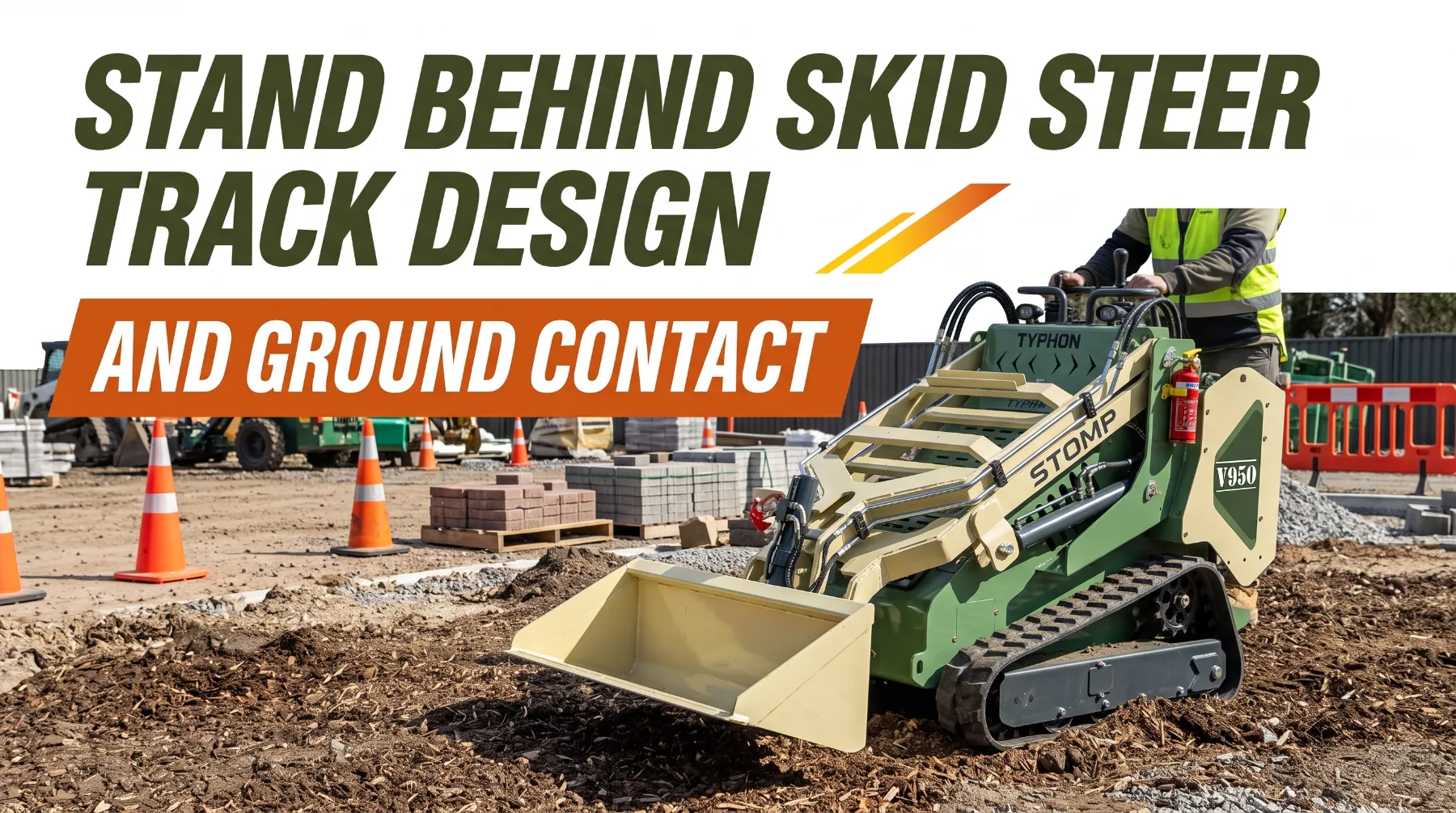 Loose soil and recently graded ground can make traction a major concern during residential landscaping work. A stand-behind skid steer may need to move material and finish grading while avoiding ruts, deep marks, or unnecessary surface damage. Losing traction during a turn can dig into the soil, while excessive ground disturbance can create additional cleanup and rework. These conditions make track design and ground contact important factors in how the machine performs.
Track contact area affects how the skid steer transfers its weight and traction to the working surface. A larger contact footprint can spread the machine’s weight over more ground, helping reduce concentrated pressure in softer soil. Track pattern, machine weight, and ground conditions also influence how effectively the machine maintains grip while moving, turning, and carrying a load.
During grading and material handling, maintaining traction without unnecessarily disturbing the surface requires careful operation. Smooth turns, controlled travel, and selecting the right machine setup for the ground can help limit rutting and surface damage. Understanding how track design and ground contact interact gives operators a better basis for working efficiently on sensitive or recently prepared terrain.
Understanding Track Contact Area
The portion of the track touching the ground determines how the machine’s weight spreads across the surface. Rather than concentrating the load on a small footprint, the tracks distribute it along their length, which changes how the ground responds underneath. That distribution is the foundation of how a tracked machine behaves on soft or worked ground.
A larger contact area spreads the load over more ground, and that can matter a great deal on softer or less compacted terrain. When the weight is shared across a broader footprint, the machine is less likely to sink or dig in, which helps it stay on top of ground that a smaller footprint might churn up. On the loose, recently graded soil common to landscaping work, that broader contact is often what keeps the machine working the surface rather than fighting it.
Key takeaway: The track’s ground contact area determines how the machine’s weight is distributed, and a larger contact area spreads the load across more ground, which helps on softer or less compacted terrain.
Supporting Traction on Loose Ground
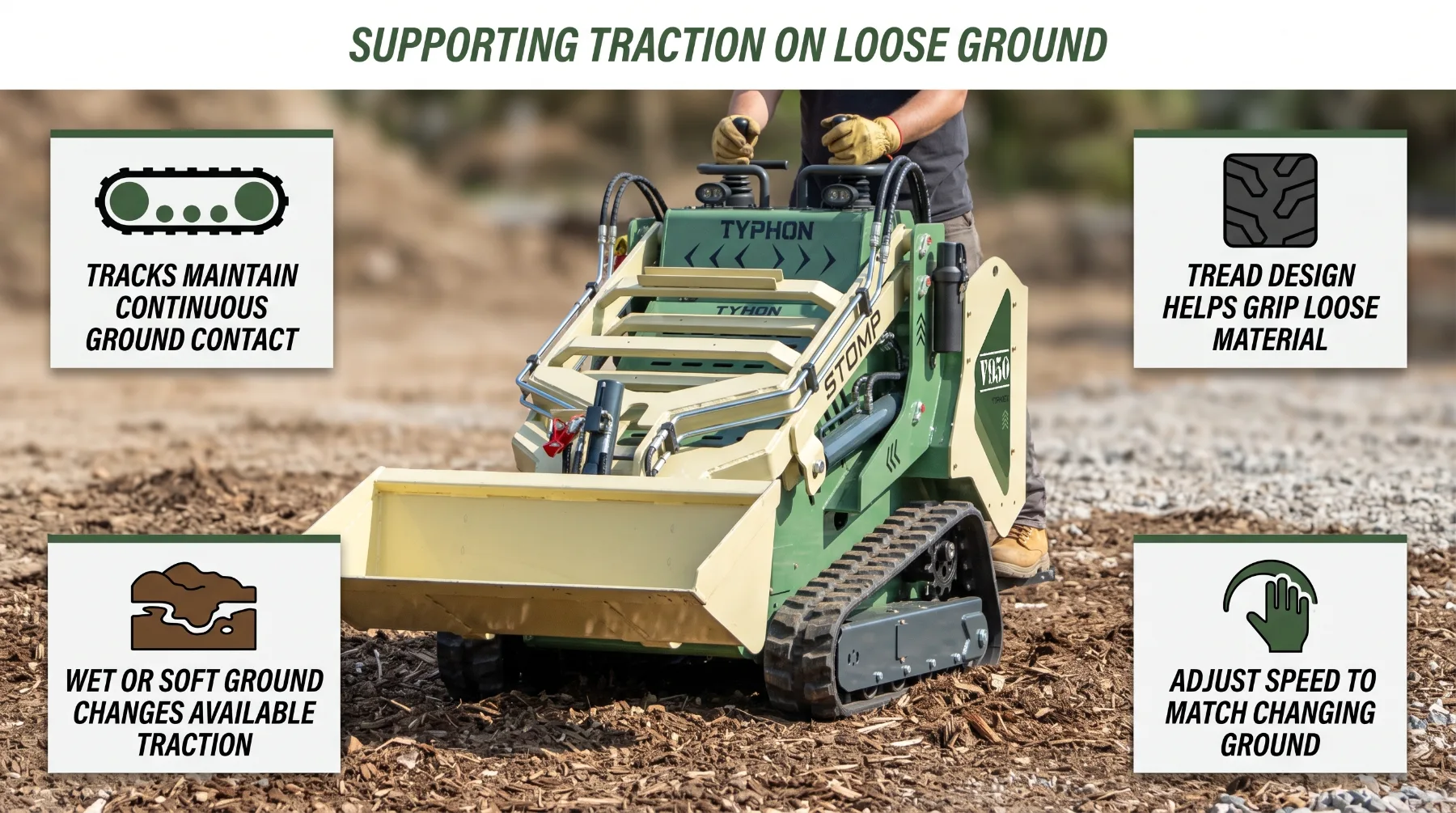 Loose ground can make traction more difficult, especially on soil, mulch, gravel, and other unsettled surfaces. Tracks provide continuous contact with the ground, helping distribute the machine’s weight and maintain more consistent grip as it travels across changing terrain.
However, traction depends on more than the tracks themselves. Tread design and ground conditions both affect how effectively the machine can maintain forward movement. Understanding this relationship helps operators adjust their approach to changing surfaces.
- Continuous Ground Contact: Tracks maintain contact across a larger portion of the surface to support consistent movement.
- Tread Design: Tread patterns help the tracks grip and move through loose material.
- Ground Conditions: Dry, wet, soft, or shifting surfaces can change the amount of available traction.
- Operator Control: Adjusting travel speed and machine movement to ground conditions helps maintain predictable traction.
Key takeaway: Tracks maintain continuous contact across soil, mulch, gravel, and other loose materials, while tread design and ground conditions both affect how effectively the machine keeps moving forward.
Managing Surface Disturbance
Track configuration influences how the machine interacts with finished landscaping and prepared surfaces, but it’s important to be clear about what tracks can and can’t do. They spread weight and grip well, yet they don’t make the machine gentle on their own. The way the operator drives and turns matters just as much as the equipment underneath.
Skid-steering works by driving the tracks on each side at different speeds to turn, and that action can still disturb soil or turf, particularly when the ground is soft. A tight pivot on freshly graded or damp ground can scuff, gouge, or tear the surface even with tracks doing their job. This is why appropriate travel and turning techniques are essential on finished areas. Making wider, gentler turns, avoiding sharp pivots on soft spots, and planning a route that limits unnecessary turning all help protect the surface. The machine’s design gives you an advantage, but the operator’s technique is what preserves the ground.
Key takeaway: Track configuration affects how the machine treats finished surfaces, but skid-steering can still disturb soil or turf, so appropriate travel and turning techniques matter, especially on soft ground.
Considering Track Width
Track width shapes the machine’s overall footprint and its ground contact, and it involves a genuine tradeoff worth weighing before the work begins. There’s no single best width, only the width that suits the job in front of you.
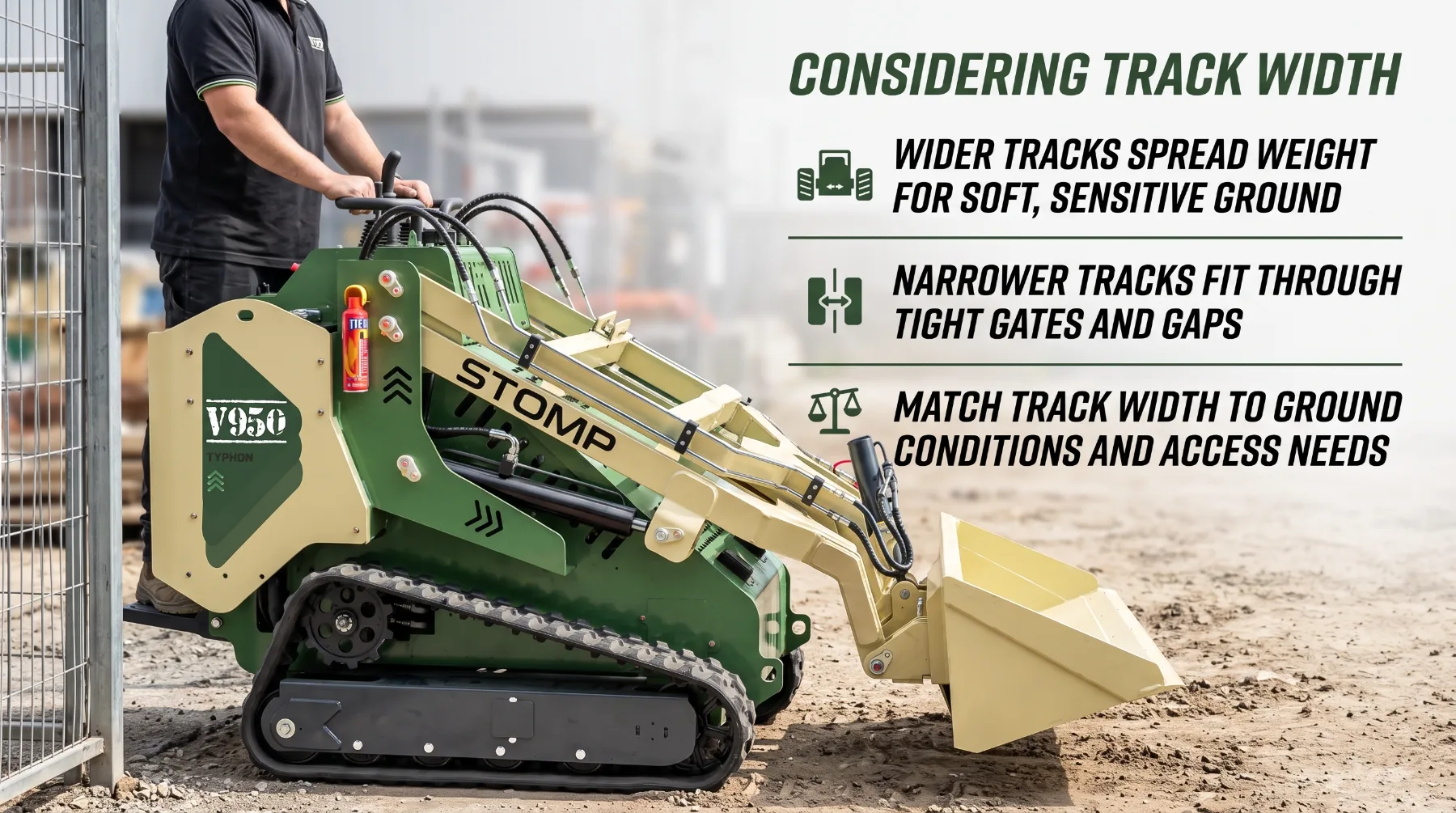 A wider track distributes weight across a larger area, which can reduce how heavily the machine presses into the ground and helps on soft or sensitive surfaces. A narrower configuration gives up some of that footprint but improves access through restricted spaces, letting the machine reach work areas a wider setup couldn’t fit. The choice comes down to what the job demands most: broad, gentle ground contact for soft terrain, or a slimmer profile for tight gates, pathways, and gaps between features. Matching the track width to the balance of ground conditions and access your work requires keeps the machine suited to the task rather than compromised on one front or the other.
Key takeaway: Track width affects both footprint and ground contact, with a wider track distributing weight across a larger area and a narrower configuration improving access through restricted spaces.
Working on Uneven Terrain
Continuous track contact helps the machine maintain a consistent connection with uneven ground, following dips and rises more steadily than a footprint that breaks contact easily. That steadiness is an advantage on the irregular surfaces common to landscaping and construction sites, where the ground rarely sits flat and level.
That advantage doesn’t remove the need for careful operation, though. Slopes, soft spots, loose material, and changes in ground elevation all affect how the machine handles, and each should be assessed before moving or working rather than discovered mid-task. A slope can shift the machine’s balance, a hidden soft spot can grab a track, and loose material can give way underfoot. Reading the terrain ahead, planning a route that avoids the worst of it, and adjusting speed to suit the ground are what keep the machine stable and under control. The tracks help, but judgment does the rest.
Key takeaway: Continuous track contact helps maintain a consistent connection with uneven ground, but careful operation is still required, so assess slopes, soft spots, loose material, and elevation changes before moving or working.
Inspecting Track Components
Track condition directly affects ground contact and machine performance, which makes undercarriage inspection a routine worth keeping up. Worn or poorly maintained tracks grip less effectively, wear unevenly, and can undermine the very weight distribution and traction the design is meant to provide. Catching problems early keeps the machine working the way it should.
A thorough check covers more than the tracks themselves. Regularly inspect the tracks, rollers, idlers, drive components, and tension system for excessive wear, damage, debris buildup, or incorrect adjustment. Worn tread reduces grip, damaged rollers or idlers affect how smoothly the track runs, and improper tension can cause premature wear or even a thrown track. Debris packed into the undercarriage adds strain and interferes with normal operation, so clearing it out is part of the job. Making this inspection a regular habit protects both performance and the working life of the machine.
Key takeaway: Track condition directly affects ground contact and performance, so regularly inspect the tracks, rollers, idlers, drive components, and tension system for wear, damage, debris buildup, or incorrect adjustment.
Conclusion
Track design affects how a stand-behind skid steer distributes its operating weight, maintains ground contact, develops traction, and travels across different surfaces. Track width and contact area determine how machine weight is distributed over the ground, with a broader footprint generally reducing ground pressure and improving support on softer or less compacted surfaces. Tread pattern, track condition, and ground material influence available traction, while skid-steering can still disturb finished or sensitive surfaces during sharp turns and pivots. Uneven terrain requires controlled travel and careful assessment of slopes, soft spots, loose material, and elevation changes, while track width must be balanced between ground support and access through restricted areas. Regular inspection of tracks, tread, rollers, idlers, drive components, tension, and undercarriage areas helps identify wear, damage, and debris buildup before they affect operation. Matching track configuration to the terrain and access requirements, using controlled steering techniques, and maintaining the undercarriage properly supports reliable stand-behind skid steer performance across landscaping, construction, and material-handling applications.
Frequently Asked Questions
Why is ground contact important on a tracked skid steer?
Ground contact determines how the machine transfers its weight and traction to the surface. A larger track footprint spreads the load instead of concentrating it in one area, which can help the machine stay on soft ground and reduce sinking. Good track contact also provides the grip needed for travel and work. Worn tread, incorrect tension, or debris in the undercarriage can reduce both traction and load distribution, affecting performance on difficult ground.
Do wider tracks reduce ground pressure?
Yes. Wider tracks can spread the machine’s weight across a larger contact area, potentially reducing ground pressure. This can help on soft or sensitive surfaces by reducing how deeply the machine presses into the ground. However, wider tracks also require more clearance and may make access through gates or narrow paths more difficult. Track width should therefore balance ground conditions with the access requirements of the job.
Can tracks prevent surface damage?
No. Tracks can distribute weight and improve traction, but they cannot completely prevent surface damage. Skid-steer turning can scuff or tear soil, turf, and finished surfaces, especially during sharp pivots on soft or damp ground. Wider, gradual turns, fewer unnecessary pivots, and careful route planning can reduce disturbance. Protecting the surface ultimately depends on both track design and operating technique.
What should be inspected on skid steer tracks?
Inspect the complete undercarriage, including track condition, tread wear, rollers, idlers, drive components, and track tension. Look for uneven wear, damage, and signs that could affect traction or smooth operation. Check that track tension is correct because improper tension can accelerate wear or contribute to a thrown track. Also remove mud, soil, and other debris that can interfere with the undercarriage. Regular checks help catch problems early and support reliable track performance.