Best Trencher for Landscaping, Irrigation, and Utility Line Installation in 2026
For contractors, landscapers, farmers, property developers, and utility crews, digging clean trenches is one of the most common jobs on a worksite. Whether the project involves installing irrigation pipe, drainage lines, electrical conduit, fiber cable, water lines, or landscape edging, the right trencher can save time, reduce labor, and create a cleaner result compared with manual digging.
In 2026, trenchers remain one of the most practical machines for small and medium job sites because they are built for one clear purpose: cutting narrow, consistent trenches into the ground. Instead of using shovels or forcing an excavator to dig a long narrow line, a trencher uses a digging chain or wheel to remove soil in a controlled path. This helps contractors finish work faster, maintain better trench accuracy, and reduce cleanup after the job.
Choosing the best trencher depends on the job type, soil condition, trench depth, trench width, access space, and budget. A small walk-behind trencher may be perfect for residential irrigation and landscape lighting, while a trencher attachment for a skid steer may be better for contractors who already own a compact loader. For deeper utility work, a larger ride-on trencher or heavy-duty attachment may be the better option.
This guide explains what a trencher is, why contractors use trenchers, the best jobs for trenching machines, and how to choose the right trencher for landscaping, irrigation, drainage, cable, pipe, and utility line installation in 2026.
What Is a Trencher?
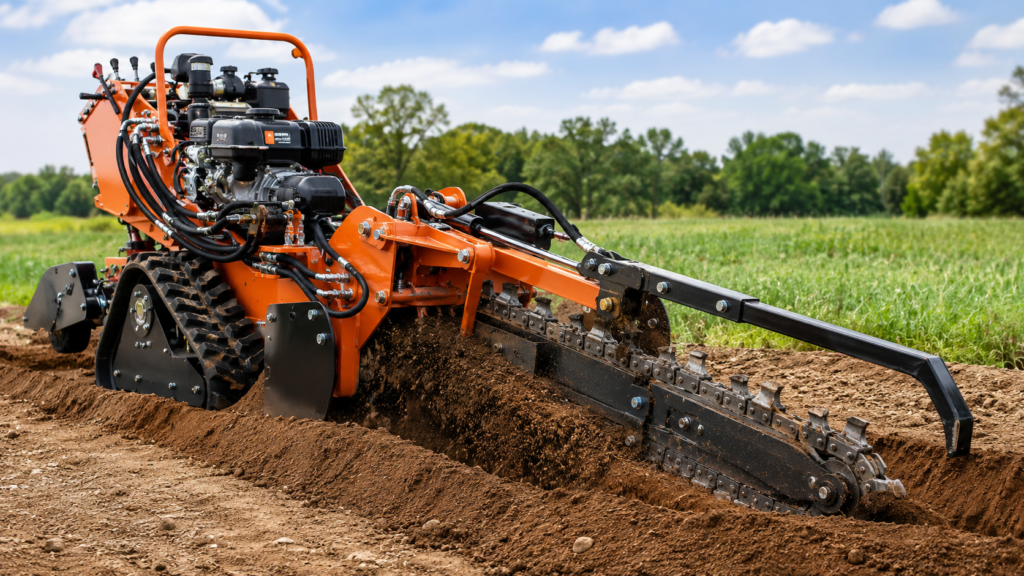
Most trenchers use a chain system with digging teeth. The chain rotates around a boom and cuts into the ground as the machine moves forward or backward. The removed soil is usually carried out of the trench and placed beside the cut, making it easier to backfill later. Some larger trenchers use a wheel-style cutting system, but chain trenchers are very common for landscaping and utility jobs.
Trenchers come in several types. The most common options include walk-behind trenchers, ride-on trenchers, mini trenchers, and trencher attachments for skid steers, compact track loaders, mini loaders, or compact tractors. Each type is built for a different level of work.
A walk-behind trencher is a smaller machine that an operator controls from behind. It is popular for residential landscaping, irrigation, cable installation, and small utility work. A ride-on trencher is larger, more powerful, and better for longer trenching projects. A trencher attachment connects to a host machine such as a skid steer or compact loader, allowing the operator to use one machine for multiple jobs.
The main purpose of a trencher is efficiency. Instead of using workers with shovels to dig a long trench by hand, a trencher can cut a clean path much faster. This makes it valuable for contractors who need to complete jobs quickly while keeping labor costs under control.
Why Trenchers Are Useful for Contractors
Trenchers are useful because they solve a common jobsite problem: digging long, narrow trenches quickly and accurately. For contractors, time is money. A job that takes several workers many hours with shovels can often be completed much faster with the right trencher.
The first major benefit is speed. Trenchers are designed to cut continuously. Once the machine is set to the correct depth and direction, it can create a trench line much faster than manual labor. This is especially important for irrigation companies, utility contractors, and landscapers who handle repeated trenching jobs.
The second benefit is consistency. A trencher creates a trench with a more even depth and width. This matters when installing irrigation pipe, drainage pipe, cable, or conduit because the line needs to sit properly underground. A trench that is too shallow may expose the pipe or cable to damage. A trench that is too deep may waste time, fuel, and backfill material.
The third benefit is cleaner work. Compared with digging by hand or using a large bucket, a trencher removes only the soil needed for the trench. This reduces surface damage and makes the jobsite easier to clean. For landscaping work, this is a big advantage because customers often care about how the lawn, garden, or property looks after the job is done.
The fourth benefit is lower labor demand. A trencher can reduce the number of workers needed for digging. Instead of assigning a crew to manually cut a trench, one trained operator can handle much of the digging process. Workers can then focus on pipe installation, layout, backfilling, and finishing.
The fifth benefit is versatility. A trencher can be used across many industries, including landscaping, farming, construction, telecom, plumbing, electrical work, drainage, and municipal maintenance. This makes it a useful machine for contractors who want equipment that can support multiple types of jobs.
Best Jobs for Trenchers
1. Irrigation System Installation
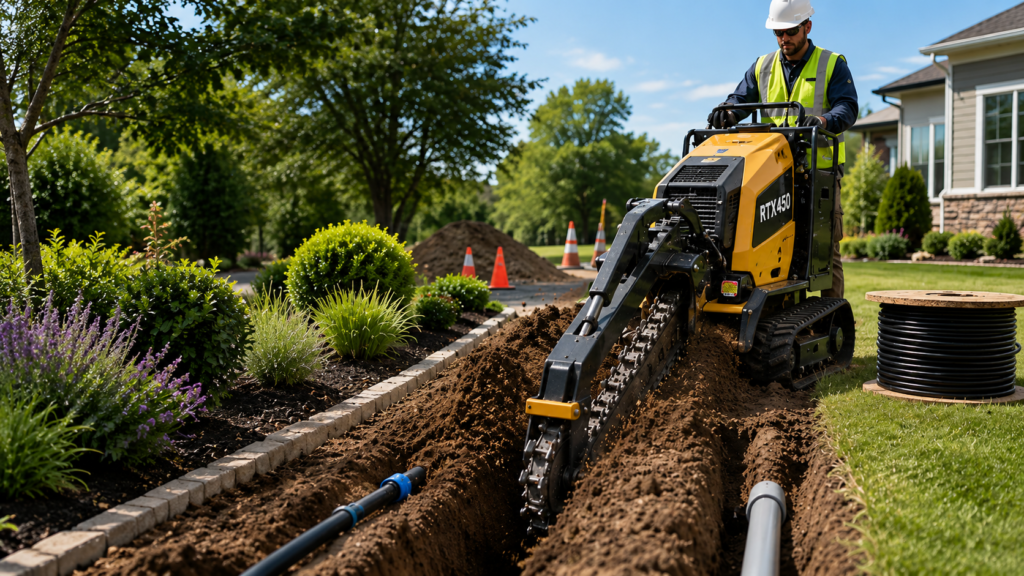
One of the best uses for a trencher is irrigation system installation. Landscapers and irrigation contractors often need to place water lines below the ground to supply sprinklers, drip irrigation, or farm watering systems. A trencher can cut narrow lines across lawns, gardens, fields, and commercial landscapes with less surface damage than wide digging.
For irrigation work, the best trencher is usually a walk-behind trencher, mini trencher, or compact trencher attachment. The right choice depends on the property size and soil condition. For small lawns and residential yards, a walk-behind trencher is often enough. For larger commercial landscapes or farmland, a more powerful trencher may be better.
2. Drainage Line Installation
Drainage is another important use for trenchers. Poor drainage can cause standing water, soil erosion, foundation problems, and landscape damage. Contractors use trenchers to install French drains, drainage pipe, and water management systems.
A trencher helps create a clean trench for drainage pipe, gravel, and filter fabric. Consistent depth is important because drainage lines often need a proper slope to move water away from a building or low area. A clean trench makes it easier to control the grade and improve water flow.
3. Cable and Fiber Installation
Trenchers are also useful for cable and fiber optic installation. Telecom contractors may use trenchers to bury cable lines for internet, communication, or low-voltage systems. For this type of work, the trench usually needs to be narrow and clean.
A mini trencher can be a strong choice for shallow cable work, especially in residential or commercial properties where space is limited. For longer cable runs, a larger walk-behind trencher or attachment may be more efficient.
4. Pipe Installation
Trenchers are commonly used for pipe installation, including water lines, irrigation pipe, gas conduit, and other underground pipe systems. The goal is to create a trench that is deep enough, straight enough, and wide enough for the pipe to sit correctly.
For pipe work, choosing the right trench depth and width is important. Contractors should match the trencher setup to the pipe size and local requirements. Soil type also matters. Hard clay, rocky soil, and compacted ground may require a more powerful trencher or special chain teeth.
5. Landscaping and Hardscaping
Landscaping contractors use trenchers for edging, landscape lighting, irrigation, drainage, and underground utility preparation. Trenchers are especially helpful when working around lawns, gardens, patios, driveways, and pathways.
A small trencher can help create precise cuts without destroying the whole work area. This makes it useful for clean professional jobs where appearance matters. For landscape lighting, a mini trencher can cut shallow lines for low-voltage wiring. For irrigation, a walk-behind trencher can create deeper lines for water pipe.
Walk-Behind Trencher vs Trencher Attachment
A walk-behind trencher is a dedicated trenching machine. It is usually compact, easier to transport, and good for smaller jobs. Landscapers, irrigation contractors, rental customers, and small crews often like walk-behind trenchers because they are simple and focused. They are especially useful in yards, narrow access areas, and residential jobsites.
The main advantage of a walk-behind trencher is simplicity. It is built only for trenching and can be easier to move through tight areas. It may also be more affordable than buying a larger machine and attachment combination.
The main advantage of a trencher attachment is productivity and versatility. If a contractor already has a skid steer or compact loader, a trencher attachment can turn that machine into a trenching tool. After trenching, the same loader can be used for backfilling, grading, moving materials, or carrying pipe.
For small residential jobs, walk-behind trenchers are often the better choice. For contractors handling multiple jobsite tasks, a trencher attachment may provide better long-term value.
Mini Trencher vs Full-Size Trencher
Mini trenchers and full-size trenchers are both useful, but they are designed for different levels of work.
A mini trencher is best for small jobs, tight spaces, and shallow trenches. It is easier to transport, easier to store, and often less intimidating for smaller crews. Mini trenchers are commonly used for landscape lighting, small irrigation lines, garden work, shallow cable runs, and residential drainage.
The main benefit of a mini trencher is access. It can fit in narrow areas where larger machines may not work well. It also causes less ground disturbance, which is important for finished lawns and landscaped properties.
A full-size trencher is better for deeper, longer, and more demanding trenching jobs. It has more power, more weight, and better ability to handle tougher soil. Full-size trenchers are often used for utility installation, larger irrigation projects, commercial drainage, and long pipe runs.
The downside of a full-size trencher is that it requires more space, transport planning, and operator experience. It may also cost more to rent or buy. However, for heavy-duty work, the extra power can be necessary.
The best choice depends on the job. If the project is small, shallow, and located in a tight area, a mini trencher may be the smart choice. If the project requires deeper trenching, longer runs, or tougher soil conditions, a full-size trencher will usually be more productive.
Trencher Rental vs Buying
Contractors also need to decide whether to rent or buy a trencher. Both options make sense depending on how often the machine will be used.
Renting is a good choice for one-time projects, seasonal jobs, or contractors who only trench occasionally. For example, a landscaper who installs irrigation only a few times per year may prefer renting instead of buying. Renting can also give contractors access to different trencher sizes depending on the job.
Another benefit of renting is lower maintenance responsibility. The rental company usually handles major service, repairs, and machine upkeep. This can be helpful for small businesses that do not want to manage another piece of equipment.
Buying is a better choice for contractors who trench often. If a business installs irrigation, drainage, utilities, or cable every week, owning a trencher can save money over time. Owning also means the machine is available when needed, without waiting for rental availability.
A contractor should consider the cost of rental, transport, maintenance, storage, insurance, and expected usage. If the machine will be used many times per month, buying may be the stronger long-term decision. If it will only be used a few times per year, renting may be more practical.
For many growing contractors, the best strategy is to rent first, learn which machine size works best, then buy when trenching jobs become consistent. This reduces risk and helps the contractor choose the right machine based on real job experience.
How to Choose the Right Trencher
Choosing the right trencher starts with understanding the job. Before renting or buying, contractors should ask several key questions.
First, what is the required trench depth? Different projects need different depths. Landscape lighting may need only a shallow trench, while irrigation, drainage, or utility work may require deeper digging. The trencher must be capable of reaching the required depth without struggling.
Second, what trench width is needed? A narrow cable line does not need the same trench width as a drainage pipe. Choosing the correct width helps reduce unnecessary soil removal and saves time during backfilling.
Third, what type of soil is on the jobsite? Soft soil is easier to trench. Hard clay, compacted ground, roots, rocks, and dry soil can make trenching more difficult. Tough soil may require a more powerful machine, stronger digging chain, or special teeth.
Fourth, how much access space is available? Residential yards, gates, sidewalks, and finished landscapes may limit the size of machine that can enter the area. For tight access, a mini trencher or compact walk-behind trencher may be the best option.
Fifth, how long is the trench? A short trench in a backyard may not need a large machine. A long trench across a commercial site may require more power and speed. Matching the machine to the trench length helps improve productivity.
Sixth, does the contractor already own a host machine? If the contractor has a skid steer, compact track loader, or mini loader, a trencher attachment may be a smart investment. If not, a dedicated walk-behind trencher may be easier and more affordable.
Seventh, what is the budget? Contractors should compare rental rates, purchase price, maintenance cost, transport cost, and expected job profit. The best trencher is not always the biggest machine. It is the machine that completes the job safely, efficiently, and profitably.
Safety Tips Before Trenching
Trenching can be dangerous if safety steps are ignored. Before any trenching project, the first step is to locate underground utilities. Contractors and property owners should contact the proper utility marking service before digging. Hitting a buried gas line, electrical line, water line, or communication cable can cause serious damage, injury, service interruption, and expensive repairs.
After utilities are marked, the operator should inspect the jobsite. Look for soft ground, slopes, rocks, roots, overhead hazards, traffic, pedestrians, and nearby structures. The trench path should be planned before the machine starts cutting.
Operators should also inspect the trencher before use. Check the chain, teeth, guards, controls, hydraulic lines, tires or tracks, and safety features. A damaged chain or missing guard can create unnecessary risk.
Personal protective equipment is also important. Operators and workers should wear safety boots, gloves, eye protection, hearing protection, and high-visibility clothing when needed. On active construction sites, hard hats may also be required.
Trench depth matters for safety. Deeper trenches can create cave-in hazards, especially if workers need to enter the trench. Protective systems, safe access, and supervision by a qualified or competent person may be required depending on the trench depth and job conditions. Contractors should always follow local rules and workplace safety standards.
Workers should never stand too close to the digging chain while the machine is operating. Keep bystanders away from the work zone. The operator should move slowly and stay in control, especially near turns, slopes, hard soil, or marked utility areas.
Backfilling should also be done carefully. After pipe, cable, or conduit is installed, the trench should be filled properly to protect the installed line and prevent future settling. For drainage jobs, proper gravel, slope, and fabric may be needed to keep the system working correctly.
Best Trencher Recommendation for 2026
The best trencher for landscaping, irrigation, and utility line installation in 2026 depends on the type of work.
For residential landscaping, irrigation, and small cable jobs, a walk-behind trencher is often the best choice. It is compact, practical, and easier to use in tight spaces. It can handle many common jobs without requiring a large machine.
For contractors who already own a skid steer or compact loader, a trencher attachment may be the best investment. It adds trenching ability to a machine that can also move material, backfill trenches, grade soil, and handle other attachments. This can improve equipment value and reduce the need for a separate dedicated trencher.
For small property work, landscape lighting, and shallow lines, a mini trencher can be the most convenient choice. It is easier to transport, easier to control, and better for areas where a larger machine would cause too much disturbance.
For long utility runs, deeper pipe installation, or tough soil conditions, a larger trencher or ride-on trencher may be the better option. More power and digging capacity can make a big difference when the job is demanding.
In simple terms, choose a trencher based on depth, width, soil, access, job size, and budget. Do not choose a machine only because it is the biggest or most powerful. The right trencher is the one that matches the work and helps the contractor finish the job safely, cleanly, and profitably.
Final Thoughts
Trenchers are one of the most useful machines for contractors working in landscaping, irrigation, drainage, cable, pipe, and utility line installation. They save time, reduce manual digging, create cleaner trenches, and help crews complete underground installation work more efficiently.
In 2026, demand for clean and efficient trenching remains strong because more properties need irrigation systems, drainage improvements, communication lines, electrical conduit, and underground utility support. For contractors, the right trencher can improve productivity and help deliver better results for customers.
A walk-behind trencher is a strong choice for smaller jobs and residential work. A trencher attachment is a smart option for contractors who already use skid steers or compact loaders. A mini trencher is ideal for tight access and shallow work. A larger trencher is better for heavy-duty utility and pipe installation.
Before trenching, always plan the route, check the soil, mark underground utilities, inspect the machine, and follow safety rules. A trencher is powerful and productive, but it must be used carefully.
For contractors who want faster digging, cleaner job sites, and better underground installation results, a trencher is one of the best equipment choices for landscaping, irrigation, drainage, cable, pipe, and utility work in 2026.