What Every Buyer or Renter Should Ask Before Booking a Skid Steer
A grading contractor phones a rental yard on a busy afternoon, asks for “a skid steer for a couple of days,” and gives the clerk almost nothing else to work with. The machine showed up Monday too wide for the backyard gate, fitted with standard-flow hydraulics when the mulcher he planned to run needs high flow, and billed from the moment it left the yard rather than when it hit the site. His crew loses the morning sorting it out, the rental clock keeps ticking, and a job that should have flowed stalls before the first bucket of dirt moves. That scramble traces back to a handful of questions nobody asked before booking.
Booking the right skid steer isn’t about grabbing whatever the yard has on the lot. A short list of questions run before you reserve keeps you from paying for the wrong machine, an underpowered one, or one that can’t even reach the work. This guide walks through why the right questions matter, how to nail down machine size and type, how to confirm attachments and hydraulic flow, what to clarify in the rental terms, how to check condition and maintenance, and what to settle on operator support and site access. Here’s what to ask before you book.
Why a Few Questions Save the Whole Rental
Skipping the questions feels efficient until the truck arrives with the wrong machine. Most rental headaches trace back to details nobody confirmed at booking, whether a mismatched size, the wrong hydraulic flow, or a surprise charge buried in the terms. Catching those gaps on the phone costs minutes; catching them on delivery day costs a lost shift.
Clarity protects both sides of the deal. When you tell the yard exactly what the job needs, they load the right machine and the right tools instead of guessing, and you get equipment matched to the work rather than to whatever was parked nearest the gate. A booking built on specifics simply performs better than one built on “a couple of days.”
Cost predictability follows the same logic. Asking about rates, billing, delivery, and coverage upfront means the invoice matches the quote, so a clear conversation before booking prevents the disputes that sour an otherwise smooth rental. Key takeaway: treat booking questions as part of the job, not a formality. A few minutes of specifics on the phone protects your schedule, your budget, and your crew’s first morning on site.
Pinning Down Machine Size and Type
Job type points you toward the right machine faster than anything else, so describe the work before you ask for a size. Heavy loading, grading, and open-site material handling reward a large-frame skid steer with muscle to spare, while tight residential yards, interior work, and turf-sensitive jobs call for a compact machine that fits the space and spares the ground. Naming the job first keeps the yard from sending too much machine or too little.
Rated operating capacity is the number to confirm next. Ask what the machine lifts safely, and match that figure to your heaviest load, since a unit rated too light strains and stalls while one rated too heavy costs more than the work requires. Track type factors in as well, since wheeled machines move fast on firm, paved ground while tracked units grip soft, muddy, or sloped sites without sinking.
Width settles more bookings than crews expect, so measure your tightest access point and ask whether the machine clears it. A compact skid steer that fits a 36-inch gate opens up backyards a full-size unit can never reach. What this means: describe your job, load, and ground honestly, then match the machine’s size, capacity, track type, and width to those realities before you reserve anything.
Confirming Attachments and Hydraulic Flow
Attachments decide what the machine actually does, so confirm the yard supplies the tools your job needs before you book. Ask whether they carry the bucket, forks, auger, grapple, breaker, or mulcher the work calls for, and whether those tools come with the machine or rent separately. A skid steer without the right attachment is only half the equipment you need.
Hydraulic flow is where renters get caught most often, and it’s worth a direct question. Powered attachments like mulchers, cold planers, and large augers run off the machine’s auxiliary hydraulics, and each needs a certain flow rate to perform, so confirm whether the machine offers standard or high flow. A high-flow mulcher starves and stalls on a standard-flow unit, which turns a rented tool into dead weight.
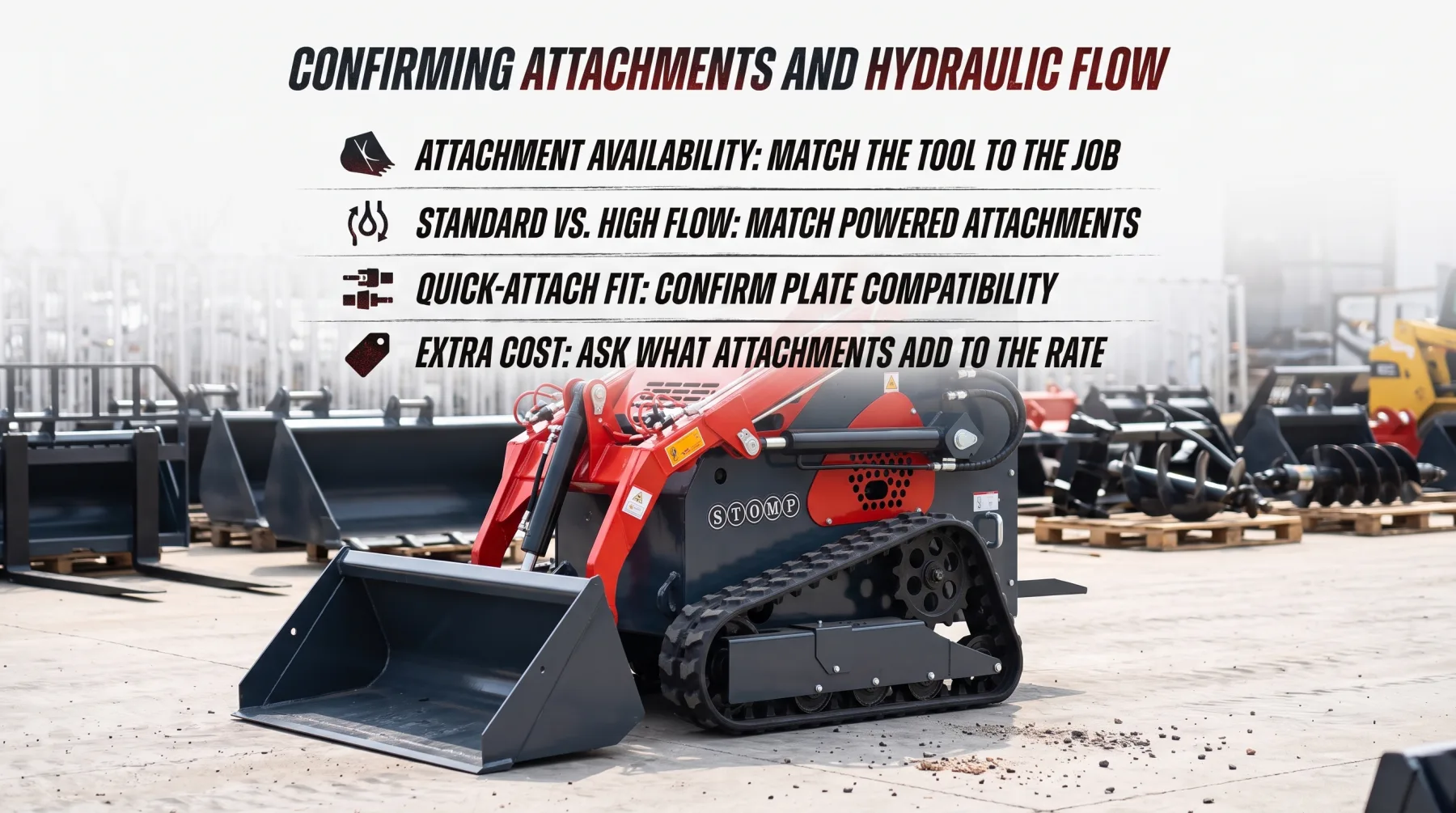
Mounting fit rounds out the tool questions. Ask whether the attachments use a universal quick-attach plate that matches the machine, since an off-brand or older tool sometimes won’t connect. Run through these before you commit:
- Attachment availability for every tool the job requires
- Standard vs. high flow matched to your powered attachments
- Quick-attach compatibility between the tools and the machine
- Extra rental cost for attachments beyond the base machine
Key takeaway: confirm the yard supplies the right tools, that the machine’s hydraulic flow can drive them, and that everything mounts to the same coupler. A tool your skid steer can’t feed or fit is a tool that won’t do the job.
Reading the Rental Terms and Costs
Terms decide what a rental really costs, so ask about them before you reserve rather than after a surprise charge lands. Confirm the daily, weekly, or monthly rate, and clarify exactly when the billing clock starts and stops, since some yards bill from dispatch while others bill from delivery. Knowing those boundaries keeps the invoice matching the quote.
Extra costs hide in the details more often than crews expect. Ask who covers delivery and pickup, whether fuel comes back full or gets billed, and how the yard handles overtime hours if the job runs long. Damage and insurance terms deserve the same attention, so clarify what the deposit covers and whether your own policy or a rental protection plan handles a mishap on site.
Hour limits catch renters off guard on longer jobs. Some rentals cap the machine at a set number of hours per period and bill extra beyond that, so confirm the allowance if you plan heavy daily use. What this means: treat the rental agreement as part of the machine, not fine print. A clear rundown of rates, billing, extras, and coverage at booking prevents the disputes that turn a smooth rental sour.
Checking Machine Condition and Maintenance
Condition determines whether a rented skid steer works or wastes your day, so ask about it before the machine leaves the yard. Find out how recently the unit was serviced, whether it’s been inspected since its last rental, and what condition you should expect it to arrive in. A well-maintained machine keeps your crew working; a neglected one strands them waiting on a repair.
Hours on the machine tell you plenty about what to expect. Ask roughly how many hours the unit has logged, since a heavily used machine runs a higher risk of wear-related breakdowns than a newer one. Tracks, tires, and the hydraulic system deserve specific mention, so confirm the yard checks for leaks, worn tracks, and sound drive components before dispatch.
Delivery inspection protects you from inheriting someone else’s damage. Ask whether you can walk the machine and document its condition before signing, and plan to photograph any existing wear or damage on arrival. Key takeaway: confirm the machine is recently serviced, ask about its hours, and document its condition at delivery. A little diligence upfront keeps a breakdown from becoming your problem mid-job.
Settling Operator Support and Site Access
Operator support keeps a small hiccup from becoming a lost day, so ask what the yard provides before you book. Find out what happens if the machine breaks down mid-rental, how fast they respond, and whether they supply a replacement to keep you working. Ask for the operator’s manual and a contact number for service questions that come up on site.
Site access decides whether the machine even reaches the work, and it’s the detail rushed bookings skip most. Measure your gates, driveways, and any tight passages against the machine’s width, then confirm the delivery truck and trailer can actually reach the drop point. Soft ground, slopes, and overhead obstacles all shape a safe unload, so scout the route the machine will travel before it arrives.
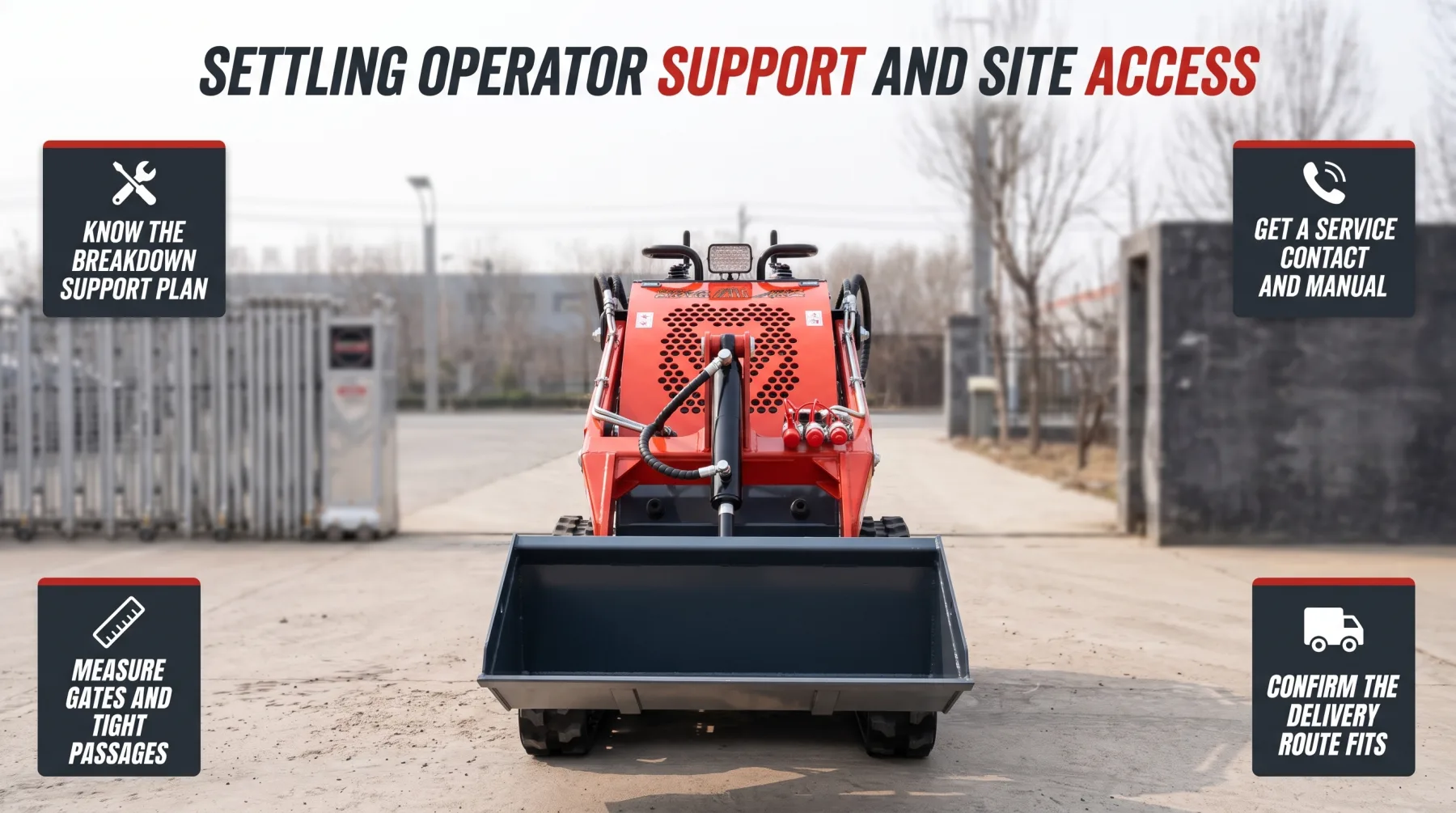
Consider a crew that books a full-size skid steer for a fenced backyard only to find the machine won’t clear the side gate. That whole rental day evaporates on a problem a two-minute measurement would have caught. What this means: line up the yard’s breakdown support and match both the machine’s dimensions and the truck’s route to your real site, and delivery stays a smooth start rather than an expensive dead end.
Conclusion
Booking a skid steer goes smoothly when you ask the right questions before you reserve rather than after the truck arrives. Describe your job, load, and ground so the yard sends the correct size, capacity, and track type, confirm the attachments and hydraulic flow the work demands, and read the rental terms line by line so the rate, billing, and extra costs hold no surprises. Check that the machine is recently serviced and document its condition on delivery, then line up breakdown support and confirm both the machine and truck can reach your site. Run this checklist before every booking, and you protect your schedule, your budget, and your crew’s first day on the job. When you’re ready to book a dependable skid steer matched to your work, reach out to a trusted equipment specialist who can pair a reliable machine with the results your projects depend on.
Frequently Asked Questions
What should I ask before renting a skid steer?
Start with the machine itself: confirm the size, rated operating capacity, track type, and width suit your job and access. Ask whether the yard supplies the attachments you need and whether the machine’s hydraulic flow can drive them. Clarify the rate, billing start and stop, delivery and fuel charges, and insurance terms, then check how recently the machine was serviced and what support the yard offers if it breaks down mid-rental.
How do I know what size skid steer I need?
Match the machine to your job, load, and site. Heavy loading and open-site grading call for a large-frame machine with high capacity, while tight residential yards, interior work, and turf-sensitive jobs suit a compact unit that fits gates and spares the ground. Confirm the rated operating capacity meets your heaviest load, and measure your tightest access point so the machine’s width clears it before you book.
Do I need high-flow hydraulics on a rented skid steer?
Only if you’re running attachments that require it. Standard-flow machines handle buckets, forks, augers, and lighter powered tools, while high-flow units drive demanding attachments like large mulchers, cold planers, and heavy breakers. Tell the yard exactly which attachments you plan to run, and confirm the machine’s flow rating matches them, since a high-flow tool won’t perform on a standard-flow machine.