Skid Steer vs Mini Excavator: Which Digs Faster and Deeper?
A crew rolls onto a site with a full day of trenching and grading ahead. One operator jumps on a skid steer with a bucket, ready to push, load, and grade across the open lot. The other fires up a mini excavator to dig a deep utility trench along the property line. By mid-afternoon, the skid steer has moved a mountain of material across the yard, but it still can’t cut the trench past knee depth. The mini excavator, meanwhile, has the trench dug clean and straight, yet it has barely touched the surface grading. Neither machine failed. They were simply built for different halves of the same job.
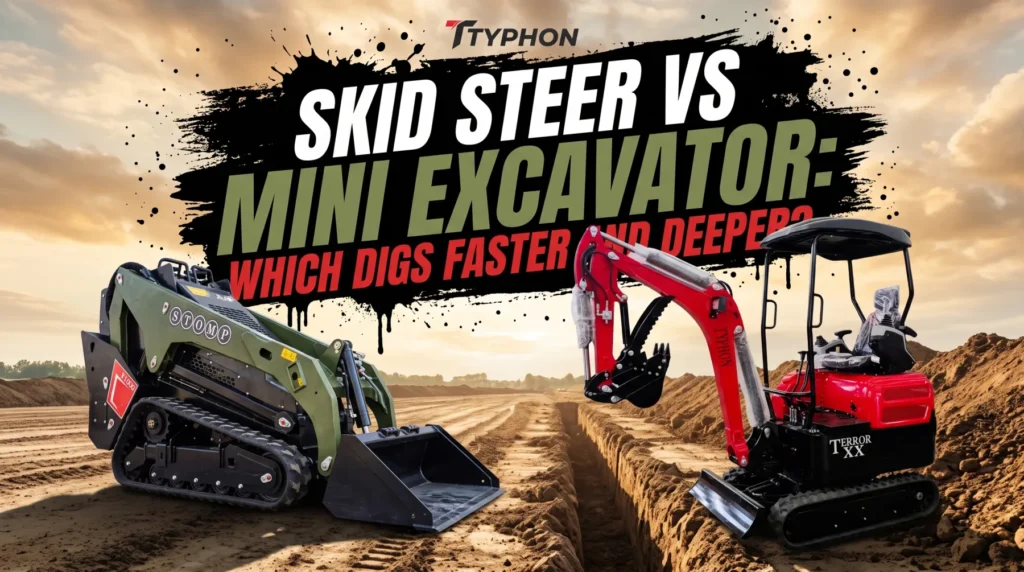
The choice between a skid steer vs mini excavator comes down to how each machine moves earth. A skid steer pushes, scoops, and carries material across a site with a front-mounted bucket, working fast on the surface. A mini excavator sits on tracks and swings a boom-mounted bucket to dig down and reach out with real depth and control. Both belong on nearly any earthmoving job, but they dig in completely different ways, and picking the wrong one costs you time, fuel, and a stalled crew. Here is how they stack up and when each machine earns its place.
The smartest operators do not choose based on which machine looks more powerful; they choose based on the work that needs to be done most often. Site layout, material type, digging depth, and the number of tasks happening at once all change which machine delivers better results. A skid steer can save hours when the job involves moving and shaping material, while a mini excavator becomes the clear winner when precision digging and access below ground are the priority. Understanding where each machine excels helps contractors avoid using the wrong tool for the task and keeps the entire project moving efficiently.
The Core Difference in How They Dig
Strip away the specifications and the difference becomes simple. A skid steer is built to move material across a site. It digs by driving a front-mounted bucket into a pile, pushing through loose material, then lifting and carrying the load to another location. Because the entire machine moves during the loading process, it excels at tasks like grading, backfilling, spreading gravel, clearing debris, and quickly moving large amounts of material around a jobsite. What it does not do well is deep excavation, because its front bucket is designed for surface work rather than reaching far below ground.
A mini excavator works in the opposite way. Instead of driving into the material, it anchors itself in place and uses a boom, arm, and bucket to reach outward and dig downward. This design allows operators to create deeper, cleaner cuts while maintaining better control over trench walls, foundations, utility lines, and precise excavation work. The ability to swing material to the side without repositioning the entire machine gives it a major advantage when working in confined areas or handling detailed digging tasks.
Here is the key idea: a skid steer moves material across the ground, while a mini excavator removes material from below the surface. Neither machine replaces the other because they solve different parts of the job. When you understand whether your project is mainly about loading, grading, and spreading or digging, trenching, and excavation, the right choice becomes much clearer. For crews that handle a mix of earthmoving tasks, knowing your typical workload and jobsite conditions matters more than comparing a single horsepower number or digging specification. The machine that matches your most common tasks will usually deliver the best productivity and return.
Performance Differences You Need to Know
The right machine depends on the digging your job actually demands, not the widest range of tasks you can imagine. A skid steer and mini excavator can both move earth, but they approach the work from completely different angles. One is built for speed, versatility, and surface movement, while the other is designed for depth, precision, and controlled excavation. Looking at the factors that affect your daily workflow, site conditions, and project goals makes it easier to choose the machine that keeps your crew productive. Here is how the two stack up across the areas that decide the job.
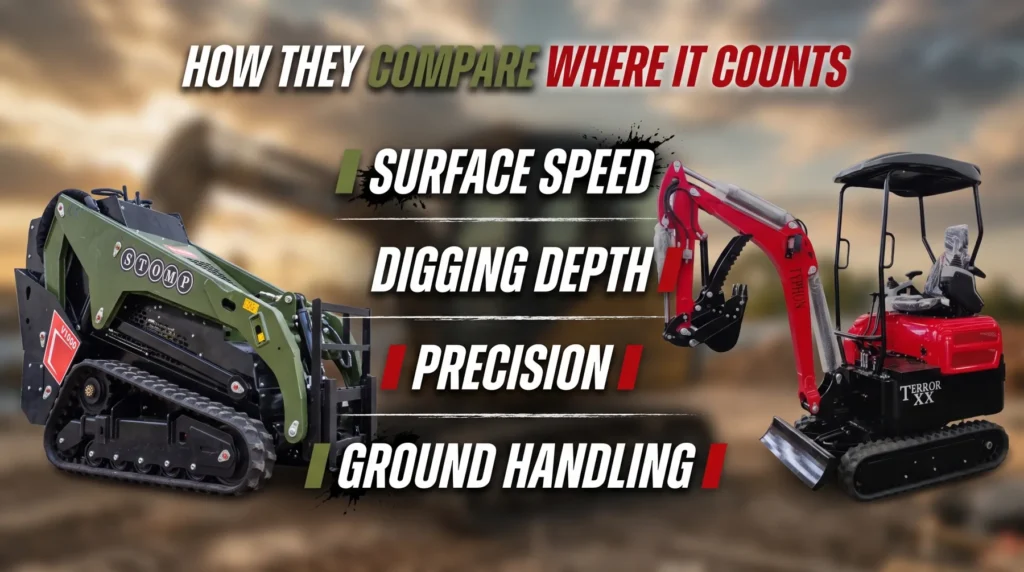
Digging Speed on the Surface
For moving material fast across an open area, a skid steer usually wins. It scoops a full bucket, drives it to the pile, dumps, and comes back, and it does that cycle quickly on firm, level ground. Backfilling a trench, spreading gravel, stripping topsoil, or loading trucks all play to its strengths. When the work is about volume moved per hour on the surface, a skid steer keeps pace better than a mini excavator ever could.
A mini excavator is slower at that kind of bulk surface work because it has to swing, dump, and reset within its reach radius. It can load and move material, but it was never built to haul it across a site. Where the mini excavator gets its speed back is in the dig itself, cutting a clean trench far faster than a skid steer scraping at the ground from the front.
Digging Depth and Reach
This is where the mini excavator pulls ahead without argument. Its boom and arm reach down several feet below grade, cutting trenches for water lines, footings, drainage, and utilities with depth a skid steer cannot touch. Even a compact model reaches depths a front bucket will never see, and larger units dig deeper still. When the job calls for going down, the mini excavator is the tool.
A skid steer digs only as deep as it can push its bucket into the ground, which is shallow by comparison. It can trench a little, scrape, and grade the surface, but ask it to cut a footing four feet down and it simply can’t. For any work that lives below grade, depth alone settles the question. Manufacturers publish maximum dig depth and reach figures for exactly this reason, and comparing them against your typical jobs is worth the effort before you rent or buy.
Cycle Times and Precision
Cycle time depends entirely on the task, which is why crews often run both. A skid steer’s cycle is a drive-and-dump loop, fast and repetitive across the surface. The more open ground you have, the quicker that loop runs. A mini excavator’s cycle is a dig-swing-dump arc, and because the machine stays planted, it repeats that arc with steady precision in one spot.
Precision is where the mini excavator earns its keep. That boom control lets an operator cut a clean trench line, dig around existing utilities, and place spoil exactly where it belongs. A skid steer is less precise for fine digging, though it grades and levels a surface faster once the excavation is done. The two machines complement each other, which is why so many sites keep both working.
Maneuverability and Ground Handling
Both machines are compact, but they move differently. A skid steer turns in place, darts across firm ground quickly, and handles tight surface work well, though soft or muddy ground can bog down a wheeled unit. A tracked skid steer holds up better in poor conditions, and if traction is your daily fight, weighing pays off before you commit.
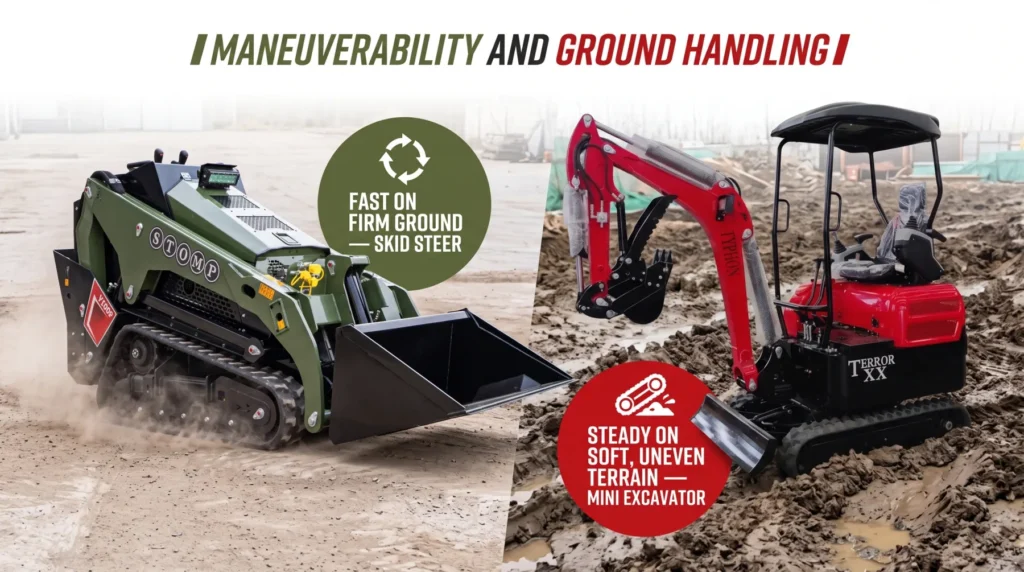
A mini excavator rides on rubber tracks that spread its weight, so it crosses soft, wet, and uneven ground that would stall a wheeled machine. Its ability to plant, dig, and reposition makes it steady on rough sites. For tight or confined work, a zero tail swing mini excavator rotates without hanging over obstacles, which a skid steer can’t replicate near walls and fences.
Making the Right Equipment Choice
Choose a skid steer if your work leans on moving material across the surface, backfilling, grading, spreading gravel, loading trucks, and running attachments like augers, brooms, and grapples. Its speed on the surface and its versatility with attachments make it the workhorse for jobs that live at or near grade. For crews who spend their days pushing and hauling rather than digging deep, a skid steer is usually the smarter buy.
Choose a mini excavator if your work regularly takes you below grade, digging trenches, footings, drainage, foundations, and utility lines with depth and precision. Its reach, control, and ability to work on soft or confined ground make it the machine when the job is about going down rather than across. For contractors doing excavation and utility work, this is the tool that earns its keep.
On cost, a skid steer often carries a slightly lower entry price and a deep used market, and its attachment range lets one machine cover many surface tasks. A mini excavator typically costs a bit more for comparable size, but for digging work it saves so much time that the price difference pays back fast. Following a steady protects either machine and stretches component life, and safe operating practices around trenches and open excavations protect the whole crew on site.
Conclusion
Both machines move earth, so the choice comes down to which direction you need it moved. A skid steer pushes, scoops, and carries material fast across the surface, making it the pick for backfilling, grading, loading, and attachment-driven work at or near grade. A mini excavator digs down and reaches out with depth and precision no front bucket can match, which makes it the tool for trenches, footings, and utility work below grade. Digging speed on the surface favors the skid steer, while depth, reach, and fine control favor the mini excavator. For many sites, the real answer is running both, letting each machine handle the half of the job it was built for. Match the machine to the ground you work most, weigh the spec sheets and cost against your typical jobs, and when you are ready to source dependable equipment, reach out to a trusted equipment specialist who can pair reliable machines with the results your projects depend on.
Frequently Asked Questions
Which digs deeper, a skid steer or a mini excavator?
A mini excavator digs far deeper because its boom and arm reach several feet below grade, while a skid steer can only push its bucket a short depth into the ground.
Is a skid steer faster than a mini excavator?
A skid steer is faster for moving material across the surface, but a mini excavator is faster and cleaner at cutting trenches and digging below grade.
Do I need both a skid steer and a mini excavator?
Many sites run both, since a skid steer handles surface hauling and grading while a mini excavator handles deep digging, and together they cover most earthmoving work.