Mini Excavator Benefits for Construction Jobsites
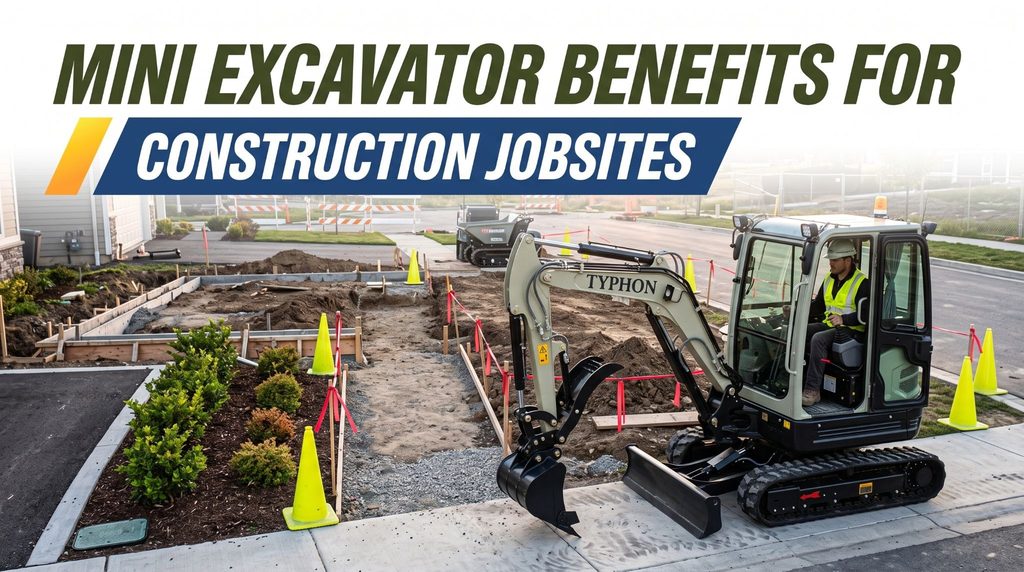
Working on a residential lot can involve several excavation tasks within a very limited space. A foundation footing may need to be dug, a utility trench can run toward the street, and a drainage channel may follow the back of the property. When the only access is a narrow gate between the house and a fence, bringing a full-size excavator into the yard may not be practical.
A mini excavator provides a more compact option for these conditions. Its smaller footprint allows it to pass through restricted access points while still handling digging, lifting, trenching, and site preparation work. Careful operation can also help limit unnecessary disturbance to landscaped areas, existing structures, and other features around the work zone.
Choosing the right mini excavator for the property helps balance access, digging capability, and ground protection. Machine width, operating weight, digging depth, tail swing, and available working space all deserve consideration before the equipment arrives. With the right setup, a mini excavator can handle demanding residential excavation tasks while fitting into spaces where larger equipment cannot.
Compact Size Supports Tight Access
The defining strength of a mini excavator is where it can go. These machines fit into areas that simply don’t have room for larger equipment, which turns access from a roadblock into a non-issue on many jobs. When a site is boxed in, that compact footprint is what gets the work started.
The advantage shows up in the spots that stop bigger machines. Narrow gates, residential yards, driveways, and the tight spaces between structures all become workable when the machine is sized to pass through them. Rather than dismantling a fence or finding a longer way around, you bring the excavator straight to where the digging needs to happen. On crowded or enclosed sites, that direct access saves both time and disruption.
Key takeaway: A mini excavator’s compact dimensions let it reach areas larger equipment can’t, including narrow gates, yards, driveways, and spaces between structures.
Digging Performance Covers Common Tasks
A compact mini excavator can handle a wide range of everyday excavation work without the size of a larger machine. Foundation digging, utility trenches, drainage channels, landscaping, and general site preparation are all common applications where controlled excavation is required. Its smaller size makes it especially practical for projects where access and working space are limited.
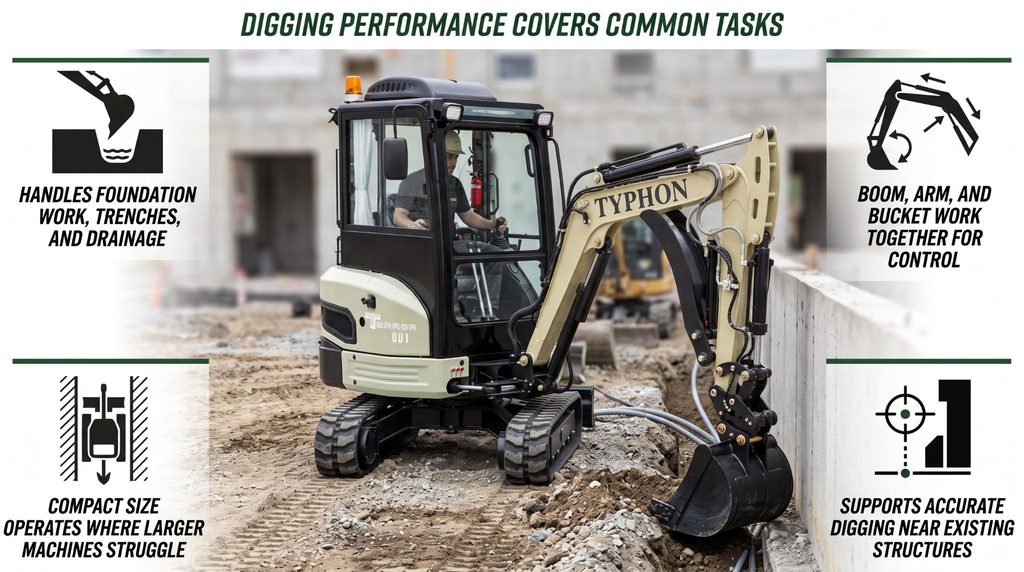
The combination of the boom, arm, and bucket allows operators to control the digging process and work accurately in confined areas. This makes it possible to follow trench lines, work close to existing structures, and shape ground for landscaping while maintaining a manageable machine footprint. The result is useful digging capability without unnecessary bulk on the jobsite.
- Common Excavation: Handles foundation work, utility trenches, drainage, and general site preparation.
- Boom & Arm Control: Works together with the bucket to provide controlled digging movements.
- Confined-Space Work: Compact dimensions help the machine operate where larger equipment may struggle to position.
- Precision Digging: Supports accurate trenching, foundation excavation, and ground shaping around existing features.
Key takeaway: With a suitable boom, arm, and bucket, a mini excavator handles foundation digging, utility trenches, drainage, landscaping, and site prep while keeping control in confined areas.
Attachments Increase Jobsite Versatility
A bucket is only the beginning of what a mini excavator can do. Depending on the machine, a range of attachments extends its usefulness well beyond digging, so a single excavator can take on tasks that might otherwise call for separate equipment. That flexibility is a large part of the machine’s value on a busy site.
The options cover a wide spread of work. Hydraulic breakers handle demolition, augers drill clean holes for posts or footings, thumbs grip and move awkward material, and compactors prepare and firm up ground. With the right attachment fitted, one machine moves from breaking concrete in the morning to drilling holes and handling material later in the day. Confirming each attachment suits the specific machine and its hydraulic system keeps that versatility practical and reliable.
Key takeaway: Beyond buckets, attachments like hydraulic breakers, augers, thumbs, and compactors let a mini excavator support demolition, drilling, material handling, and ground preparation.
Maneuverability Helps Around Obstacles
Real jobsites are rarely open and clear. Buildings, fences, trees, utility lines, and other equipment all crowd the work area and restrict how a machine can move. A mini excavator is built to work within those constraints rather than fighting them.
Its compact dimensions and responsive controls are what make the difference. The machine repositions easily in tight quarters, turns in limited space, and works close to obstacles without the constant risk of contact that a larger machine brings. Threading between a building and a row of trees, or working alongside existing utility lines, becomes a controlled task instead of a hazard. That agility keeps the work moving on sites where a bigger machine would spend more time maneuvering than digging.
Key takeaway: Compact dimensions and responsive controls let a mini excavator reposition easily around buildings, fences, trees, utility lines, and other equipment.
Lower Space Requirements Simplify Site Work
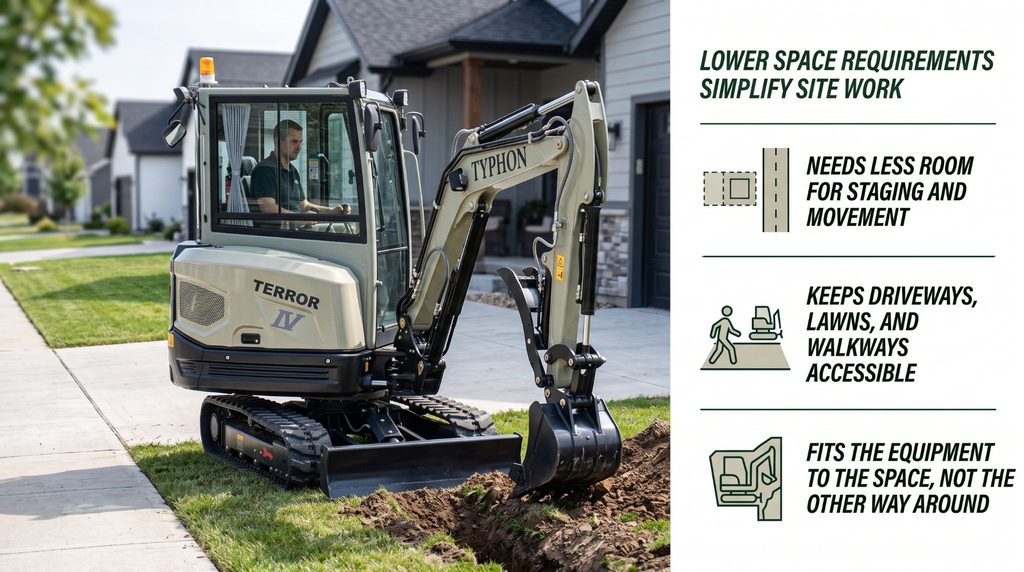
Beyond digging and moving, a mini excavator asks less of the site itself. It needs less room for staging and movement than a larger machine, which frees up space that a crowded jobsite can rarely spare. On tight lots, that smaller demand keeps the whole operation more workable.
This matters most on residential projects. Workers often need to maintain access around driveways, lawns, sidewalks, and existing structures throughout the job, and a machine with a smaller footprint leaves that access intact. There’s less need to block a driveway or cordon off a wide staging area, so the property stays usable and the crew keeps moving. Fitting the equipment comfortably into the space available, rather than forcing the space to accommodate the equipment, makes for a smoother project from start to finish.
Key takeaway: A mini excavator needs less room for staging and movement, which helps on residential projects where access around driveways, lawns, sidewalks, and structures must stay open.
Machine Size Should Match the Project
Choosing a mini excavator comes down to fitting the machine to the actual work. Several characteristics deserve attention together: operating weight, digging depth, reach, hydraulic performance, and attachment compatibility. Each shapes what the machine can realistically handle on your site.
Weighing these against the job is what prevents a poor fit in either direction. A machine that’s too large can defeat the very access and space advantages you’re after, while one that’s too small may fall short on depth, reach, or hydraulic power for the task. Confirm the digging depth and reach suit the excavation, the hydraulic performance supports the attachments you’ll run, and the operating weight fits the ground and access. Matching these to the real work helps you avoid bringing equipment that’s either oversized for the space or insufficient for the job.
Key takeaway: Operating weight, digging depth, reach, hydraulic performance, and attachment compatibility all matter, so match them to the actual work to avoid a machine that’s too large or too small.
Conclusion
A mini excavator combines compact dimensions, digging capability, maneuverability, and attachment versatility to support construction work where access and space are limited. Its compact profile allows it to pass through narrow gates and operate around buildings, fences, trees, and other obstacles, while the boom, arm, and bucket support foundations, trenches, drainage, grading preparation, and general excavation. Attachments such as breakers, augers, thumbs, and compactors extend its capabilities beyond standard bucket work, while responsive controls help maintain precise positioning in confined areas. Before operation, contractors should measure the tightest access points, identify all required tasks, confirm attachment compatibility and hydraulic requirements, plan working and staging areas, and match operating weight, digging depth, reach, and machine capacity to the job. Matching the mini excavator to the site’s access, ground conditions, workload, and attachment requirements supports efficient and reliable performance across residential, utility, landscaping, and general construction applications.
Frequently Asked Questions
What are mini excavators commonly used for?
Mini excavators are used for a wide range of construction and site-preparation tasks, including trenching, foundation work, drainage, landscaping, backfilling, and general excavation. Their compact size allows them to work in confined areas where larger excavators may have difficulty positioning accurately. Attachments also expand their capabilities, such as breakers for demolition, augers for drilling, thumbs for material handling, and compactors for ground preparation. This combination of compact dimensions, digging capability, and attachment versatility makes mini excavators useful across residential, utility, landscaping, and general construction projects.
Are mini excavators suitable for residential construction?
Yes. Mini excavators are particularly well suited to residential construction because their compact dimensions allow them to work around houses, driveways, fences, and other structures. They can pass through narrow gates and operate in confined yards or spaces between buildings where larger equipment may not fit. Their smaller footprint can also reduce disruption to lawns, sidewalks, and finished surfaces. With suitable digging depth, reach, and attachments, they can handle foundation excavation, utility trenching, drainage, backfilling, and landscaping work around residential properties.
Can a mini excavator use different attachments?
Yes. Many mini excavators can use a range of attachments, including buckets, hydraulic breakers, augers, thumbs, rakes, and compactors. These tools allow one machine to perform different tasks such as digging, demolition, drilling, material handling, and ground preparation without requiring separate equipment for every job. However, each attachment must match the excavator’s mounting system, hydraulic flow, pressure, and overall capabilities. Checking compatibility before installation helps maintain reliable performance and prevents unnecessary strain on the machine or attachment.
What should contractors consider when selecting one?
Contractors should match the mini excavator to the actual job requirements rather than focusing on one specification. Important factors include operating weight, overall dimensions, digging depth and reach, hydraulic performance, ground conditions, and attachment compatibility. Machine dimensions are especially important when working through narrow gates or confined sites, while operating weight affects stability, transport, and suitability for the ground. If hydraulic attachments will be used, confirm that the machine can provide the required flow and pressure. Considering these factors together helps contractors select a machine that can access the site, perform the required work, and operate effectively under expected conditions.