How Skid Steer Wheelbase Affects Turning Behavior
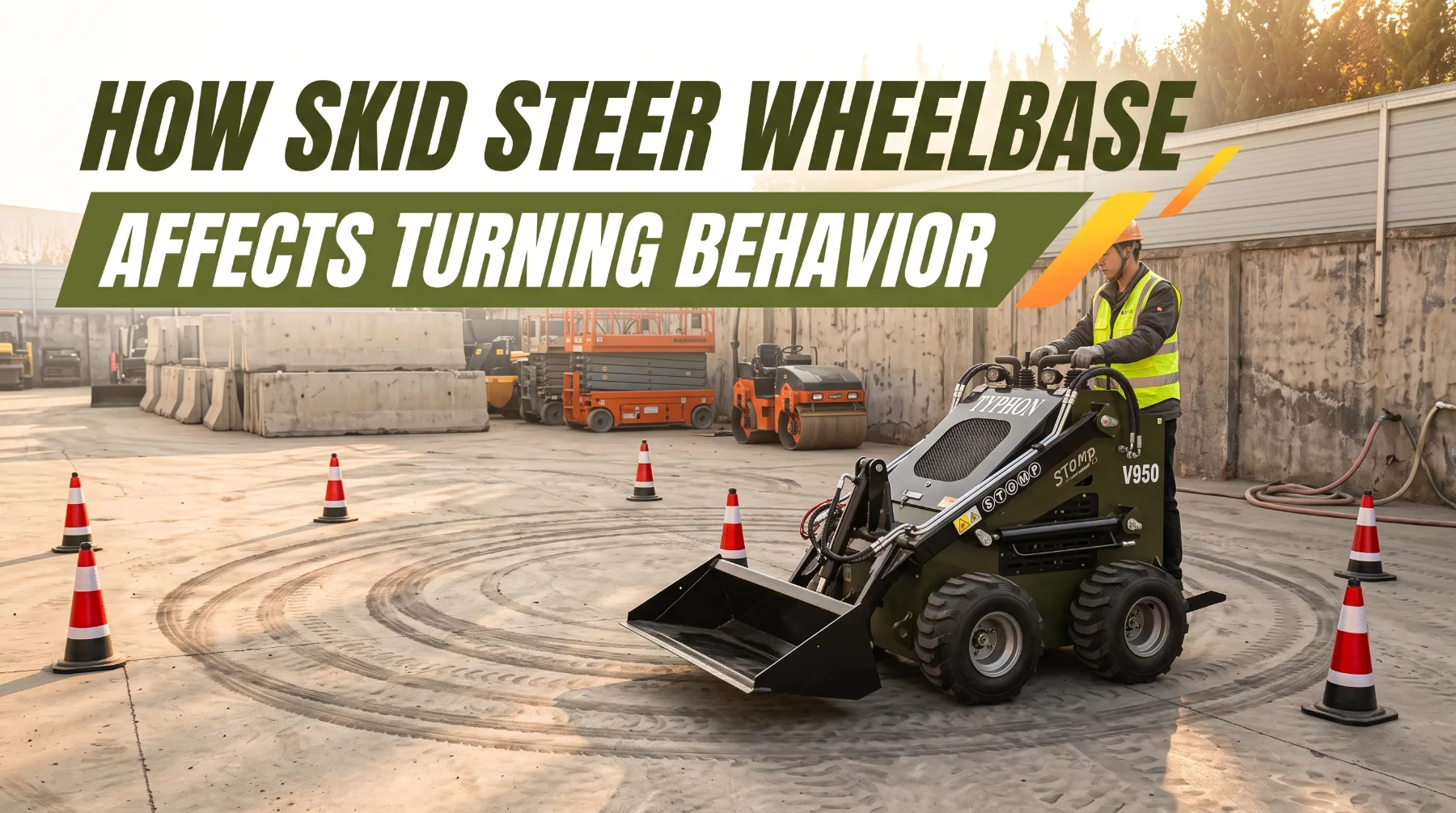 Working in a tight corner of a jobsite, a skid steer may have a building on one side, a gravel pile on another, and parked equipment directly behind it. The operator needs to rotate, line up the bucket, and move again without wasting space on repeated repositioning. A skid steer can make that maneuver through a tight pivot, and the wheelbase plays an important role in how the machine behaves during the turn. Differences in wheelbase can change how quickly the loader rotates, how it tracks through a turn, and how much surface it scrubs beneath the tires or tracks.
Wheelbase influences more than the size of the turning area. A shorter layout can make the machine feel more responsive during tight maneuvers, while a longer wheelbase can affect straight-line tracking and the way the loader moves through a turn. Tire or track configuration, steering geometry, operating surface, and machine dimensions also contribute to the final behavior.
For operators working around buildings, stockpiles, landscaping features, or other obstacles, understanding these relationships makes tight-space work easier to manage. The right technique also depends on controlling travel speed, positioning the attachment, and considering the surface before making a sharp turn. Looking at the wheelbase alongside the rest of the machine’s design gives a clearer picture of how a skid steer will behave when space is limited.
Wheelbase and Turning Radius
Wheelbase is the distance between the front and rear axle centers on a wheeled skid steer, and it directly shapes how the machine moves through a turn. A shorter wheelbase generally lets the loader rotate within a more compact area, which is exactly what tight jobsites reward. A longer layout changes how the machine tracks as it comes around, giving it a different feel through the same maneuver.
Wheelbase doesn’t act alone, though. Tire size, the steering system, and the machine’s overall geometry all feed into the final turning behavior. Two machines with similar wheelbases can still turn differently once you factor in their tires and build. The point is to treat the wheelbase as one key ingredient in turning behavior rather than the whole recipe.
Key takeaway: Wheelbase is the distance between axle centers, and a shorter one generally allows a more compact rotation, though tire size and machine geometry also shape the result.
How the Loader Pivots
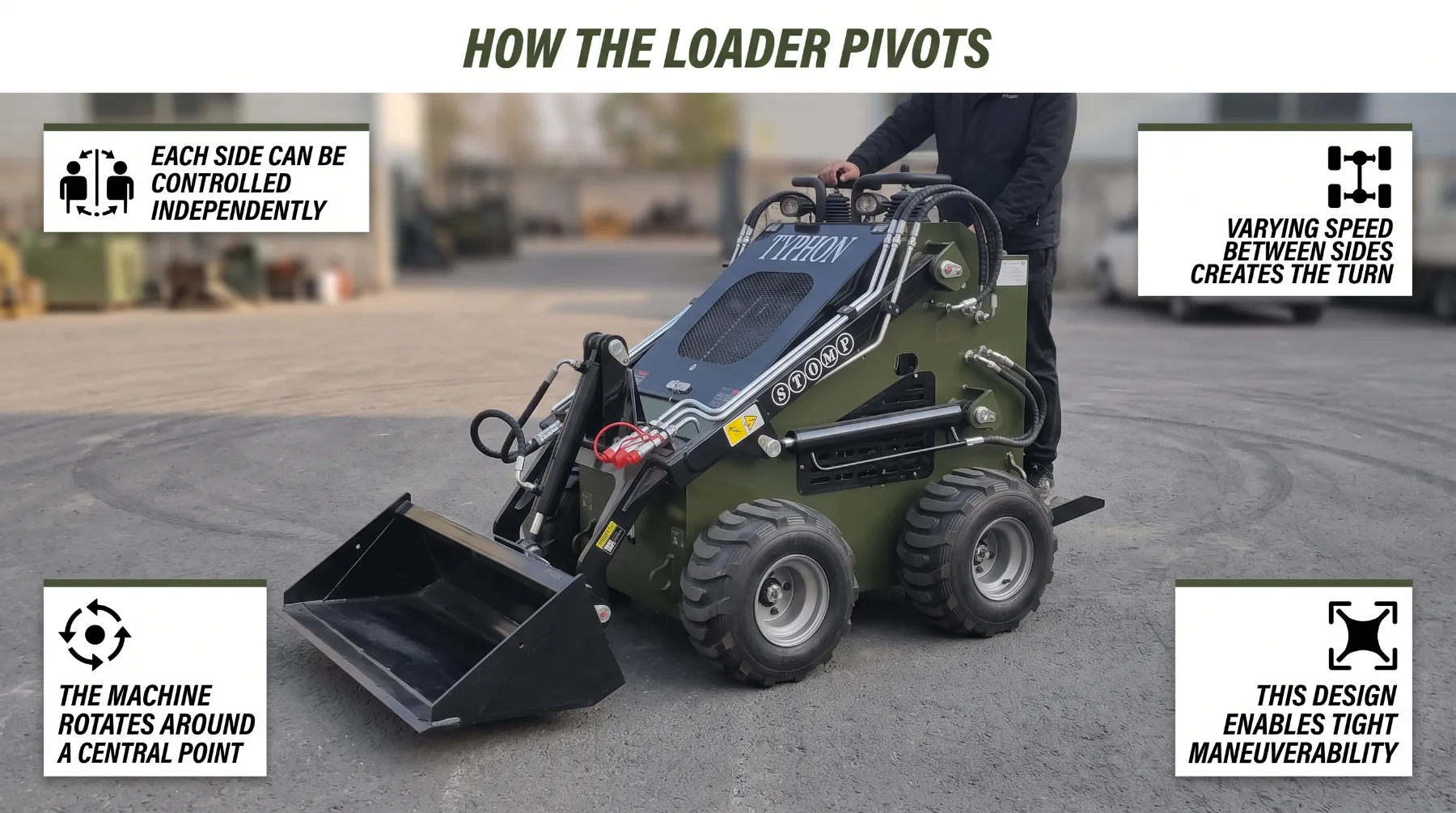 A skid steer changes direction by controlling the wheels or tracks on each side independently rather than steering the front wheels. By slowing one side relative to the other, or moving the two sides in opposite directions, the machine can rotate around its own center.
This skid-steer system gives the loader its distinctive maneuverability in confined areas. Instead of needing a wide turning arc, the machine can pivot within a much smaller footprint, making it easier to reposition and work around obstacles.
- Independent Side Control: Each side can be controlled separately to change the machine’s direction.
- Differential Speed: Varying the speed between the two sides creates the turning action.
- Central Pivot: The machine can rotate around a central point instead of following a wide turning arc.
- Tight Maneuverability: The pivoting design helps the loader operate effectively in confined spaces.
Key takeaway: A skid steer turns by driving the wheels on each side at different speeds or directions, pivoting around its center rather than steering through a curve like a conventional vehicle.
Effect During Tight Turns
The value of this design shows up most clearly in confined spaces. When you’re working close to a structure, a material pile, or other equipment, the ability to rotate in place without traveling far is what keeps the job moving. A compact wheelbase supports that, letting the machine come around while staying close to its working position.
Operators put this to use constantly. Repositioning beside a wall, lining up a bucket at a pile, or threading around a narrow obstacle all depend on tight, controlled turns. The more compact the machine’s turning footprint, the less room those movements demand, which is a real advantage on a crowded site where every foot of clearance counts.
Key takeaway: A compact wheelbase helps the machine rotate while staying close to its working position, which is valuable when repositioning near structures, piles, or narrow obstacles.
Tire Scrubbing and Ground Contact
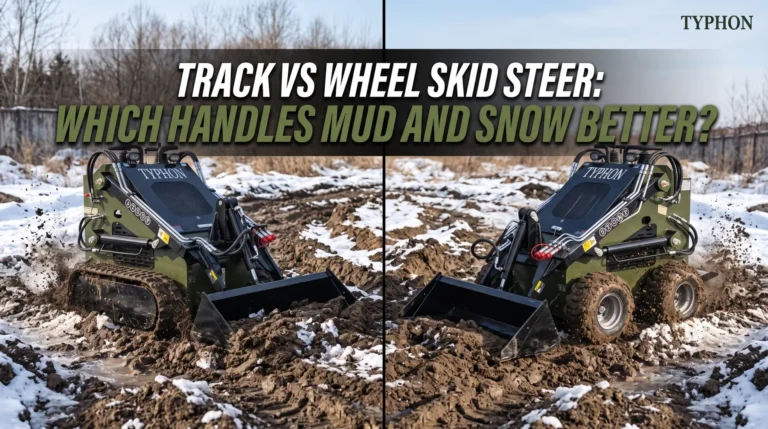
The same pivoting action that makes a skid steer so maneuverable also creates tire scrubbing. Because the wheels don’t follow a normal curved steering path, they drag sideways across the surface during a sharp turn. That scrubbing is a natural part of how the machine turns, but it has consequences worth understanding.
On hard surfaces, repeated pivots can show up as visible tire wear or marks and disturbance on the ground. Sensitive surfaces like finished concrete or turf can be affected more noticeably. Ground conditions, tire selection, and operating technique all influence how efficiently the machine turns and how much wear or disturbance results. Smoother, wider turns scrub less than aggressive spins in place, so technique makes a genuine difference.
Key takeaway: Sharp pivots cause the tires to scrub sideways across the surface, so ground conditions, tire choice, and turning technique all affect wear and surface disturbance.
Wheelbase During Forward Travel
Wheelbase influences more than tight turns; it also shapes how the machine behaves traveling straight and making gradual directional changes. A longer layout tends to offer a different sense of stability and tracking as the loader moves forward, holding its line in a way that can feel steadier over distance.
A more compact machine, by contrast, often feels more responsive during the frequent repositioning that tight work demands. Neither is simply better. The right balance depends on the type of work and the operating surface. A machine that spends its day making short moves in a confined yard benefits from compact responsiveness, while one covering more ground may favor the steadier tracking of a longer layout.
Key takeaway: Wheelbase affects straight-line travel too, with a longer layout tending toward steadier tracking and a compact machine feeling more responsive during frequent repositioning.
Load Position and Turning
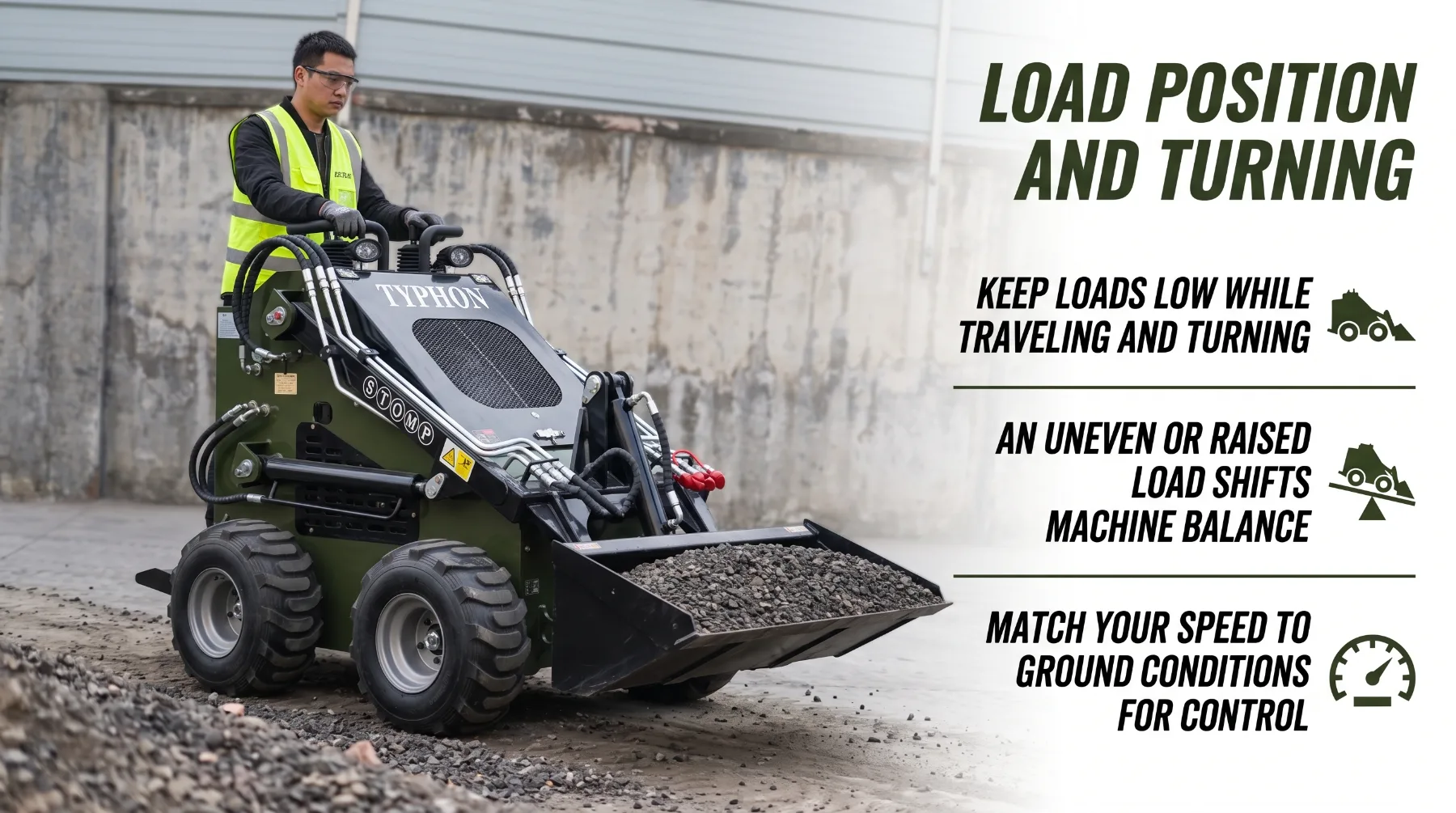 Carrying a bucket or attachment changes how the machine handles in a turn, and load position is central to keeping control. A raised load or one that’s unevenly distributed shifts the machine’s balance, which can affect stability and control precisely when you’re maneuvering. That effect grows on slopes and uneven ground, where the surface is already working against you.
The remedy is straightforward and worth making a habit. Keep loads low while traveling and turning, and hold your speed to what the conditions allow. A low, centered load keeps the machine’s balance where it belongs, and an appropriate travel speed gives you the time and control to turn safely. Together, these practices protect both stability and control through every turn.
Key takeaway: A raised or uneven load affects stability during turns, especially on slopes, so keeping loads low and traveling at an appropriate speed helps maintain control.
Matching Layout to the Jobsite
Different skid steer designs suit different working environments, and turning behavior is a big reason why. Tight landscaping areas, busy construction sites, material yards, and agricultural work each place their own demands on maneuverability. A machine that shines threading between garden features may not be the ideal pick for covering ground in an open yard, and vice versa.
Because of that, the wheelbase deserves consideration alongside the machine’s other characteristics. Operating weight, tire type, lift geometry, and overall machine dimensions all factor into how well a loader fits a given site. Weighing these together, rather than fixating on any one spec, is how you match a skid steer to the work it actually has to do.
Key takeaway: Landscaping, construction, material yards, and agricultural work each demand different maneuverability, so weigh wheelbase alongside operating weight, tire type, lift geometry, and machine dimensions.
Conclusion
A skid steer’s wheelbase influences turning behavior, pivot response, and straight-line tracking because it affects the machine’s geometry and contact with the ground. A shorter wheelbase generally allows tighter repositioning, while the skid-steer steering system creates turns by varying the speed and direction of the wheels on each side, allowing the machine to pivot within a compact area. Tire contact, ground conditions, load position, and steering input also affect how smoothly the machine rotates and how much tire scrubbing occurs during sharp turns. A longer wheelbase can provide more stable straight-line tracking, while a shorter configuration can improve maneuverability where frequent repositioning and confined turns are required. During turning, keeping loads low and controlling travel speed helps maintain stability and reduces unnecessary tire and surface wear. Wheelbase should therefore be considered together with overall machine dimensions, tire configuration, operating weight, load requirements, and jobsite conditions when selecting a skid steer for construction, landscaping, material handling, or agricultural work.
Frequently Asked Questions
Does wheelbase affect skid steer turning?
Yes. Wheelbase influences how a skid steer moves during a turn, although tire size, steering control, and overall geometry also matter. A shorter wheelbase generally allows tighter maneuvering, while a longer layout changes how the machine tracks through a turn. The wheelbase should therefore be considered as part of the machine’s overall design.
Why can a skid steer turn so tightly?
A skid steer turns by controlling the wheels or tracks on each side independently rather than steering the front wheels. One side can move slower than the other, or the sides can move in opposite directions, allowing the machine to pivot around its center. This gives skid steers their compact turning ability in confined spaces.
Does a longer wheelbase make a skid steer harder to turn?
A longer wheelbase changes turning behavior but does not automatically make a skid steer harder to turn. It can affect how the machine tracks through turns, while a shorter wheelbase may feel more responsive during frequent repositioning. Tire size, operating weight, steering system, and overall geometry also influence maneuverability.
Can tight turns damage the ground?
Yes. Sharp pivot turns can cause tire scrubbing and disturb hard surfaces, turf, or finished concrete. Because skid steers pivot rather than follow a conventional curved path, the tires can drag sideways during tight turns. Using wider turns, suitable tires, and smoother operating techniques can reduce surface damage.