Track vs Wheel Skid Steer: Which Handles Mud and Snow Better?
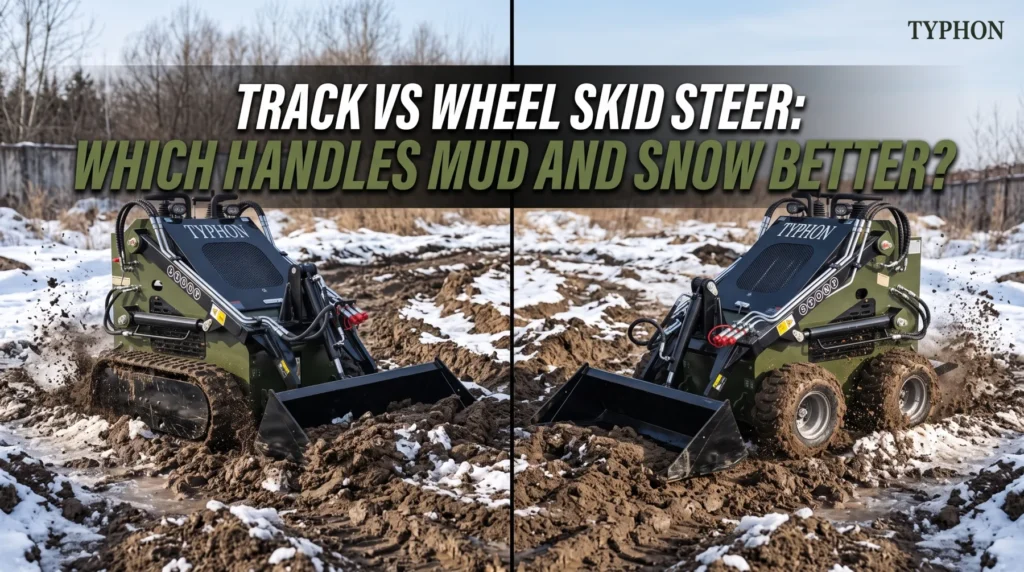
A grading crew shows up to a saturated site after three days of rain. The wheeled skid steer they brought digs itself into a rut before it reaches the pile, spinning all four tires while the operator burns fuel going nowhere. A track machine parked next to it crawls across the same soft ground, spreads its weight, and keeps working. That single morning is the whole debate in miniature. When the ground turns soft or slick, the machine under you decides whether the job moves forward or grinds to a halt.
The choice between a track skid steer vs wheel skid steer comes down to how each one puts power to the ground. Tracks spread weight over a large contact area and grip loose surfaces. Wheels ride on a smaller footprint, move faster on firm ground, and cost less to run. Both can work in mud and snow, but they do it very differently, and the wrong pick costs you time, fuel, and torn-up ground. Here is how they stack up and when each one earns its place.
One important difference is how each machine affects the jobsite itself. A tracked skid steer places less ground pressure on the surface, reducing the chance of deep ruts and helping preserve finished lawns, soft soil, and freshly graded areas. A wheeled skid steer concentrates more weight on each tire, which works well on hard, stable surfaces but can leave deeper marks when conditions are wet. If protecting the ground is just as important as moving material, the undercarriage can be as critical to productivity as the engine or hydraulic system.
Track vs Wheel at a Glance
When weather turns a job site soft or slick, track skid steers usually have the advantage in traction and stability. In mud, tracks perform much better because their larger footprint spreads the machine’s weight and helps keep it from sinking, while wheel skid steers are more likely to dig in and spin. In snow, track machines also tend to hold traction better, especially on packed snow, ice, or deeper drifts, while wheel machines do fine on plowed surfaces or lighter snowfall but can struggle as conditions worsen.
Tracks are also easier on the ground. They cause less damage on turf, gravel, and finished surfaces because they spread weight more evenly, while wheel skid steers are more likely to leave ruts or tear up soft areas. The trade-off is speed and cost. Wheel skid steers usually travel faster and cycle quicker on firm ground, and they also cost less to buy and maintain. Track skid steers are slower and typically come with higher upfront and undercarriage wear costs, but for contractors working often in mud, snow, or unstable ground, that extra traction can easily be worth it.
Why Tracks Win in Mud
Mud punishes a small footprint. A wheeled machine puts its full weight on four contact patches, so in soft ground those tires press down, break the surface, and sink. Once a tire loses grip, it spins, digs a rut, and the machine stalls out. That is the classic wheeled-skid-steer-in-the-mud problem every contractor has watched happen.
Tracks solve it with flotation. The long, wide track spreads the same machine weight across a far larger area, which lowers ground pressure and keeps the machine riding on top of soft ground instead of punching through it. Lower ground pressure is the single biggest reason a tracked skid steer keeps digging and grading when a wheeled one is stuck. Equipment manufacturers publish ground pressure figures for exactly this reason, and comparing them is worth the effort before you buy or rent.
Traction matters too. Rubber tracks bite into loose, wet material and pull the machine forward where a spinning tire only digs deeper. If your work regularly takes you onto wet clay, freshly graded lots, tracks are the safer bet for staying productive.
How the Two Compare in Snow
Snow is less one-sided, and this is where a lot of buyers guess wrong. Both machine types handle snow well, but the conditions decide the winner. On plowed lots, hard-packed snow, and shallow accumulation, a wheeled machine performs efficiently thanks to its higher travel speed and quicker cycle times, making it ideal for clearing large paved areas on a tight schedule. However, as snow becomes deeper, wetter, or starts turning to slush, traction becomes more important than speed. A tracked skid steer spreads its weight across a larger surface, helping it maintain grip and keep moving where wheeled machines are more likely to spin or lose momentum.
Deep snow and ice change the math. Tracked skid steer traction shines when the surface gets slick or the snow gets deep, because the wider footprint and gripping track keep the machine planted while it pushes a heavy blade or bucket. A wheeled machine on ice tends to slide and lose pushing power right when you need it most. For crews handling mixed snow removal work, pairing the right machine with the right often matters as much as the tracks or tires underneath.
One caution for cold-weather work: keep debris and packed snow out of a track undercarriage. Ice buildup in the rollers and idlers adds wear, so clear the tracks at the end of a cold shift.
Speed, Cost, and the Trade-Offs
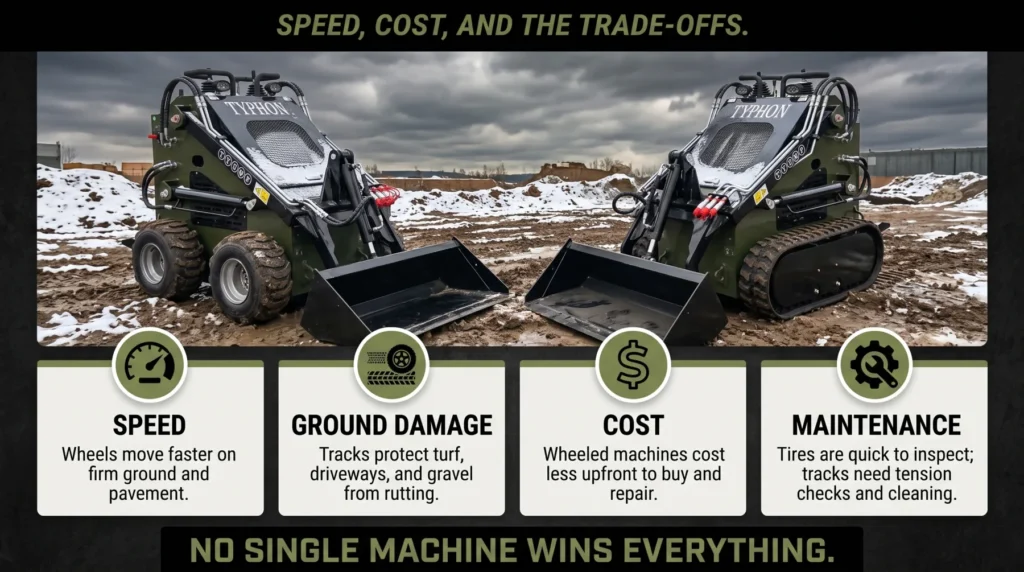
No single machine wins in every situation, and the strengths that make tracks excellent in mud and soft ground can also create trade-offs in other areas. Higher purchase costs, more maintenance, and slower travel speeds are part of what you accept in exchange for better traction and stability. The key is understanding which advantages matter most for the work you do every day.
Speed. Wheels are faster. On firm ground and pavement, a wheeled skid steer travels quicker and finishes high-cycle work sooner. If most of your day is on hard surfaces, that speed adds up to real productivity.
Ground damage. Tracks are gentler. The same low ground pressure that floats over mud also protects turf, finished driveways, and gravel from rutting and tearing. Landscapers and crews on established sites often choose tracks for that reason alone.
Cost. Wheels are cheaper across the board. A wheeled machine typically costs less to buy, and tire replacement is far simpler and cheaper than servicing a track undercarriage. Track and undercarriage wear is the biggest hidden expense of a tracked machine, especially if it runs a lot of hours on abrasive surfaces like concrete and sharp rock.
Maintenance. Wheels keep it simple. Tires are quick to swap and easy to inspect. Tracks demand more attention to tension, undercarriage cleaning, and wear, and following safe operating and maintenance practices protects both the machine and the operator. If you want to stretch component life, sticking to a steady pays off on either machine.
Making the Call for Your Site
Match the machine to the ground you actually work on, not the worst day you can imagine. The best skid steer is the one that spends most of its time working efficiently in your everyday conditions, rather than being optimized for situations you rarely encounter.
Choose a track skid steer if you regularly work in mud, soft soil, unstable terrain, deep snow, or wet construction sites where traction is critical. Tracks distribute the machine’s weight more evenly, reducing ground pressure and helping you stay productive when wheeled machines might struggle for grip. Although the upfront and maintenance costs are higher, the added stability and reduced downtime can easily justify the investment on challenging jobsites.
Choose a wheeled skid steer if your projects are primarily on pavement, gravel, concrete, or other firm surfaces where speed and maneuverability matter most. Wheeled machines travel faster, cost less to maintain, and generally provide a lower cost of ownership, making them an excellent choice for landscaping, material handling, property maintenance, and snow removal on plowed or lightly covered surfaces.
Still on the fence? Renting both machine types and using them on your own jobsites is often the best way to make a confident decision. Real-world conditions reveal differences that specifications cannot, and after a few days of working in your typical environment, you’ll quickly know which machine delivers the productivity, comfort, and performance your business needs.
Conclusion
Tracks win in mud and deep snow, while wheels win on speed, lower operating costs, and day-to-day simplicity. Neither machine is the universal answer because each is designed to excel in different working conditions. The right choice becomes obvious when you compare it to the ground you spend most of your time on rather than the occasional extreme weather event. If wet, soft, or slippery terrain is a regular part of your work, a tracked skid steer delivers the traction, flotation, and stability needed to stay productive while minimizing downtime and ground damage. On the other hand, if your jobs are mostly on pavement, gravel, or other firm surfaces and your winter work is limited to plowed lots or light snowfall, a wheeled skid steer offers faster travel, lower maintenance costs, and excellent overall efficiency. Matching the machine to your everyday environment instead of your toughest day will give you better productivity, lower ownership costs, and a machine that works with you instead of against you whenever conditions change.
Frequently Asked Questions
Which is better in mud, a track or wheel skid steer?
A track skid steer is better in mud because its larger footprint spreads weight and resists sinking, while wheels tend to spin and dig in.
Can a wheeled skid steer handle snow?
Yes, a wheeled skid steer works well on plowed lots and shallow snow, but it loses traction in deep snow and on ice where a tracked machine performs better.
Are track skid steers more expensive to maintain?
Yes, track and undercarriage wear costs more than tire replacement, so tracked machines generally carry higher long-term maintenance costs.