Wheels vs. Tracks: The Ultimate Skid Steer Showdown
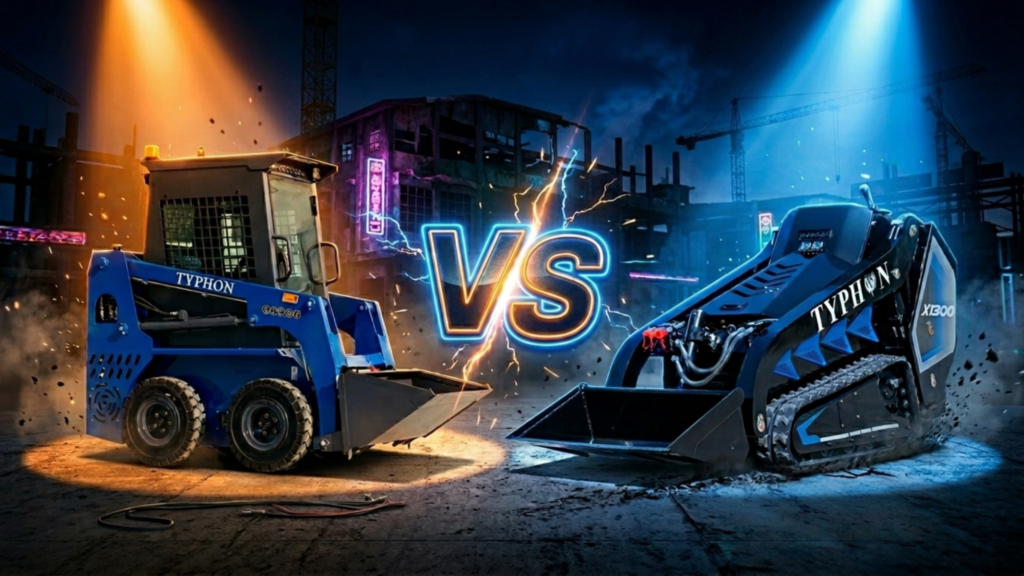
Walking onto a dealer’s lot to buy a skid steer is an exciting moment, but it quickly leads to a tough decision: should you choose wheels or tracks? This is one of the most important choices you will make for your business. Picking the wrong machine can lead to wasted time, extra costs, and a piece of equipment that makes your daily work feel much harder than it needs to be.
The truth is that there is no “perfect” answer for everyone. Whether a wheeled skid steer or a Compact Track Loader (CTL) is better for you depends entirely on your specific situation. You have to consider the ground you drive on, the weight of the materials you move, your budget, and the type of weather you work in throughout the year.
These two machines are built for different purposes, and choosing between them comes down to your job site conditions. A wheeled skid steer is generally faster and cheaper to maintain, making it the ideal choice for hard, flat surfaces like concrete or asphalt. In contrast, a track loader acts like a mountain goat, offering superior grip and stability on soft, muddy, or uneven ground where wheels might get stuck or cause damage. Because each machine shines in different environments, the right investment depends on looking past the sales pitch to see how they perform in your daily work. By carefully weighing the pros and cons of both, you can choose the perfect partner to help you finish your projects faster and more efficiently.
Terrain and Surface: Where Does Each Machine Thrive?
The ground you work on is the most important factor when choosing between a wheeled skid steer and a track loader. Each machine is designed for a completely different environment, and the surface beneath you is the biggest clue as to which one belongs on your specific job site.
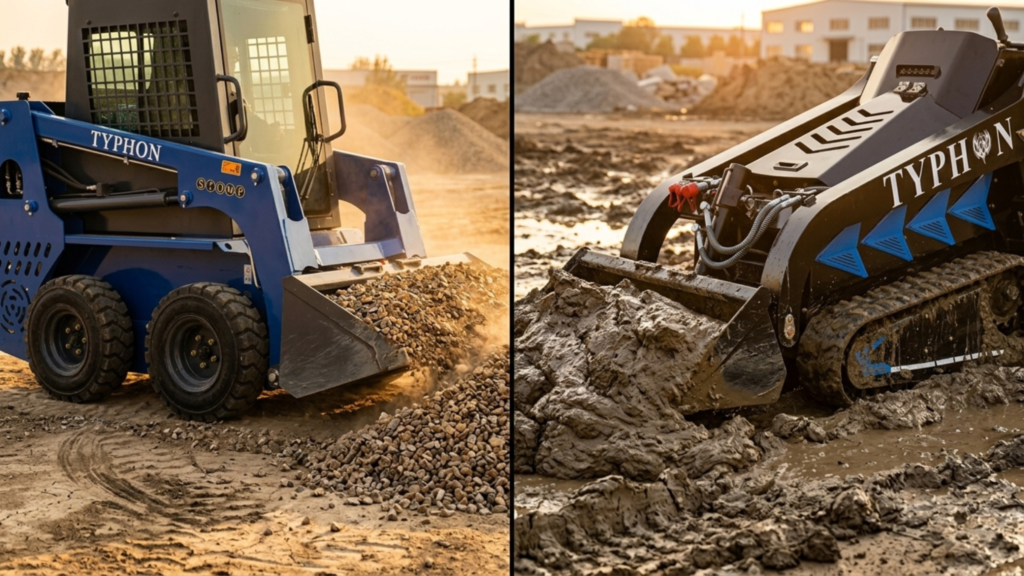
Wheeled skid steers are the undisputed kings of hard, solid surfaces. When you are working on concrete, asphalt, or other paved areas, four sturdy tires provide clean and efficient operation without damaging the ground below. This makes wheels the natural choice for parking lots, finished sites, or indoor work where protecting the floor is just as important as the task itself. With wheels, you can move quickly and navigate tight turns without leaving unsightly marks or tearing up the finished surface.
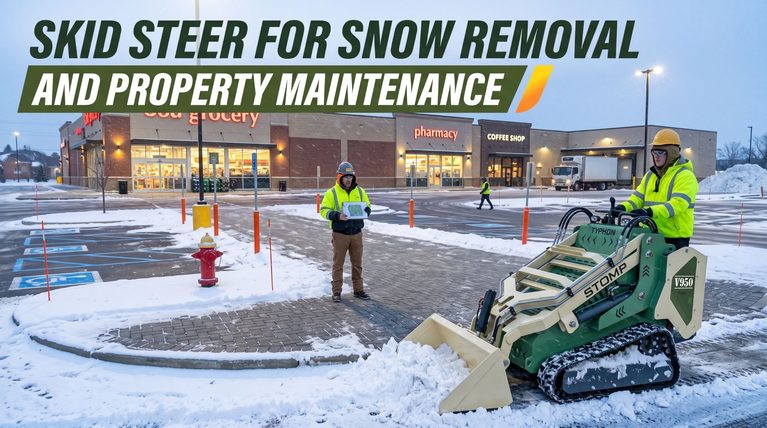
On the other hand, Compact Track Loaders (CTLs) are built to dominate soft, unpredictable ground. Because a CTL spreads its weight across a wide pair of heavy-duty rubber tracks, it has very low ground pressure. This allows the machine to “float” over mud, sand, loose dirt, and even snow where a wheeled machine would likely sink, spin its tires, or get stuck entirely. Just as importantly, those tracks distribute weight so evenly that they leave almost no ruts behind, protecting sensitive landscaping or soft soil from the deep gouges that wheels often carve out.
To visualize the difference, imagine working on a job site after a heavy rain. A wheeled machine might dig itself into the mud and tear up the lawn, causing extra cleanup work, while a CTL glides across the soft surface and keeps on working. However, if you move both machines to a concrete parking lot, the wheeled machine is faster and more efficient, while the tracks offer no real advantage. Understanding this balance is the key to choosing the right machine for your terrain.
Traction and Pushing Power: The Physics of Earthmoving
When your daily tasks involve heavy lifting, grading, or pushing large piles of dirt, the physics of ground contact becomes the deciding factor. This is the area where track loaders pull ahead. Because a Compact Track Loader (CTL) uses long tracks, it puts much more surface area on the ground than four tires ever could. That extra contact patch translates directly into superior traction and pushing power. When you are grading a steep slope, leveling a large pile, or driving a bucket into a dense bank, those tracks grip the ground and drive forward instead of slipping. The machine successfully transfers its engine power to the ground, ensuring that more force is used to move material rather than wasting energy by spinning tires.
Wheeled machines face a natural limit in these high-power situations. With only four small points of contact, they are much more likely to lose their grip when pushing heavy loads through loose, wet, or soft material. When the tires break traction, they dig in and stall your progress, which is frustrating when you need that power the most. While the performance gap shrinks on very firm, flat ground, the wheeled machine simply cannot match the raw grip of a CTL in challenging conditions.
For contractors who focus on serious earthmoving, grading, and deep digging, this traction advantage is a total game changer. It translates to fewer stalls throughout the day, more consistent output, and the confidence to take on difficult jobs in conditions that would completely stop a wheeled machine in its tracks. By understanding how your machine connects to the ground, you can ensure you have the right amount of muscle to tackle your toughest projects without losing time or momentum.
Upfront Costs vs. Long Term Maintenance
While performance is vital, the financial reality of your purchase matters just as much. When you look at the numbers, wheeled skid steers often hold a clear advantage.
The first benefit is a lower purchase price. Wheeled machines are generally cheaper to buy than comparable Compact Track Loaders (CTLs). For a contractor keeping a close eye on their budget or buying their first piece of equipment, that lower initial cost is a significant benefit.
The gap in costs also tends to grow over the life of the machine. When tires wear out, replacing them is a straightforward and relatively affordable job. Tracks, however, are a different story. High-quality rubber tracks cost much more to replace, and you also have to consider the undercarriage components hidden beneath them. Rollers, idlers, and sprockets eventually wear out, and replacing these parts can become quite expensive. In fact, maintaining the undercarriage is often one of the largest ongoing expenses for any CTL owner.
However, these higher costs do not automatically make wheels the smarter buy. The real question is how much extra income those tracks can generate for your business. A CTL that allows you to keep working through wet weather and soft ground, times when a wheeled machine would have to sit idle, can easily pay for its own higher costs through increased productivity. When making your decision, you must weigh the added maintenance expenses against the potential for completing more jobs in difficult conditions that would stop a wheeled machine cold. It is about balancing the money you spend today with the efficiency you gain on the job site tomorrow.
Speed, Agility, and Operator Comfort
How a machine maneuvers around a job site significantly impacts your daily efficiency and how the operator feels at the end of a long shift. Each machine offers distinct advantages in this area.
Wheeled skid steers are the clear winners when it comes to speed and agility. They travel much faster across large, flat sites, allowing you to cover ground and reposition between tasks quickly. They also pivot tightly and smoothly, spinning in place to maneuver through cramped spaces and around obstacles. If your work involves a lot of moving back and forth across firm ground, the time saved by that extra speed adds up quickly over the course of a day.
On the other hand, tracks are the winners for ride quality. The operator’s experience is a major factor, as tracks are designed to bridge gaps, bumps, and uneven ground, soaking up the jolts that would otherwise vibrate through the cab. When you compare this to the bouncy, jarring ride of a wheeled machine where the tires can act like springs over rough terrain, the difference is immediately noticeable. A smoother ride leads to less operator fatigue, which means better focus, steadier work, and a crew that stays productive through the entire shift.
So, how do you choose between them? Think carefully about your typical work environment. Fast travel on flat, firm ground definitely favors wheels. However, if you are spending long hours on rough, uneven terrain, the superior comfort of tracks will be a major benefit.
The Verdict: Which One Fits Your Business Model?
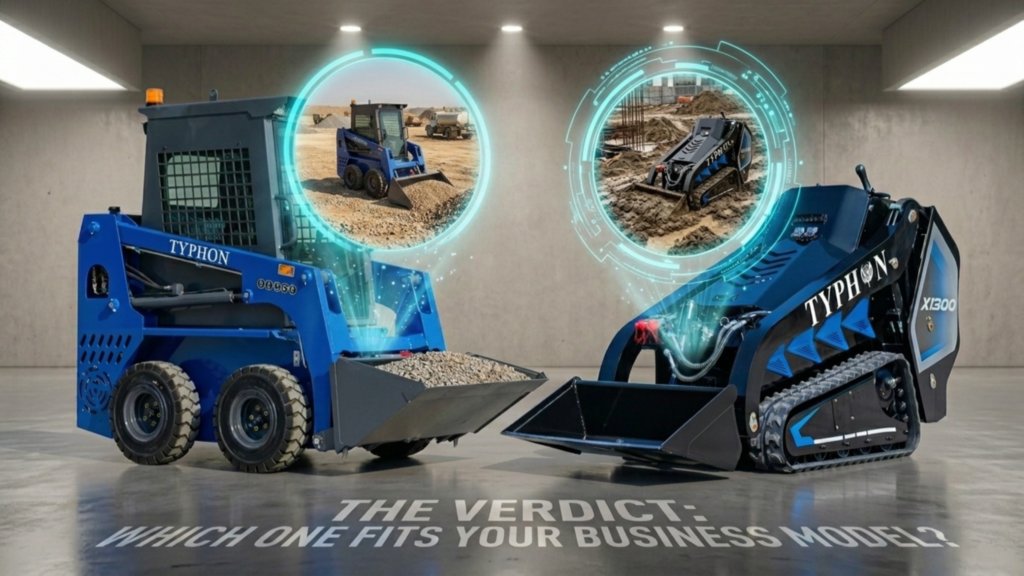
There is no universal winner in this showdown. The right machine is simply the one that best matches your specific trade, your typical job sites, and your local climate. To make the final call, use this simple checklist to see which direction fits your business model best.
Choose a wheeled skid steer if:
- You work mostly on concrete, asphalt, or other paved surfaces.
- You do demolition work where hard, debris-filled surfaces are standard.
- You run a paving business and need to protect finished ground.
- You operate in scrap yards or other solid, hard-ground environments.
- You want to keep your upfront purchase price and repair costs as low as possible.
- You need fast travel speed to move quickly across large, flat sites.
Choose a Compact Track Loader (CTL) if:
- You do landscape grading and often work on soft or finished lawns.
- You handle heavy earthmoving, dozing, and digging that requires serious traction.
- You operate in regions with wet winters, frequent mud, or lots of snow.
- You need to “float” over soft ground without sinking or leaving deep ruts.
- You need maximum pushing power to tackle your most demanding jobs.
- You value a smoother ride that helps reduce operator fatigue during long shifts.
When the decision feels like a toss-up, let your most common working conditions break the tie. The best investment is the machine that keeps you working steadily on the surfaces and in the weather you face every single day. By choosing the right tool for your specific environment, you ensure your business stays productive, profitable, and ready for any challenge the job site throws your way.
Conclusion
The debate between wheels and tracks doesn’t have a single “right” answer; it comes down to being honest about your daily work. Wheeled skid steers are the clear champions for hard, paved surfaces. They are generally more affordable to purchase and maintain, and their speed on flat ground is hard to beat. If you are working on concrete or asphalt, they are often the most efficient choice for your bottom line.
On the other hand, Compact Track Loaders are designed to conquer the elements. They offer the ability to “float” over mud, sand, and snow, providing the stability and traction you need when the terrain gets tough. Beyond their raw pushing power, they offer a much smoother ride, which keeps your operators comfortable and focused even during long, grueling shifts.
Ultimately, your smartest move is to pick the machine that aligns with your specific environment. Consider the surfaces you encounter, the weight of the materials you move, and the typical weather in your region. When you align your equipment choice with your most common job site conditions, your loader becomes more than just a piece of machinery, it becomes your most productive and dependable business partner.