How to Properly Operate a Skid Steer Trencher for Maximum Efficiency
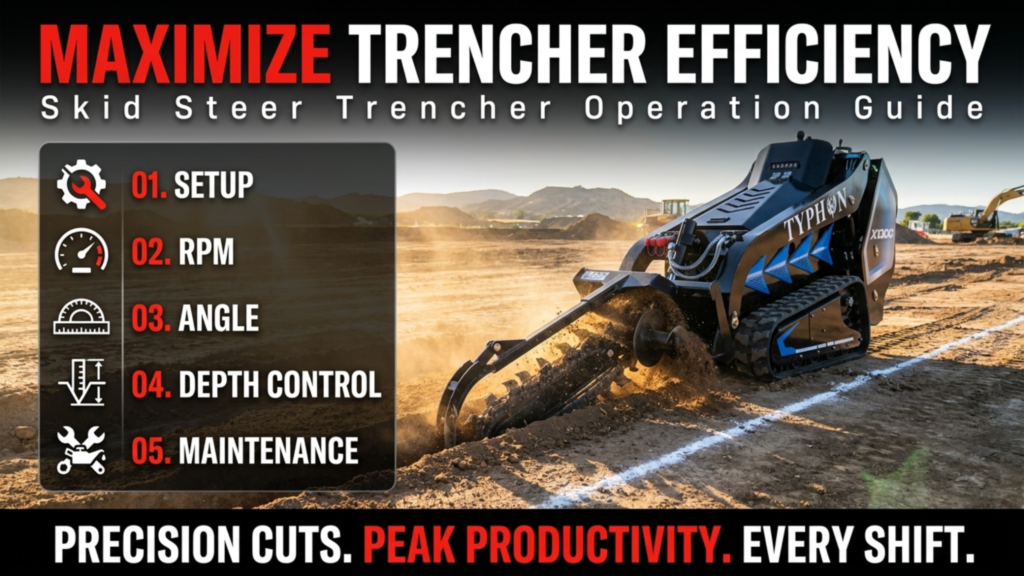
A skid steer trencher can dig clean, precise lines for pipe, cable, and drainage faster than any crew with shovels, but only when you run it right. Push the machine too hard, ignore the setup, or let the teeth dull, and that efficiency evaporates into stalls, uneven trenches, and premature wear. The difference between a productive day and a frustrating one rarely comes down to the machine itself. It comes down to how the operator prepares, controls, and maintains it. Learning to run a trencher properly protects your equipment, keeps your trenches clean and accurate, and gets more work done on every tank of fuel. This guide walks you through five areas that separate skilled trencher operation from guesswork, covering inspection and setup, ground speed and RPM, cutting angle and depth, spoil management, and the routine maintenance that keeps output high all day long.
Pre-Operation Inspection and Setup
Every efficient trenching job starts before the chain ever touches the ground. A thorough pre-operation inspection catches small problems while they are still cheap and easy to fix, rather than in the middle of a dig when they cost you time and money. Begin with the trencher teeth, checking for any that are dull, chipped, or missing, because worn teeth slow your cutting speed and force the whole system to work harder. Move on to the hydraulic lines, looking closely for leaks, cracks, or loose fittings that could fail under pressure. Then check your machine fluids, confirming hydraulic oil, engine oil, and coolant all sit at proper levels so nothing runs dry or overheats once you start working.
Setup is just as important as inspection, and it begins with positioning the skid steer correctly. Line the machine up so the trencher follows the exact path you intend to dig, giving yourself a clear, straight approach before you engage the chain. A well-positioned machine trenches more accurately and puts less strain on the attachment, since you are not constantly correcting your line.
Finally, make sure the spoil auger is clear of any debris left over from previous work. A blocked or fouled auger cannot move soil away from the trench, which leads to buildup, mechanical strain, and a messy path behind you. Clearing it takes only a moment and ensures the auger works freely from the first cut. Taking these steps every time protects the machine from unnecessary strain and sets you up for a clean, efficient trench right from the start.
Mastering Ground Speed and Engine RPM
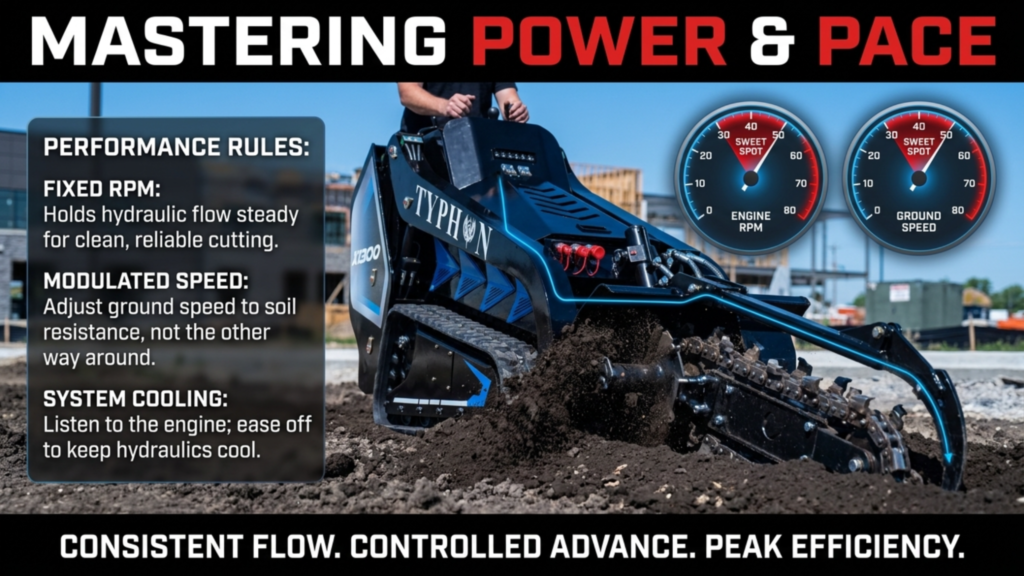
Once the machine is ready, controlling engine RPM and ground speed becomes the heart of efficient trenching. Your engine RPM drives the hydraulic flow that powers the trencher chain, so maintaining a consistent RPM that matches the manufacturer’s recommendation is essential. Set it too low, and the chain lacks the flow it needs to cut cleanly. Let it wander, and your cutting performance becomes inconsistent. Find the recommended RPM for your machine, hold it steady, and the hydraulic system delivers the reliable power the chain depends on to slice through soil at full efficiency.
Ground speed is the second half of the equation, and it is where operator feel really matters. While the RPM stays fixed, you modulate how fast the machine moves forward to match the soil conditions. Push forward too quickly, and you overload the chain, causing the engine to lug or even stall as the teeth try to remove more material than they can handle. Move too slowly, and you waste time without gaining a cleaner cut. The goal is a steady, controlled advance that keeps the chain cutting at a productive pace without bogging down.
Getting this balance right does more than protect your speed. It also guards the hydraulic system against overheating, which happens when the chain fights excessive resistance for too long. Listen to your engine and watch the chain as you work. If the engine begins to labor, ease off the ground speed and let the chain catch up before advancing again. With practice, matching consistent RPM to the right ground speed becomes second nature, letting you cut efficiently through varied soil while keeping both the engine and hydraulics running cool and strong.
Maintaining Correct Cutting Angle and Depth
Consistent depth is one of the clearest marks of skilled trenching, and it depends on how steadily you control the lift arms. To keep the trencher at your intended depth, adjust the lift arms smoothly and gradually, maintaining a consistent angle of attack against the terrain. This angle determines how the teeth engage the soil, and holding it steady lets the chain cut evenly from one end of the trench to the other. When the angle stays constant, the trencher settles into a rhythm, digging a uniform channel that needs little correction afterward.
The biggest mistake operators make here is changing depth too abruptly. Sudden adjustments to the lift arms throw off the angle of attack and disrupt the smooth cutting action the trencher relies on. Abrupt changes can cause the machine to hop or bounce, which is both hard on the equipment and disruptive to your line. That hopping places excessive stress on the cutting teeth, wearing them down faster and risking damage, while also leaving you with an uneven, ragged trench that fails to hold a proper grade.
Instead, treat depth changes as gradual transitions rather than quick moves. Ease the lift arms up or down slowly, giving the chain time to adjust to the new depth without losing its bite. Keep your eyes on the trench and the terrain ahead so you can anticipate changes in the ground rather than reacting late with a sharp correction. A steady hand on the controls keeps the angle of attack consistent, protects the teeth from unnecessary stress, and produces the clean, even trench that professional work demands. Patience and smooth control here pay off in both trench quality and equipment life.
Efficient Spoil Management
Managing the spoil, or the loose dirt the trencher removes, is what keeps your workspace clean and your trench ready for the next step. Position the unit so the auger clears the spoil effectively, moving it well away from the trench edge as you dig. When the auger does its job properly, the excavated soil ends up in a manageable pile to the side rather than heaped right at the lip of the trench. This positioning matters because spoil left too close to the edge tends to slide or fall back into the excavated path, forcing you to dig the same ground twice.
Continuous spoil management throughout the dig is far more efficient than cleaning up afterward. When the auger consistently carries material away from the trench, you avoid the buildup that would otherwise require manual shoveling to clear. That saves significant labor and keeps the job moving at a steady pace.
A well-managed spoil pile also keeps the workspace safe and ready for whatever comes next. Consider what proper spoil handling delivers:
- A clean, open trench free of dirt falling back into the excavated path
- Reduced manual cleanup that saves time and labor on every job
- A safer work area with spoil kept clear of the trench edge and walkways
- A ready path for crews to install utilities, pipe, or cable without delay
By keeping the auger clearing spoil effectively from start to finish, you protect the integrity of your trench and set up the following crew for smooth, safe work. Good spoil management is a quiet, ongoing effort that pays off in both cleanliness and productivity.
Routine Maintenance and Wear Management
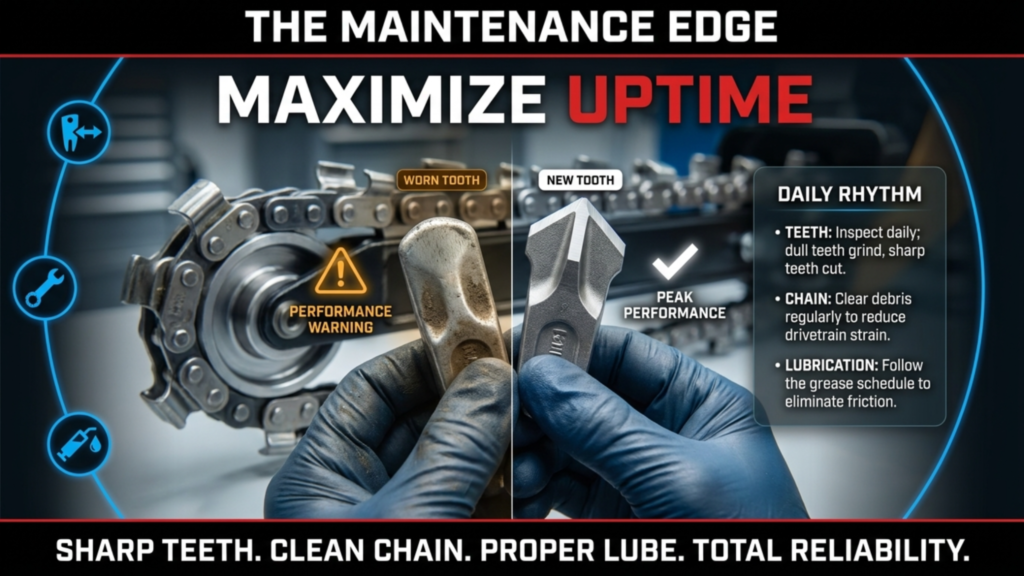
The final piece of efficient trenching is the maintenance you perform throughout the working day, not just at the shop. Trencher teeth take the brunt of the work, so monitor their condition regularly as you dig. Dull or missing teeth force the chain to grind rather than cut, which significantly decreases your cutting speed and increases fuel consumption as the machine works harder to accomplish less. Checking the teeth periodically and replacing worn ones promptly keeps the trencher cutting cleanly and efficiently, protecting both your pace and your fuel budget.
Beyond the teeth, the chain itself needs attention during operation. Rocks and roots have a habit of lodging in the chain as you dig, and left in place, they slow cutting and put extra strain on the drive system. Clear the chain of this debris regularly so it can move freely and cut at full efficiency. Making this a routine part of your day prevents small obstructions from turning into larger mechanical problems.
Daily grease maintenance rounds out the routine and is one of the simplest ways to extend the life of your equipment. Following the manufacturer’s greasing schedule keeps the moving parts of the trencher properly lubricated, reducing friction and wear on the components that do the hardest work. Combined with regular tooth inspection and chain clearing, this habit protects the attachment from the accelerated wear that neglect invites. Build these checks into your daily rhythm, and you will extend the lifespan of the trencher while maximizing daily output. A few minutes of attention throughout the day keeps the machine cutting fast, burning less fuel, and working reliably job after job.
Conclusion
Operating a skid steer trencher for maximum efficiency comes down to controlling the details that most operators overlook. A thorough pre-operation inspection and proper setup start you off strong, matching consistent engine RPM to the right ground speed keeps the chain cutting without lugging or overheating, and steady lift-arm control maintains the angle and depth that produce clean, uniform trenches. Add effective spoil management to keep the path clear and the workspace safe, along with routine tooth, chain, and grease maintenance to protect your speed and fuel efficiency, and you have a complete approach to trenching that delivers results. Each of these areas supports the others, so weakness in one drags down the whole operation. Put all five into practice consistently, train your crew to follow the same disciplined routine, and your trencher will dig faster, cut cleaner, and last longer on every job. When wear or mechanical issues run beyond routine care, trust a qualified technician to keep your equipment performing at its best.