
Top 5 Features to Look for in a Skid Steer Trencher Attachment
A trencher attachment turns your skid steer into a dedicated digging machine, cutting clean lines for pipe, cable, drainage, and irrigation in a fraction of the time hand digging would take. But not all trenchers are built the same, and the wrong choice can leave you fighting stalled chains, uneven depths, and messy trenches that need constant rework. The right attachment matches your soil, your machine, and the demands of your jobs, delivering reliable performance day after day. Knowing which features truly matter helps you invest with confidence rather than guessing at specifications. This guide breaks down the five features that separate a capable, dependable trencher from one that holds your crew back, giving you a clear framework for your next purchase or rental decision.
Heavy-Duty Chain and Teeth Configuration
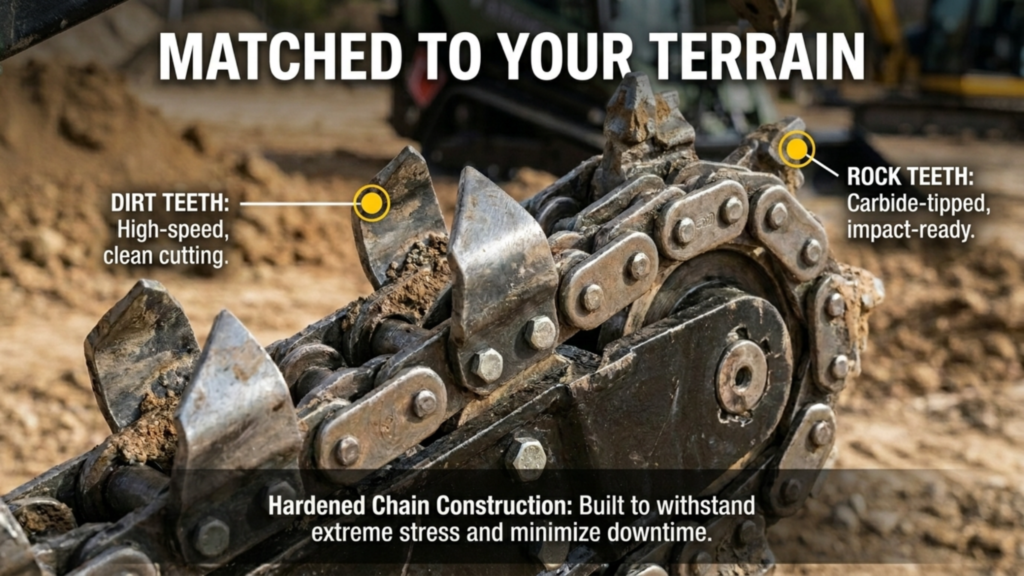
The chain and teeth are where a trencher meets the ground, so this is the first feature to evaluate closely. A high-quality digging chain paired with the right teeth determines how aggressively the attachment cuts and how long it lasts under pressure. The catch is that no single configuration works everywhere. Soft dirt, rocky ground, and frozen terrain each demand a different tooth design, and matching the teeth to your soil type is what delivers strong cutting action without premature wear. Choosing a chain built for the wrong conditions leaves you with slow progress and teeth that dull or break far too soon.
Different soils call for different setups, and understanding these options helps you specify the right one:
- Dirt teeth for soft to medium soils where speed and clean cutting matter most
- Rock and frost teeth with carbide tips for hard, rocky, or frozen ground
- Combination chains that handle mixed conditions across varied job sites
Beyond the teeth themselves, the quality of the chain matters just as much for durability. A robust, well-built chain withstands the constant stress of cutting through resistance without stretching or failing, while a cheap chain becomes a recurring source of downtime and replacement cost. Look for hardened components and a design suited to the demands you place on it. When you pair a durable digging chain with teeth chosen for your specific conditions, you get aggressive, efficient cutting and equipment that holds up through the toughest jobs, protecting both your productivity and your investment over the long haul.
Adjustable Depth Control Systems
Consistent trench depth is one of the clearest signs of quality work, and it depends heavily on the depth control system built into your trencher. A reliable attachment should feature an easy-to-adjust depth gauge or skid shoe that keeps your trenches uniform from start to finish. Without dependable depth control, trenches wander shallow and deep across their length, forcing you back over the same ground to fix inconsistencies. That rework costs time and labor you should never have to spend, and it undermines the professional finish your customers expect.
Precise depth control does more than keep trenches tidy. It saves significant time on grading, because a trench cut to the right depth the first time needs far less correction afterward. Just as important, it protects the underground utilities you cannot afford to hit. Digging too deep near existing lines invites damage, while inconsistent depth makes it harder to lay pipe or cable at the proper grade. A system that lets you set and hold a precise depth removes much of the guesswork and keeps every pass matching the one before it.
When evaluating depth control, look for adjustments that are simple to make and hold their setting reliably during operation. A skid shoe or depth gauge that shifts under load defeats its own purpose, so build quality matters here too. The easier the system is to set, the more likely your operators are to use it correctly on every job. A trencher with dependable, easy-to-adjust depth control helps you dig accurate trenches efficiently, avoid costly rework, and steer clear of the underground hazards that turn a routine job into an expensive problem.
High-Torque Hydraulic Drive System
The hydraulic drive is the engine of your trencher, and its power determines whether the attachment cuts steadily or stalls in tough ground. A high-torque motor is essential, because trenching regularly runs into dense, compact soil that demands serious force to cut through. When the drive lacks torque, the chain slows or stops the moment it meets resistance, killing your productivity and forcing frustrating restarts. A powerful hydraulic system supplies the muscle needed to keep the chain turning at a steady speed even when conditions get difficult.
Steady chain speed is the key to productive trenching, and it is exactly what high torque protects. As the teeth bite into compact material, resistance builds and tries to slow the chain. A motor with strong torque pushes through that resistance and maintains the pace, letting you dig continuously rather than in fits and starts. This consistency matters most in the hardest conditions, where a weaker drive would bog down repeatedly and turn a quick job into a long one.
Matching the trencher’s hydraulic requirements to your skid steer’s output is part of getting this right. An attachment built for high torque only delivers on that promise when your machine can supply the flow and pressure it needs, so confirm compatibility before you commit. A drive system that suits both the ground you dig and the machine you run keeps the chain moving, prevents the stalls that eat into your schedule, and gives you the reliable, uninterrupted cutting that dense and compact soils demand. Prioritizing torque here pays off every time the ground gets tough.
Integrated Crumber and Auger Design
A trench is only useful when it is clean, and that is where an integrated crumber and auger design earns its keep. As the chain cuts, loose soil falls back into the trench and piles at the edges, and without a way to manage it, you end up with a messy channel that needs hand cleaning before you can lay anything in it. A built-in crumber blade solves the first half of this problem by scraping loose material out of the bottom of the trench, leaving a clean base ready for pipe or cable. A side-mounted auger handles the second half, moving the excavated soil away from the trench edge so it does not spill back in.
Together, these two components deliver a clean, professional finish that would otherwise take extra labor to achieve. The crumber ensures the trench bottom stays clear and true to depth, while the auger keeps the spoil pile off to the side and out of your way. This combination matters because dirt falling back into the trench as you work forces you to dig the same ground twice, wasting time and effort on every pass.
When you evaluate a trencher, check that both features are well designed and work together smoothly. A crumber that clears the trench effectively and an auger that moves soil efficiently save you significant cleanup time and produce trenches that look and perform better. For crews focused on quality and speed, this integrated design is the difference between a trench that is ready to use and one that demands extra hands to finish. It is a feature that quietly protects both your finish quality and your schedule.
Compatibility with Quick-Attach Mounting
Even the best trencher only delivers value if it connects properly to your skid steer, which makes mounting compatibility a feature you cannot overlook. Choose a trencher with a universal quick-attach plate that fits your specific machine for a fast, secure connection. A proper fit lets operators mount and dismount the attachment in minutes without tools, so you spend more time trenching and less time wrestling with the setup. When the plate matches your machine correctly, the connection is solid and dependable, giving operators confidence that the attachment is locked in place before they begin.
Compatibility reaches beyond simple connection speed, though. A trencher that mounts correctly also ensures the hydraulic lines reach and connect properly, which is essential for the drive system to receive the flow and pressure it needs. Just as important, a proper fit keeps the machine’s center of gravity stable during operation. Consider what correct mounting protects:
- Fast, tool-free connection that reduces setup time between jobs
- Secure attachment that stays locked in place under load
- Proper hydraulic line reach so the drive gets full flow and pressure
- Stable center of gravity that keeps the machine balanced and safe
An ill-fitting attachment can leave the machine unbalanced, strain the hydraulic connections, and create safety risks during operation. Before you commit to a trencher, confirm that its mounting plate is compatible with your exact skid steer model rather than assuming a universal plate will fit every machine. Taking that step protects your safety, your productivity, and your equipment, ensuring the attachment performs as intended from the moment you connect it.
Conclusion
Choosing the right skid steer trencher comes down to matching its features to the work you do and the machine you run. A heavy-duty chain and the correct teeth handle your soil, adjustable depth control keeps every trench consistent, a high-torque drive powers through tough ground, an integrated crumber and auger deliver a clean finish, and proper quick-attach compatibility keeps the connection fast, secure, and safe. Weakness in any one of these areas can slow your crew and drive up your costs, so weigh them together rather than in isolation. Start by assessing your typical soil conditions, the depth and volume of trenching you handle, and the specifications of your skid steer, then compare each attachment against those needs. Make a deliberate, informed choice, and you will gain a trencher that digs clean, accurate trenches efficiently and stands up to demanding work shift after shift.


Good Job